
Pioneer VSX-1025-K: instruction
Class: Household, kitchen appliances, electronics and equipment
Type: Home Theater System
Manual for Pioneer VSX-1025-K
Table of contents
- IMPORTANT VENTILATION CAUTION
- Flow of settings on the receiver
- Chapter 1: Before you start Checking what’s in the box Loading the batteries Installing the receiver
- Chapter 2: Controls and displays Front panel
- Controls and displays02
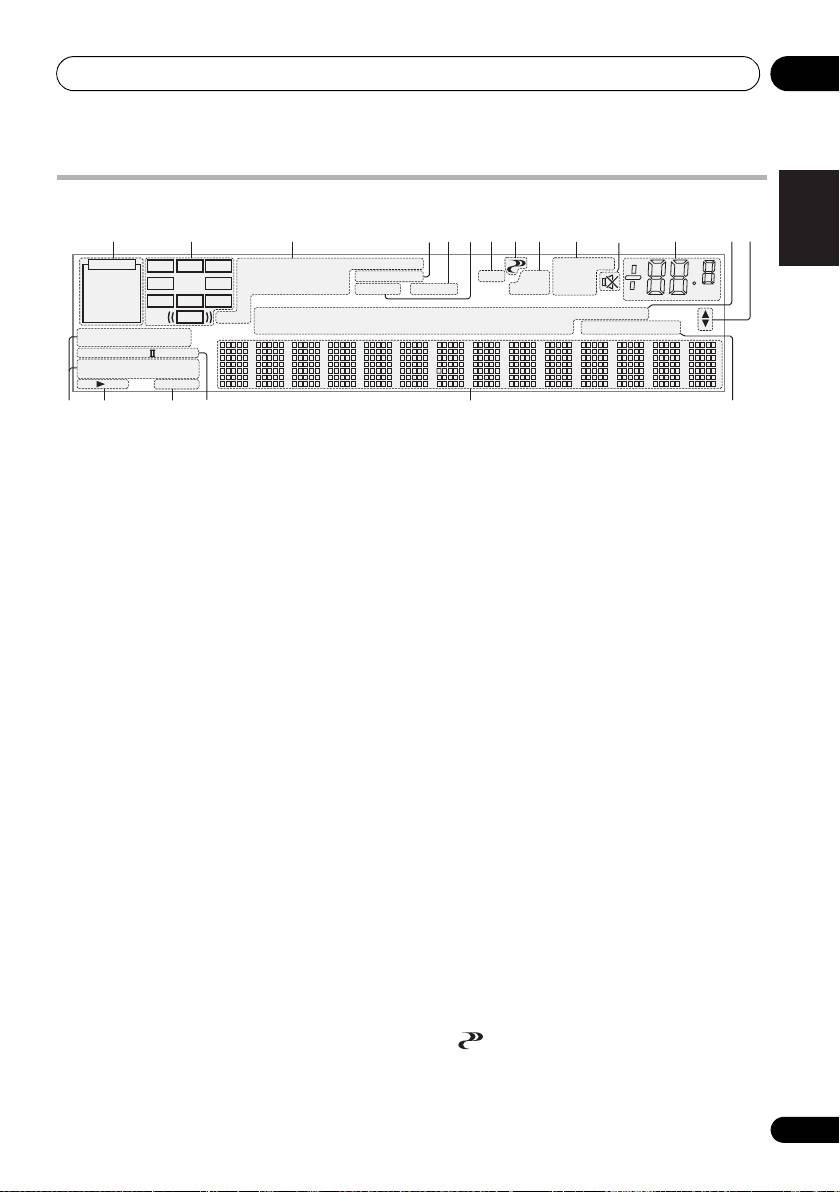
- Display
- Controls and displays02
- Remote control
- Controls and displays02
- Chapter 3: Connecting your equipment Rear panel
- Connecting your equipment03
- Connecting your equipment 03 Determining the speakers’ application
- Connecting your equipment03
- Placing the speakers Some tips for improving sound quality
- Connecting the speakers
- Installing your speaker system
- Bi-amping your speakers Bi-wiring your speakers
- Selecting the Speaker system
- About the audio connection About the video converter
- Connecting your TV and playback components
- Connecting your equipment03 About HDMI
- Connecting your DVD player with no HDMI output
- Connecting your TV with no HDMI input
- Connecting a satellite/cable Connecting a HDD/DVD receiver or other set-top box recorder, VCR and other video sources
- Connecting other audio components
- Connecting AM/FM antennas
- MULTI-ZONE setup
- Connecting Optional Bluetooth ADAPTER
- Connecting to the network Connecting an HDMI-equipped through LAN interface component to the front panel input
- Connecting to the front panel video terminal
- Connecting a USB device Connecting a USB device for Advanced MCACC output
- Connecting an IR receiver Operating other Pioneer components with this unit’s sensor
- Plugging in the receiver
- Chapter 4: Basic Setup Changing the OSD display language (OSD Language) Automatically conducting optimum sound tuning (Auto MCACC)
- Basic Setup04
- Basic Setup 04
- Basic Setup04 Problems when using the Auto MCACC Setup The Input Setup menu
- Input function default and possible settings
- Chapter 5: Basic playback Playing a source
- Playing an iPod
- Basic playback05 Finding what you want to play Switching the iPod controls
- Playing back audio files stored on a Playing a USB device USB memory device
- Basic playback controls
- About playable file formats Music files Photo files
- Listening to the radio
- Saving station presets Listening to station presets Naming station presets
- An introduction to RDS
- Bluetooth ® ADAPTER for Wireless Enjoyment of Music
- Basic playback05 Listening to music contents of a Bluetooth wireless technology device with your system
- Listening to Internet radio stations
- Basic playback05
- Chapter 6: Listening to your system
- Listening to your system06
- Listening in stereo
- Using Front Stage Surround Using Stream Direct Advance
- Selecting MCACC presets Choosing the input signal
- Better sound using Phase Control
- Chapter 7: Control with HDMI function Making Control with HDMI connections
- HDMI Setup
- Before using synchronization About synchronized operations
- Setting the PQLS function
- Cautions on the Control with HDMI function
- Chapter 8: Using other functions Setting the Audio options
- Setting What it does Option(s)
- Setting What it does Option(s)
- Setting the Video options
- Setting What it does Option(s)
- Switching the speaker terminals Using the MULTI-ZONE controls
- Making an audio or a video recording MULTI-ZONE remote controls
- Dimming the display Reducing the level of an analog signal Checking your system settings Using the sleep timer
- Resetting the system Default system settings
- Chapter 9: Controlling the rest of your system Operating multiple receivers Setting the remote to control other components
- Selecting preset codes directly Programming signals from other remote controls
- Erasing one of the remote control button settings
- Resetting the input assignment Direct function of one of the input function buttons
- Multi operation and System off
- Controlling the rest of your system09
- Clearing all the remote control settings Controlling components
- Button(s) TV TV (Monitor) BD/DVD HDD/DVR VCR SAT/CATV
- Controlling the rest of your system 09 Button(s) LD
- Chapter 10: The Advanced MCACC menu Making receiver settings from the Advanced MCACC menu
- Automatic MCACC (Expert)
- The Advanced MCACC menu10
- The Advanced MCACC menu 10
- The Advanced MCACC menu10 Manual MCACC setup
- The Advanced MCACC menu 10
- The Advanced MCACC menu10 Standing Wave
- Acoustic Calibration EQ Adjust
- Using Acoustic Calibration EQ Professional
- The Advanced MCACC menu 10
- Checking MCACC Data
- Standing Wave Output MCACC data Acoustic Cal EQ
- Data Management
- The Advanced MCACC menu 10 Clearing MCACC presets
- Chapter 11: The System Setup and Other Setup menus Making receiver settings from the System Setup menu Manual speaker setup
- The System Setup and Other Setup menus 11 Speaker system setting
- Speaker Setting
- The System Setup and Other Setup menus 11 Speaker Distance Channel Level
- Network Setup menu
- The System Setup and Other Setup menus 11
- The Other Setup menu
- The System Setup and Other Setup menus 11 Remote Control Mode Setup
- Chapter 12: Additional information Power Symptom Remedy
- Symptom Remedy No sound Symptom Remedy
- Symptom Remedy Other audio problems Symptom Remedy
- Symptom Remedy
- Video Symptom Remedy
- Settings Symptom Remedy
- Professional Calibration EQ graphical output Symptom Remedy Display Symptom Remedy
- Symptom Remedy Remote control Symptom Remedy
- HDMI Symptom Remedy
- Symptom Remedy Important information regarding the HDMI connection
- USB interface Symptoms Causes Remedies
- ADAPTER PORT Symptom Remedy Internet radio Symptoms Causes Remedies
- Symptoms Causes Remedies
- About iPod Surround sound formats
- Auto Surround, ALC and Stream Direct with different input signal formats Stereo (2 channel) signal formats
- Preset code list
- Additional information12
- Additional information 12
- DVD
- BD DVR (BDR, HDR) VCR
- Satellite Set Top Box
- Additional information 12
- Additional information12 Satellite Set Top Box (SAT/PVR Combination)
- Cable Set Top Box Cable Set Top Box (Cable/PVR Combination) CD CD-R Laser Disc Player Cassete Deck Digital Tape MD
- Specifications
- Cleaning the unit

audio/video multi-channel receiver
récepteur audiovisuel multicanal
VSX-1020_SYXCN.book 1 ページ 2010年3月12日 金曜日 午前9時10分
VSX-1020_SYXCN.book 2 ページ 2010年3月12日 金曜日 午前9時10分
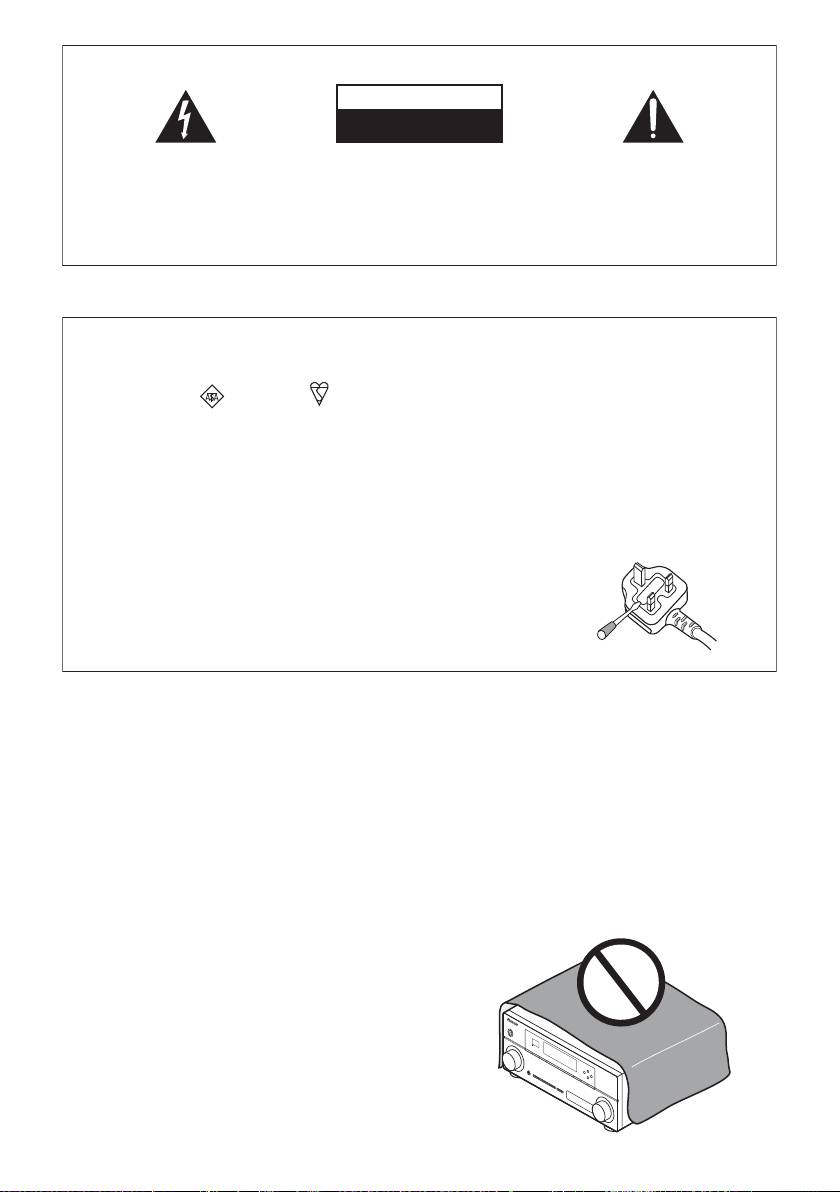
IMPORTANT
CAUTION
RISK OF ELECTRIC SHOCK
DO NOT OPEN
The lightning flash with arrowhead symbol,
CAUTION:
The exclamation point within an equilateral
within an equilateral triangle, is intended to
TO PREVENT THE RISK OF ELECTRIC
triangle is intended to alert the user to the
alert the user to the presence of uninsulated
SHOCK, DO NOT REMOVE COVER (OR
presence of important operating and
“dangerous voltage” within the product’s
BACK). NO USER-SERVICEABLE PARTS
maintenance (servicing) instructions in the
enclosure that may be of sufficient
INSIDE. REFER SERVICING TO QUALIFIED
literature accompanying the appliance.
magnitude to constitute a risk of electric
SERVICE PERSONNEL.
shock to persons.
D3-4-2-1-1_A1_En
Replacement and mounting of an AC plug on the power supply cord of this unit should be performed only by qualified
service personnel.
IMPORTANT: THE MOULDED PLUG
This appliance is supplied with a moulded three pin mains plug for your safety and convenience. A 10 amp fuse is fitted in this plug. Should
the fuse need to be replaced, please ensure that the replacement fuse has a rating of 10 amps and that it is approved by ASTA or BSI to
BS1362.
Check for the ASTA mark or the BSI mark on the body of the fuse.
If the plug contains a removable fuse cover, you must ensure that it is refitted when the fuse is replaced. If you lose the fuse cover the plug
must not be used until a replacement cover is obtained. A replacement fuse cover can be obtained from your local dealer.
If the fitted moulded plug is unsuitable for your socket outlet, then the fuse shall be removed and the plug cut off and disposed of
safely. There is a danger of severe electrical shock if the cut off plug is inserted into any 13 amp socket.
If a new plug is to be fitted, please observe the wiring code as shown below. If in any doubt, please consult a qualified electrician.
IMPORTANT: The wires in this mains lead are coloured in accordance with the following code:
Blue : Neutral Brown : Live
As the colours of the wires in the mains lead of this appliance may not correspond with the coloured markings identifying the terminals in
your plug, proceed as follows;
The wire which is coloured BLUE must be connected to the terminal which is marked with the
letter N or coloured BLACK.
The wire which is coloured BROWN must be connected to the terminal which is marked with the
letter L or coloured RED.
How to replace the fuse: Open the fuse compartment with a screwdriver and replace the fuse.
D3-4-2-1-2-2*_A1_En
WARNING
VENTILATION CAUTION
This equipment is not waterproof. To prevent a fire or
When installing this unit, make sure to leave space
shock hazard, do not place any container filled with
around the unit for ventilation to improve heat radiation
liquid near this equipment (such as a vase or flower
(at least 40 cm at top, 10 cm at rear, and 20 cm at each
pot) or expose it to dripping, splashing, rain or
side).
moisture.
D3-4-2-1-3_A1_En
WARNING
Slots and openings in the cabinet are provided for
ventilation to ensure reliable operation of the product,
WARNING
and to protect it from overheating. To prevent fire
Before plugging in for the first time, read the following
hazard, the openings should never be blocked or
section carefully.
covered with items (such as newspapers, table-cloths,
The voltage of the available power supply differs
curtains) or by operating the equipment on thick carpet
according to country or region. Be sure that the
or a bed.
power supply voltage of the area where this unit
D3-4-2-1-7b*_A1_En
will be used meets the required voltage (e.g., 230 V
or 120 V) written on the rear panel.
D3-4-2-1-4*_A1_En
WARNING
To prevent a fire hazard, do not place any naked flame
sources (such as a lighted candle) on the equipment.
D3-4-2-1-7a_A1_En
VSX-1020_SYXCN.book 3 ページ 2010年3月12日 金曜日 午前9時10分
Information for users on collection and disposal of old equipment and used batteries
Symbol for
These symbols on the products, packaging, and/or accompanying documents mean
equipment
that used electrical and electronic products and batteries should not be mixed with
general household waste.
For proper treatment, recovery and recycling of old products and used batteries,
please take them to applicable collection points in accordance with your national
legislation.
By disposing of these products and batteries correctly, you will help to save valuable
Symbol examples
resources and prevent any potential negative effects on human health and the
for batteries
environment which could otherwise arise from inappropriate waste handling.
For more information about collection and recycling of old products and batteries,
please contact your local municipality, your waste disposal service or the point of sale
where you purchased the items.
These symbols are only valid in the European Union.
For countries outside the European Union:
If you wish to discard these items, please contact your local authorities or dealer and
ask for the correct method of disposal.
Pb
K058a_A1_En
Operating Environment
CAUTION
Operating environment temperature and humidity:
The STANDBY/ON switch on this unit will not
+5 °C to +35 °C (+41 °F to +95 °F); less than 85 %RH
completely shut off all power from the AC outlet.
(cooling vents not blocked)
Since the power cord serves as the main disconnect
Do not install this unit in a poorly ventilated area, or in
device for the unit, you will need to unplug it from the
locations exposed to high humidity or direct sunlight (or
AC outlet to shut down all power. Therefore, make
strong artificial light)
sure the unit has been installed so that the power
D3-4-2-1-7c*_A1_En
cord can be easily unplugged from the AC outlet in
case of an accident. To avoid fire hazard, the power
If the AC plug of this unit does not match the AC
cord should also be unplugged from the AC outlet
outlet you want to use, the plug must be removed
when left unused for a long period of time (for
and appropriate one fitted. Replacement and
example, when on vacation).
D3-4-2-2-2a*_A1_En
mounting of an AC plug on the power supply cord of
this unit should be performed only by qualified
service personnel. If connected to an AC outlet, the
cut-off plug can cause severe electrical shock. Make
This product is for general household purposes. Any
sure it is properly disposed of after removal.
failure due to use for other than household purposes
The equipment should be disconnected by removing
(such as long-term use for business purposes in a
the mains plug from the wall socket when left unused
restaurant or use in a car or ship) and which requires
for a long period of time (for example, when on
repair will be charged for even during the warranty
vacation).
period.
D3-4-2-2-1a_A1_En
K041_A1_En

VSX-1020_SYXCN.book 4 ページ 2010年3月12日 金曜日 午前9時10分
Thank you for buying this Pioneer product. Please read through these operating instructions so you
will know how to operate your model properly. After you have finished reading the instructions, put
them away in a safe place for future reference.
Contents
Flow of settings on the receiver
. . .7
Connecting an HDMI-equipped component
to the front panel input
. . . . . . . . . . . . . . . . . . 34
Connecting to the front panel video terminal
. . . 35
01 Before you start
Connecting an iPod
. . . . . . . . . . . . . . . . . . . . 35
Checking what’s in the box
. . . . . . . . . . . . . . . . 8
Connecting a USB device
. . . . . . . . . . . . . . . . 36
Installing the receiver
. . . . . . . . . . . . . . . . . . . . 8
Connecting a USB device for Advanced
Loading the batteries
. . . . . . . . . . . . . . . . . . . . 8
MCACC output
. . . . . . . . . . . . . . . . . . . . . . . . 36
Connecting an IR receiver
. . . . . . . . . . . . . . . . 37
02 Controls and displays
Operating other Pioneer components with
this unit’s sensor
. . . . . . . . . . . . . . . . . . . . . . 37
Front panel
. . . . . . . . . . . . . . . . . . . . . . . . . . . . 9
Plugging in the receiver
. . . . . . . . . . . . . . . . . 38
Display
. . . . . . . . . . . . . . . . . . . . . . . . . . . . . . 11
Remote control
. . . . . . . . . . . . . . . . . . . . . . . 13
Operating range of remote control unit
. . . . . 14
04 Basic Setup
Changing the OSD display language
03 Connecting your equipment
(OSD Language)
. . . . . . . . . . . . . . . . . . . . . . . 39
Automatically conducting optimum sound
Rear panel
. . . . . . . . . . . . . . . . . . . . . . . . . . . 15
tuning (Auto MCACC)
. . . . . . . . . . . . . . . . . . . 39
Determining the speakers’ application
. . . . . . 17
Problems when using the Auto MCACC
Other speaker connections
. . . . . . . . . . . . . 18
Setup
. . . . . . . . . . . . . . . . . . . . . . . . . . . . . . 42
Placing the speakers
. . . . . . . . . . . . . . . . . . 19
The Input Setup menu
. . . . . . . . . . . . . . . . . . 42
Some tips for improving sound quality
. . . . . 19
Input function default and possible
Connecting the speakers
. . . . . . . . . . . . . . . . 20
settings
. . . . . . . . . . . . . . . . . . . . . . . . . . . . 43
Installing your speaker system
. . . . . . . . . . . . 21
Bi-amping your speakers
. . . . . . . . . . . . . . . 22
Bi-wiring your speakers
. . . . . . . . . . . . . . . . 22
05 Basic playback
Selecting the Speaker system
. . . . . . . . . . . . . 23
Playing a source
. . . . . . . . . . . . . . . . . . . . . . . 44
Front height setup
. . . . . . . . . . . . . . . . . . . . 23
Playing a source with HDMI connection
. . . . 45
Front wide setup
. . . . . . . . . . . . . . . . . . . . . 23
Playing an iPod
. . . . . . . . . . . . . . . . . . . . . . . 45
Speaker B setup
. . . . . . . . . . . . . . . . . . . . . 23
Playing back files stored on an iPod
. . . . . . . 45
Bi-Amping setup
. . . . . . . . . . . . . . . . . . . . . 23
Playing a USB device
. . . . . . . . . . . . . . . . . . . 47
ZONE 2 setup
. . . . . . . . . . . . . . . . . . . . . . . 23
Playing back audio files stored on a USB
About the audio connection
. . . . . . . . . . . . . . 24
memory device
. . . . . . . . . . . . . . . . . . . . . . . 47
About the video converter
. . . . . . . . . . . . . . . . 24
Playing back photo files stored on a USB
Connecting your TV and playback
memory device
. . . . . . . . . . . . . . . . . . . . . . . 48
components
. . . . . . . . . . . . . . . . . . . . . . . . . . 25
About playable file formats
. . . . . . . . . . . . . . 49
Connecting using HDMI
. . . . . . . . . . . . . . . 25
Listening to the radio
. . . . . . . . . . . . . . . . . . . 50
Connecting your DVD player with no
Improving FM sound
. . . . . . . . . . . . . . . . . . 50
HDMI output
. . . . . . . . . . . . . . . . . . . . . . . . 27
Using Neural Surround
. . . . . . . . . . . . . . . . 50
Connecting your TV with no HDMI input
. . . . 28
Tuning directly to a station
. . . . . . . . . . . . . . 50
Connecting a satellite/cable receiver or
Saving station presets
. . . . . . . . . . . . . . . . . 51
other set-top box
. . . . . . . . . . . . . . . . . . . . . . 29
Naming station presets
. . . . . . . . . . . . . . . . 51
Connecting a HDD/DVD recorder, VCR and
Listening to station presets
. . . . . . . . . . . . . . 51
other video sources
. . . . . . . . . . . . . . . . . . . . 29
An introduction to RDS
. . . . . . . . . . . . . . . . 52
Connecting other audio components
. . . . . . . 30
Bluetooth
® ADAPTER for Wireless
About the WMA9 Pro decoder
. . . . . . . . . . . 30
Enjoyment of Music
. . . . . . . . . . . . . . . . . . . . 53
Connecting AM/FM antennas
. . . . . . . . . . . . . 31
Wireless music play
. . . . . . . . . . . . . . . . . . . 53
Connecting external antennas
. . . . . . . . . . . 31
Pairing the Bluetooth ADAPTER and
MULTI-ZONE setup
. . . . . . . . . . . . . . . . . . . . . 32
Bluetooth wireless technology device
. . . . . . 53
Making MULTI-ZONE connections
. . . . . . . . 32
Listening to music contents of a
Connecting Optional Bluetooth ADAPTER
. . . 33
Bluetooth wireless technology device
Connecting to the network through LAN
with your system
. . . . . . . . . . . . . . . . . . . . . 54
interface
. . . . . . . . . . . . . . . . . . . . . . . . . . . . 34
Listening to Internet radio stations
. . . . . . . . . 55
Programming the Internet radio stations
. . . 55

VSX-1020_SYXCN.book 5 ページ 2010年3月12日 金曜日 午前9時10分
06 Listening to your system
10 The Advanced MCACC menu
Auto playback
. . . . . . . . . . . . . . . . . . . . . . . . 57
Making receiver settings from the Advanced
Listening in surround sound
. . . . . . . . . . . . . . 57
MCACC menu
. . . . . . . . . . . . . . . . . . . . . . . . 86
Standard surround sound
. . . . . . . . . . . . . . 57
Automatic MCACC (Expert)
. . . . . . . . . . . . . . . 87
Using the Advanced surround effects
. . . . . . 59
Manual MCACC setup
. . . . . . . . . . . . . . . . . . 90
Listening in stereo
. . . . . . . . . . . . . . . . . . . . . 59
Fine Channel Level
. . . . . . . . . . . . . . . . . . . . 91
Using Front Stage Surround Advance
. . . . . . . 60
Fine Speaker Distance
. . . . . . . . . . . . . . . . . 91
English
Using Stream Direct
. . . . . . . . . . . . . . . . . . . . 60
Standing Wave
. . . . . . . . . . . . . . . . . . . . . . . 92
Selecting MCACC presets
. . . . . . . . . . . . . . . . 61
Acoustic Calibration EQ Adjust
. . . . . . . . . . . 93
Choosing the input signal
. . . . . . . . . . . . . . . . 61
Acoustic Calibration EQ Professional
. . . . . . 93
Better sound using Phase Control
. . . . . . . . . 62
Checking MCACC Data
. . . . . . . . . . . . . . . . . . 96
Speaker Setting
. . . . . . . . . . . . . . . . . . . . . . 96
Channel Level
. . . . . . . . . . . . . . . . . . . . . . . 96
07 Control with HDMI function
Speaker Distance
. . . . . . . . . . . . . . . . . . . . . 96
Deutsch
Making Control with HDMI connections
. . . . . 63
Standing Wave
. . . . . . . . . . . . . . . . . . . . . . . 97
HDMI Setup
. . . . . . . . . . . . . . . . . . . . . . . . . . 64
Acoustic Cal EQ
. . . . . . . . . . . . . . . . . . . . . . 97
Before using synchronization
. . . . . . . . . . . . . 65
Output MCACC data
. . . . . . . . . . . . . . . . . . 97
About synchronized operations
. . . . . . . . . . . . 65
Data Management
. . . . . . . . . . . . . . . . . . . . . 98
About connections with a product of a
Renaming MCACC presets
. . . . . . . . . . . . . . 98
different brand that supports the Control
Copying MCACC preset data
. . . . . . . . . . . . 98
Français
with HDMI function
. . . . . . . . . . . . . . . . . . . 66
Clearing MCACC presets
. . . . . . . . . . . . . . . 99
Setting the PQLS function
. . . . . . . . . . . . . . . 66
Cautions on the Control with HDMI
function
. . . . . . . . . . . . . . . . . . . . . . . . . . . . . 67
11 The System Setup and Other
Setup menus
08 Using other functions
Making receiver settings from the
Italiano
Setting the Audio options
. . . . . . . . . . . . . . . . 68
System Setup menu
. . . . . . . . . . . . . . . . . . . 100
Setting the Video options
. . . . . . . . . . . . . . . . 71
Manual speaker setup
. . . . . . . . . . . . . . . . . 100
Switching the speaker terminals
. . . . . . . . . . . 73
Speaker system setting
. . . . . . . . . . . . . . . 101
Using the MULTI-ZONE controls
. . . . . . . . . . . 73
Speaker Setting
. . . . . . . . . . . . . . . . . . . . . 102
Making an audio or a video recording
. . . . . . . 74
Channel Level
. . . . . . . . . . . . . . . . . . . . . . 103
Reducing the level of an analog signal
. . . . . . 75
Speaker Distance
. . . . . . . . . . . . . . . . . . . . 103
Nederlands
Using the sleep timer
. . . . . . . . . . . . . . . . . . . 75
X-Curve
. . . . . . . . . . . . . . . . . . . . . . . . . . . 104
Dimming the display
. . . . . . . . . . . . . . . . . . . 75
Network Setup menu
. . . . . . . . . . . . . . . . . . 104
Checking your system settings
. . . . . . . . . . . . 75
IP address/Proxy setting
. . . . . . . . . . . . . . . 104
Resetting the system
. . . . . . . . . . . . . . . . . . . 76
Checking the MAC address
. . . . . . . . . . . . 105
Default system settings
. . . . . . . . . . . . . . . . 76
The Other Setup menu
. . . . . . . . . . . . . . . . . 106
Volume Setup
. . . . . . . . . . . . . . . . . . . . . . 106
Remote Control Mode Setup
. . . . . . . . . . . 107
09 Controlling the rest of your system
Español
Flicker Reduction Setup
. . . . . . . . . . . . . . . 107
Operating multiple receivers
. . . . . . . . . . . . . . 77
Setting the remote to control other
components
. . . . . . . . . . . . . . . . . . . . . . . . . . 77
Selecting preset codes directly
. . . . . . . . . . . . 78
Programming signals from other remote
controls
. . . . . . . . . . . . . . . . . . . . . . . . . . . . . 78
Erasing one of the remote control button
settings
. . . . . . . . . . . . . . . . . . . . . . . . . . . . . 79
Resetting the input assignment
of one of
the input function buttons
. . . . . . . . . . . . . . . 80
Direct function
. . . . . . . . . . . . . . . . . . . . . . . . 80
Multi operation and System off
. . . . . . . . . . . . 81
Programming a Multi operation or
a shutdown sequence
. . . . . . . . . . . . . . . . . 81
Using multi operations
. . . . . . . . . . . . . . . . 82
Using System off
. . . . . . . . . . . . . . . . . . . . . 82
Erasing the settings for the
multi-operation
. . . . . . . . . . . . . . . . . . . . . . 82
Clearing all the remote control settings
. . . . . . 83
Default preset codes
. . . . . . . . . . . . . . . . . . 83
Controlling components
. . . . . . . . . . . . . . . . . 83

VSX-1020_SYXCN.book 6 ページ 2010年3月12日 金曜日 午前9時10分
12 Additional information
Troubleshooting
. . . . . . . . . . . . . . . . . . . . . . 108
Power
. . . . . . . . . . . . . . . . . . . . . . . . . . . . 108
No sound
. . . . . . . . . . . . . . . . . . . . . . . . . 109
Other audio problems
. . . . . . . . . . . . . . . . 110
Video
. . . . . . . . . . . . . . . . . . . . . . . . . . . . 112
Settings
. . . . . . . . . . . . . . . . . . . . . . . . . . 113
Professional Calibration EQ graphical
output
. . . . . . . . . . . . . . . . . . . . . . . . . . . . 114
Display
. . . . . . . . . . . . . . . . . . . . . . . . . . . 114
Remote control
. . . . . . . . . . . . . . . . . . . . . 115
HDMI
. . . . . . . . . . . . . . . . . . . . . . . . . . . . 116
Important information regarding the HDMI
connection
. . . . . . . . . . . . . . . . . . . . . . . . 117
USB interface
. . . . . . . . . . . . . . . . . . . . . . 118
ADAPTER PORT
. . . . . . . . . . . . . . . . . . . . 119
Internet radio
. . . . . . . . . . . . . . . . . . . . . . 119
About iPod
. . . . . . . . . . . . . . . . . . . . . . . . . 121
Surround sound formats
. . . . . . . . . . . . . . . 121
Dolby
. . . . . . . . . . . . . . . . . . . . . . . . . . . . 121
DTS
. . . . . . . . . . . . . . . . . . . . . . . . . . . . . . 121
Windows Media Audio 9 Professional
. . . . 121
Auto Surround, ALC and Stream Direct with
different input signal formats
. . . . . . . . . . . . 122
Preset code list
. . . . . . . . . . . . . . . . . . . . . . 123
Specifications
. . . . . . . . . . . . . . . . . . . . . . . 132
Cleaning the unit
. . . . . . . . . . . . . . . . . . . . . 133
VSX-1020_SYXCN.book 7 ページ 2010年3月12日 金曜日 午前9時10分
Flow of settings on the receiver
The unit is a full-fledged AV receiver equipped
The colors of the steps indicate the following:
with an abundance of functions and terminals.
Required setting item
It can be used easily after following the
procedure below to make the connections and
English
settings.
Setting to be made as necessary
1
Before you start
• Checking what’s in the box (page 8)
8
The Input Setup menu (page 42)
Deutsch
• Loading the batteries (page 8)
(When using connections other than the
recommended connections)
2
Determining the speakers’ application
(page 17)
9
Basic playback (page 44)
• 9.1 channel surround system (Front height)
Français
• 9.1 channel surround system (Front wide)
• 7.1 channel surround system & Speaker B
10
Adjusting the sound and picture
connection
quality as desired
• 5.1 channel surround system & Front Bi-
•Using the various listening modes
amping connection (High quality surround)
• Better sound using Phase Control (page 62)
• 5.1 channel surround system & ZONE 2
• Measuring the all EQ type (SYMMETRY/ALL
connection (Multi Zone)
Italiano
CH ADJ/FRONT ALIGN) (page 87)
• Some tips for improving sound quality (page
• Changing the channel level while listening
19)
(Tip on page 103)
• Switching on/off the Acoustic Calibration
EQ, Sound retriever or Dialog Enhancement
3
Connecting the speakers
(page 68)
Nederlands
• Connecting the speakers (page 20)
• Setting the PQLS function (page 66)
• Installing your speaker system (page 21)
• Setting the Audio options (Tone, Loudness
• Bi-amping your speakers (page 22)
or Sound delay, etc.) (page 68)
• Setting the Video options (page 71)
4
Connecting the components
• About the audio connection (page 24)
11
Other optional adjustments and
Español
• About the video converter (page 24)
settings
• Connecting your TV and playback
• HDMI Setup (page 64)
components (page 25)
• The Advanced MCACC menu (page 86)
• Connecting AM/FM antennas (page 31)
• The System Setup and Other Setup menus
• Plugging in the receiver (page 38)
(page 100)
5
Power On
12
Making maximum use of the remote
control
• Operating multiple receivers (page 77)
6
Changing the OSD display language
• Setting the remote to control other
(OSD Language) (page 39)
components (page 77)
• Programming signals from other remote
controls (page 78)
7
MCACC speaker settings
• Automatically conducting optimum sound
tuning (Auto MCACC) (page 39)
7
En

VSX-1020_SYXCN.book 8 ページ 2010年3月12日 金曜日 午前9時10分
Before you start01
Chapter 1:
Before you start
Checking what’s in the box
Loading the batteries
Please check that you’ve received the following
supplied accessories:
• Setup microphone (cable: 5 m)
• Remote control unit
• AAA size IEC R03 dry cell batteries (to
The batteries included with the unit are to
confirm system operation) x2
check initial operations; they may not last over
a long period. We recommend using alkaline
•AM loop antenna
batteries that have a longer life.
•FM wire antenna
•iPod cable
CAUTION
•Power cord
Incorrect use of batteries may result in such
•
Warranty card
hazards as leakage and bursting. Observe the
following precautions:
• These operating instructions
• Never use new and old batteries together.
• Insert the plus and minus sides of the
Installing the receiver
batteries properly according to the marks
• When installing this unit, make sure to put
in the battery case.
it on a level and stable surface.
• Batteries with the same shape may have
different voltages. Do not use different
Don’t install it on the following places:
batteries together.
– on a color TV (the screen may distort)
– near a cassette deck (or close to a device that
• When disposing of used batteries, please
gives off a magnetic field). This may interfere
comply with governmental regulations or
with the sound.
environmental public instruction’s rules
– in direct sunlight
that apply in your country or area.
– in damp or wet areas
• WARNING
– in extremely hot or cold areas
Do not use or store batteries in direct
– in places where there is vibration or other
sunlight or other excessively hot place,
movement
such as inside a car or near a heater. This
– in places that are very dusty
can cause batteries to leak, overheat,
– in places that have hot fumes or oils (such as
explode or catch fire. It can also reduce the
a kitchen)
life or performance of batteries.
• Do not touch this receiver’s bottom panel
while the power is on or just after it is
turned off. The bottom panel becomes hot
when the power is on (or right after it is
turned off) and could cause burns.
8
En
Controls and displays 02
Chapter 2:
English
Controls and displays
Deutsch
Front panel
Français
Italiano
Nederlands
Español
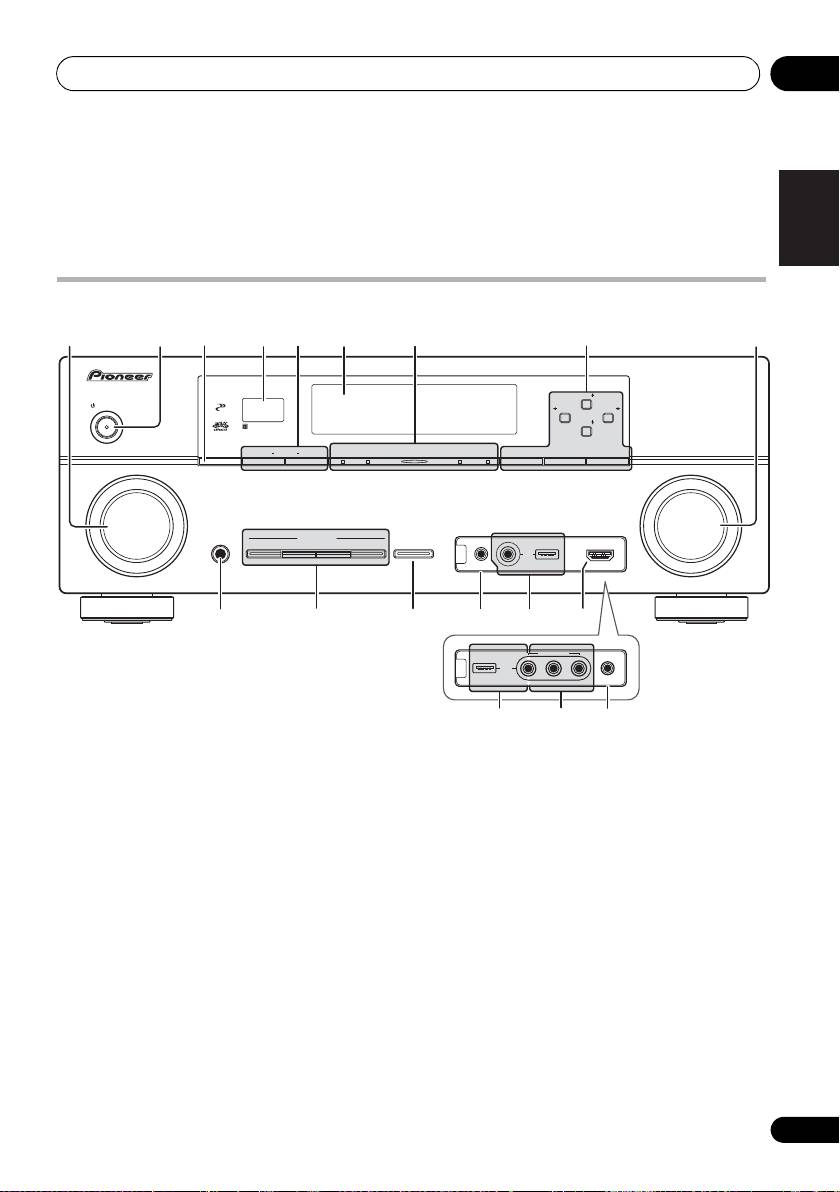
1
INPUT SELECTOR
dial
5
MULTI-ZONE
controls
Select an input function.
If you’ve made MULTI-ZONE connections (see
MULTI-ZONE setup on page 32) use these
2
STANDBY/ON
controls to control the sub zone from the main
Switches the receiver between on and standby.
zone (see Using the MULTI-ZONE controls on
3
SPEAKERS
page 73).
See Switching the speaker terminals on
6 Character display
page 73.
See Display on page 11.
4 Remote sensor
7Indicators
Receives the signals from the remote control
ADVANCED MCACC
– Lights when
EQ
is
(see Operating range of remote control unit on
set to
ON
in the
AUDIO PARAMETER
menu.
page 14).
PQLS – Lights when the PQLS feature is
active (page 66).
HDMI – Blinks when connecting an HDMI-
equipped component; lights when the
component is connected (page 25).
9
En
12 73 5 8
49
6
AUDIO/ VIDEO MULTI- CHANNEL RECEIVER
VSX
-1020
PHASE
TUNE
CONTROL
STANDBY/ON
PRESET PRESET
TUNE
ADVANCED
iPod
SPEAKERS
CONTROL ON/OFFMULTI-ZONE
MCACC
PQLS HDMI BAND TUNER EDITiPhone
ENTER
INPUT
MASTER
SELECTOR
VOLUME
PHONES
LISTENING MODE
iPod iPhone
AUTO/ALC/DIRECT STEREO STANDARD
ADV SURROUND DIRECT CONTROL
VIDEO CAMERA
iPod
iPhone
MCACC
USB HDMI 5
SETUP MIC
10
11 1412 13
15
VIDEO 2 INPUT
iPod
iPhone
USB
MCACC
AUDIOLRVIDEO
SETUP MIC
14 16 13
VSX-1020/VSX-1025
VSX-920
VSX-1020_SYXCN.book 9 ページ 2010年3月12日 金曜日 午前9時10分

VSX-1020_SYXCN.book 10 ページ 2010年3月12日 金曜日 午前9時10分
Controls and displays02
iPod/iPhone – Lights to indicate iPod/
15
VSX-1020/VSX-1025 only:
HDMI input
iPhone is connected (page 45).
connector
Use for connection to a compatible HDMI
8 Tuner controls
device (Video camera, etc.)(page 34).
BAND – Switches between the AM and FM
radio bands (page 50).
16
VSX-920 only:
VIDEO 2 INPUT terminals
Use to connect your portable equipment such
TUNER EDIT –
Use with
TUNE /
,
as camcorders, video games and portable
PRESET /
and
ENTER
to memorize and
audio/video equipment (page 35).
name stations for recall
(page 50)
.
TUNE / –
Find radio frequencies
(page 50)
.
PRESET / – Find preset stations
(page 50).
9
MASTER VOLUME
dial
10
PHONES
jack
Connect the headphones. When the
headphones are connected, there is no sound
output from the speakers.
11 Listening mode buttons
AUTO/ALC/DIRECT – Switches between
Auto Surround (page 57), Auto Level
Control mode and Stream Direct mode
(page 60).
STEREO – Switches between stereo
playback and Front Stage Surround
Advance modes (page 60).
STANDARD – Press for Standard decoding
and to switch between the various 2 Pro
Logic IIx and Neo:6 options (page 57).
ADV SURROUND – Switch between the
various surround modes (page 59).
12
iPod iPhone DIRECT CONTROL
Change the receiver’s input to the iPod and
enable iPod operations on the iPod (page 46).
13
MCACC SETUP MIC
jack
Connect the supplied microphone (page 39).
14
iPod/iPhone/USB
terminals
Connect your Apple iPod as an audio and video
source, or connect a USB device for audio and
photo playback (page 35, 36).
10
En
Controls and displays 02
English
Display
Deutsch
Français
1
SIGNAL
indicators
4
MULTI-ZONE
Light to indicate the currently selected input
Lights when the MULTI-ZONE feature is active
signal. AUTO lights when the receiver is set to
(page 73).
select the input signal automatically (page 61).
5
SOUND
Italiano
2 Program format indicators
Lights when any of the Midnight, Loudness or
Light to indicate the channels to which digital
tone controls feature is selected (page 68).
signals are being input.
Lights when Dialog Enhancement is switched on.
L/R – Left front/Right front channel
6
S.RTRV
C – Center channel
Nederlands
Lights when the Sound Retriever function is
SL/SR – Left surround/Right surround channel
active (page 69).
LFE
– Low frequency effects channel (the
(( ))
indicators light when an LFE signal is being input)
7 Listening mode indicators
XL/XR – Two channels other than the ones above
AUTO SURROUND – Lights when the
XC – Either one channel other than the ones
Auto Surround feature is switched on
above, the mono surround channel or matrix
(page 57).
encode flag
Español
ALC – Lights when the ALC (Auto level
3 Digital format indicators
control) mode is selected (page 60).
Light when a signal encoded in the
STREAM DIRECT – Lights when Direct/
corresponding format is detected.
Pure Direct is selected (page 60).
2
DIGITAL
– Lights with Dolby Digital decoding.
2 DIGITAL PLUS – Lights with Dolby Digital
ADV.SURROUND – Lights when one of the
Plus decoding.
Advanced Surround modes has been
2
TrueHD
– Lights with Dolby TrueHD decoding.
selected (page 59).
DTS
– Lights with DTS decoding.
STEREO – Lights when stereo listening is
DTS HD – Lights with DTS-HD decoding.
switched on (page 59).
96/24 – Lights with DTS 96/24 decoding.
STANDARD – Lights when one of the
WMA9 Pro – Lights to indicate that a WMA9 Pro
signal is being decoded.
Standard Surround modes is switched on
DSD PCM – Light during DSD (Direct Stream
(page 57).
Digital) to PCM conversion with SACDs.
PCM – Lights during playback of PCM signals.
8 (PHASE CONTROL)
MSTR – Lights during playback of DTS-HD
Lights when Phase Control is switched on
Master Audio signal.
(page 62).
11
En
21 3 9754 108
6
11
12 13
14
AUTO
L C R
2
DIGITAL PLUS
DSD PCM
TUNED
RDS
PCM
2
TrueHD
WMA9Pro
MULTI-ZONE STEREO
PQLS
ALC
ATT
SL SR
HDMI
DTS HD ES 96/24
S.RTRV SOUND UP MIX
OVER
MONO
dB
DIGITAL
XL XR
XC
ANALOG
LFE
MSTR
CD
TUNER
SIRIUS
DVD
TV
VIDEO
USB
CD-R
iPod
BD
DVR
HDMI
[ 2 ]
[ 3 ]
[ 4 ]
AUTO SURROUND
STREAM DIRECT
PROLOGIC
2
x
Neo:6
ADV.SURROUND
STEREO STANDARD
SP
AB
SLEEP
7
18 1915 16 17
VSX-1020_SYXCN.book 11 ページ 2010年3月12日 金曜日 午前9時10分
VSX-1020_SYXCN.book 12 ページ 2010年3月12日 金曜日 午前9時10分
Controls and displays02
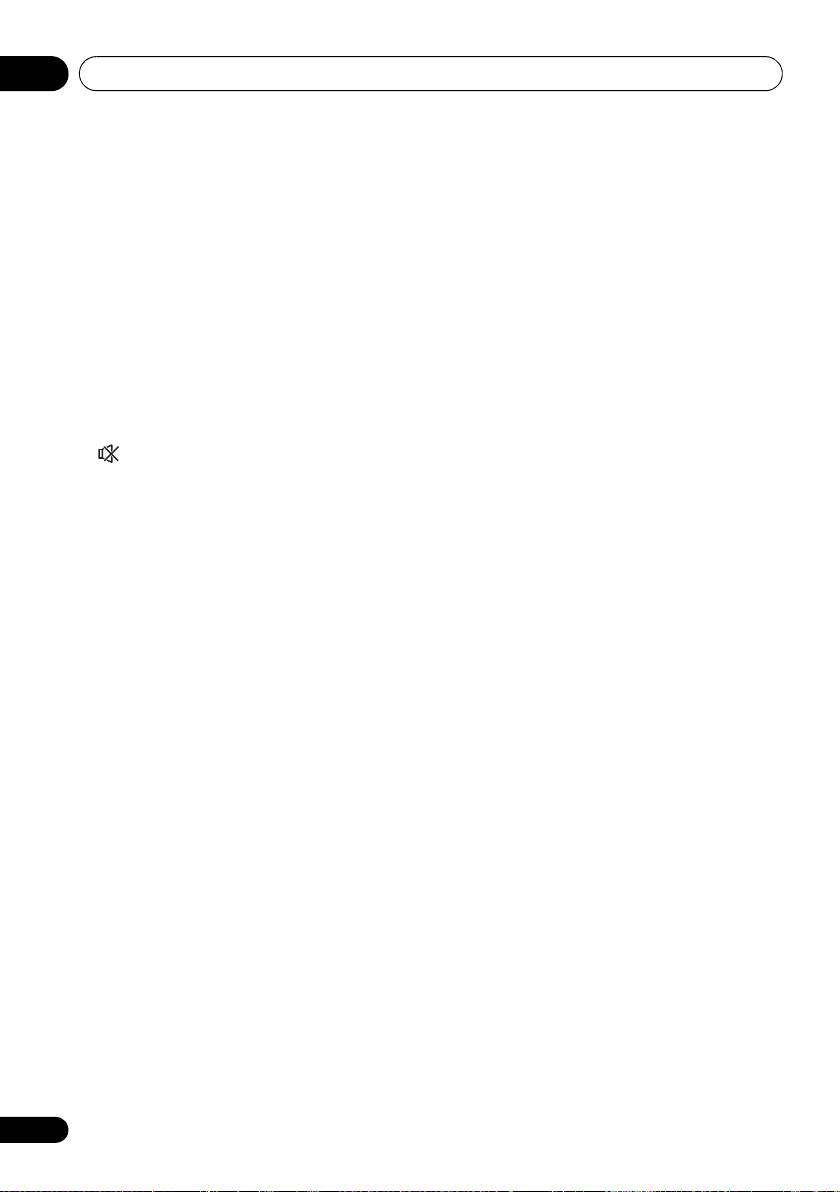
9 Analog signal indicators
19 Remote control mode indicator
Light to indicate reducing the level of an analog
Lights to indicate the receiver’s remote control
signal (page 75).
mode setting. (Not displayed when set to 1.)
(page 77)
10 Tuner indicators
TUNED – Lights when a broadcast is being
received.
STEREO –
Lights when a stereo FM broadcast
is being received in auto stereo mode.
MONO – Lights when the mono mode is
set using MPX.
RDS – Lights when an RDS broadcast is
received.
11
Lights when the sound is muted (page 14).
12 Master volume level
Shows the overall volume level.
“---” indicates the minimum level, and “+12dB”
indicates the maximum level.
13 Input function indicators
Light to indicate the input function you have
selected.
14 Scroll indicators
Light when there are more selectable items
when making the various settings.
15 Speaker indicators
Indicates the speaker terminal, A and/or B, to
which audio signal output is currently set
(page 73).
16
SLEEP
Lights when the receiver is in sleep mode
(page 75).
17 Matrix decoding format indicators
2PRO LOGIC IIx – This lights to indicate
2 Pro Logic II / 2 Pro Logic IIx decoding
(page 57).
Neo:6 – When one of the Neo:6 modes of
the receiver is on, this lights to indicate
Neo:6 processing (page 57).
18 Character display
Displays various system information.
12
En
Controls and displays 02
English
Remote control
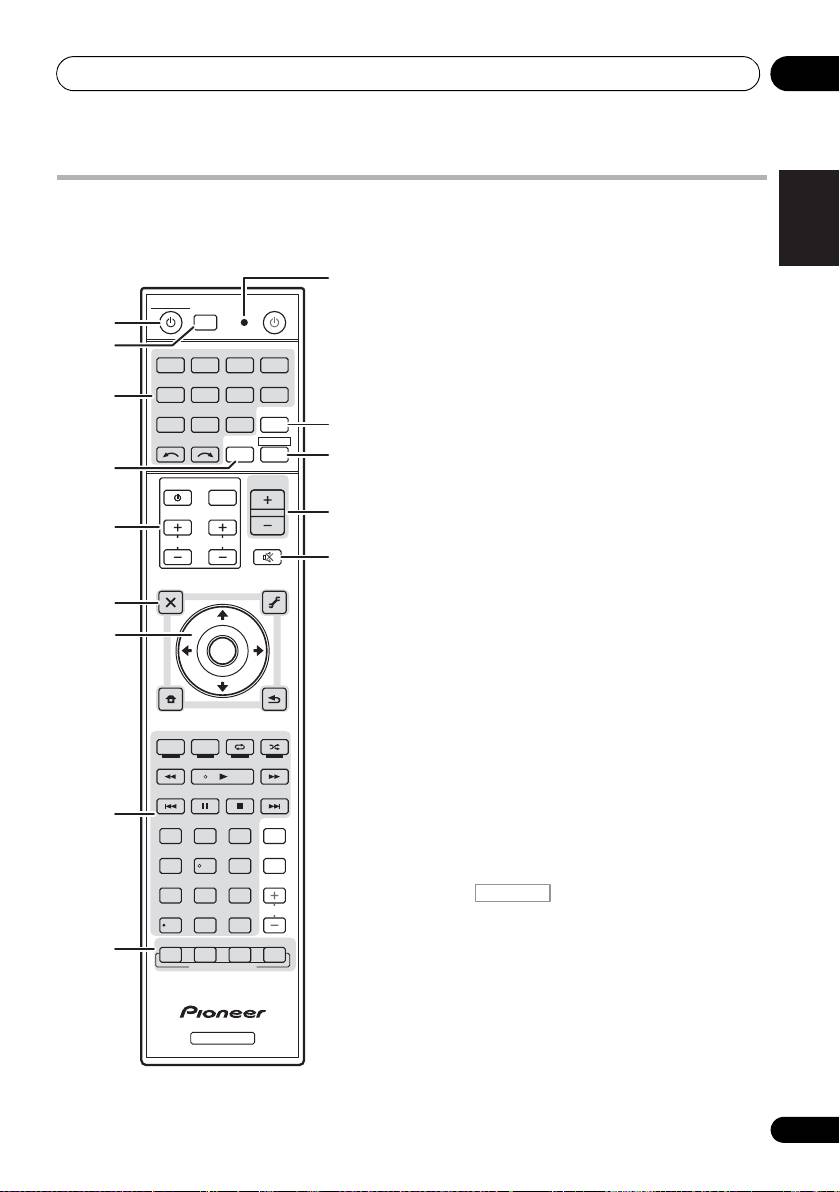
This section explains how to operate the
The remote has been conveniently color-coded
remote control for the receiver.
according to component control using the
following system:
• White – Receiver control, TV control
Deutsch
• Blue – Other controls (See page 45, 47, 50,
53, 55 and 83.)
1 RECEIVER
This switches between standby and on for this
receiver.
Français
2
MULTI OPERATION – Use to perform
multi operations (page 81).
R.SETUP – Use to input the preset code
when making remote control settings and
to set the remote control mode (page 77).
Italiano
3 Input function buttons
Press to select control of other components
(page 77).
4
ZONE 2
Nederlands
Switch to perform operations in the sub zone
(page 74).
5
TV CONTROL
buttons
These buttons are dedicated to control the TV
assigned to the TV CTRL button.
Español
– Turn on/off the power of the TV.
INPUT – Select the TV input signal.
CH +/– – Select channels.
VOL +/– – Adjust the volume on your TV.
6 Receiver controls
Press first to access:
AUDIO PARAMETER – Use to access the
Audio options (page 68).
VIDEO PARAMETER – Use to access the
Video options (page 71).
HOME MENU – Use to access the Home
Menu (pages 39, 42, 64, 86, 100 and 106).
RETURN – Press to confirm and exit the
current menu screen.
13
En
10
MULTI
SOURCERECEIVER
OPERATION
1
R.SETUP
2
BD DVD
DVR/BDR HDMI
CDTV
ADAPTERNET RADIO
3
iPod
USB TUNER VIDEO TV CTRL
11
INPUT
SELECT ZONE 2
RECEIVER
12
4
MASTER
INPUT
VOLUME
TV CONTROL
13
5
CH
VOL
MUTE
14
AUDIO
VIDEO
PARAMETER
PARAMETER
LIST
TUNE
TOOLS
6
TOP MENU
T.EDIT
BAND GUIDE
7
PRESET
ENTER
PRESET
PTY
SEARCH
RETURN
HOME
MENU
TUNE
iPod CTRL
PGM
MENU
HDD DVD
PHASE
CTRL STATUS
TV
/
DTV MPX PQLS
8
S.RETRIEVER
MIDNIGHT
AUDIO
213
SIGNAL SEL
MCACC SLEEP
INFO
546
DISP
CH
LEVEL A.ATT DIMMER
79
8
D.ACCESS
CLASS
CH
/
CLR
0
ENTER
AUTO
/
ALC
/
DIRECT
STEREO
STANDARD ADV SURR
9
LISTENING MODE
RECEIVER
VSX-1020_SYXCN.book 13 ページ 2010年3月12日 金曜日 午前9時10分
RECEIVER
Controls and displays02
7
///
,
ENTER
ADV SURR – Switch between the various
Use the arrow buttons when setting up your
surround modes (page 59).
surround sound system (page 86) and the
10 Remote control LED
Audio or Video options (page 68 or 71).
Lights when a command is sent from the
8 Receiver controls
remote control (page 77).
Press first to access:
RECEIVER
11
TV CTRL
PHASE CTRL – Switch on/off Phase Control
Set the preset code of your TV’s manufacturer
(page 62).
when controlling TV (page 78).
STATUS – Check selected receiver settings
(page 75).
12
Switches the remote to control the receiver
PQLS – Select the PQLS setting (page 66).
(used to select the white commands (SIGNAL
S.RETRIEVER – Press to restore CD quality
SEL, etc.)).
sound to compressed audio sources
Switch to perform operations in the main zone.
(page 69).
Also use to set up surround sound.
MIDNIGHT – Switches to Midnight or
Loudness listening (page 68).
13
MASTER VOLUME +/–
Set the listening volume.
SIGNAL SEL – Select an input signal
(page 61).
14
MUTE
MCACC – Switch between MCACC presets
Mutes the sound or restores the sound if it has
(page 61).
been muted (adjusting the volume also
restores the sound).
SLEEP – Use to put the receiver in sleep
mode and select the amount of time before
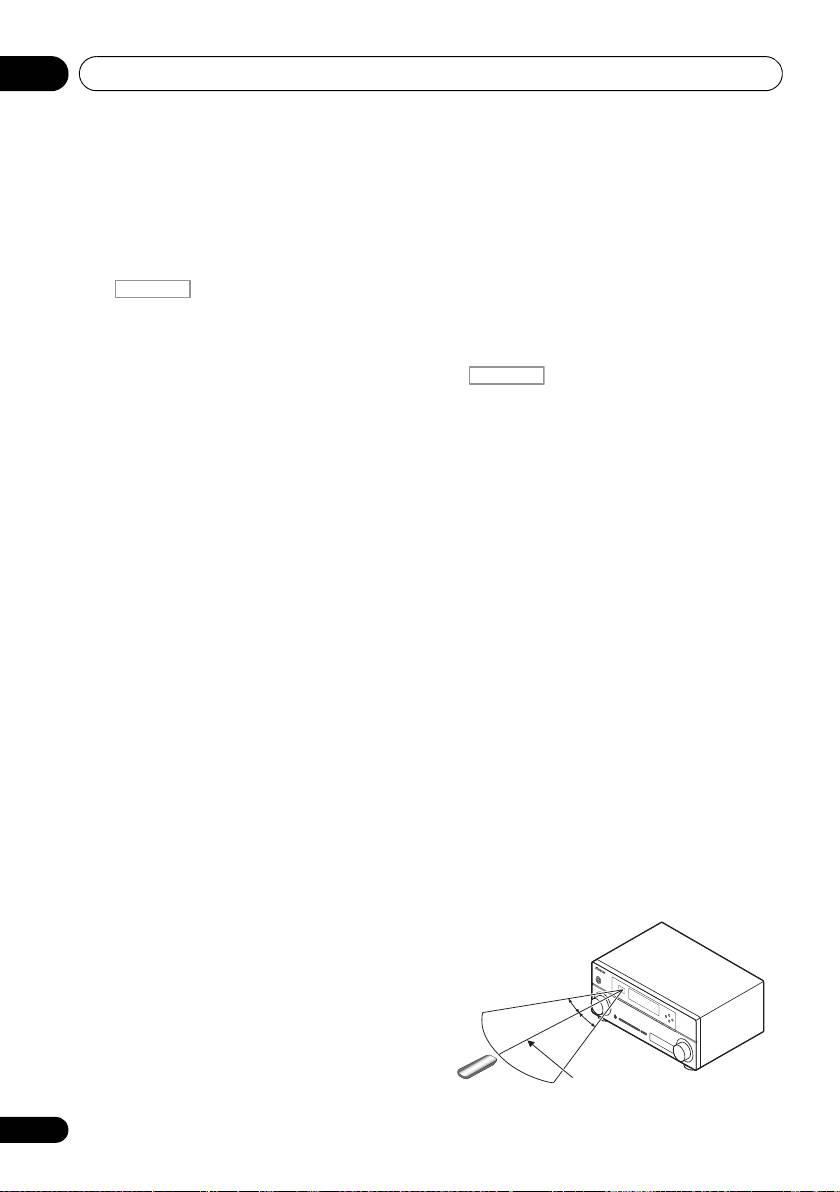
Operating range of remote control
sleep (page 75).
unit
CH LEVEL – Press repeatedly to select a
The remote control may not work properly if:
channel, then use / to adjust the level
(page 103).
• There are obstacles between the remote
control and the receiver’s remote sensor.
A.ATT – Attenuates (lowers) the level of an
analog input signal to prevent distortion
• Direct sunlight or fluorescent light is
(page 75).
shining onto the remote sensor.
DIMMER – Dims or brightens the display
• The receiver is located near a device that is
(page 75).
emitting infrared rays.
• The receiver is operated simultaneously
9 LISTENING MODE controls
with another infrared remote control unit.
AUTO/ALC/DIRECT –
Switches between
Auto Surround
(page 57)
, Auto Level
Control mode and Stream Direct mode
(page 60).
STEREO – Switches between stereo
playback and Front Stage Surround
Advance modes (page 60).
STANDARD – Press for Standard decoding
and to switch between the various 2 Pro
Logic IIx and Neo:6 options (page 57).
14
En
RECEIVER
30°
30°
7 m
VSX-1020_SYXCN.book 14 ページ 2010年3月12日 金曜日 午前9時10分
Connecting your equipment 03
Chapter 3:
English
Connecting your equipment
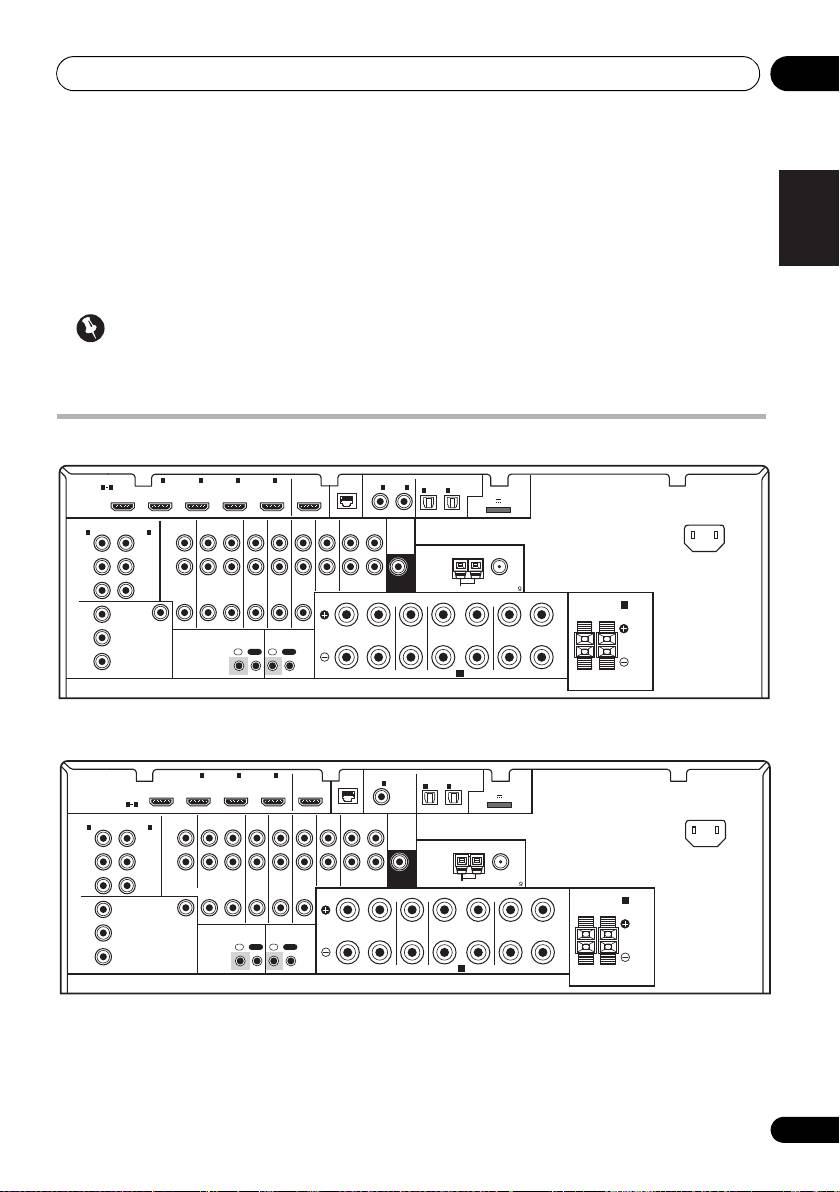
This receiver provides you with many connection possibilities, but it doesn’t have to be difficult.
This page explains the kinds of components you can connect to make up your home theater system.
Deutsch
Important
• Illustration shows the VSX-1020, however connections for the VSX-1025 and the VSX-920 are
the same except where noted.
Français
Rear panel
Italiano
Nederlands
Español
15
En
HDMI
BD IN IN IN IN IN
1
2 3 4
OUT
LAN
COAXIAL
ASSIGNABLE
OPTICAL
ASSIGNABLE
1 4
(
10/100
)
IN
1
IN
2
ASSIGNABLE
IN
1
IN
2
ADAPTER PORT
(
OUTPUT 5 V 100 mA MAX
)
AC IN
(
DVD
)
(
CD
)
(
TV/SAT
)
(
DVR/BDR
)
COMPONENT VIDEO
AUDIO
IN
1
ASSIGNABLE
IN
2
PRE OUT
(
DVD
)
(
DVR/BDR
)
Y
Y
L
ANTENNA
PB
P
B
R
ZONE 2
DVR/BDR
DVD
TV/SAT
VIDEO
CD
CD-R/TAPE
SUBWOOFER
PR
PR
OUT
OUT IN
IN
IN
IN
OUT ININ
AM LOOP
FM UNBAL 75
FRONT CENTER SURROUND
SURROUND BACK
R
LR LR L
(
Single
)
SPEAKERS
MONITOR
FRONT HEIGHT/WIDE/
B
Y
OUT
RL
VIDEO
P
B
IR CONTROL
IN
OUT
IN
OUT
PR
SPEAKERS
A
VSX-1020/VSX-1025
BD IN IN IN IN
1
2 3
OUT
LAN
COAXIAL
ASSIGNABLE
OPTICAL
(
10/100
)
IN
1
ASSIGNABLE
IN
1
IN
2
HDMI
ADAPTER PORT
ASSIGNABLE
(
OUTPUT 5 V 100 mA MAX
)
1 3
AC IN
(
DVD
)
(
TV/SAT
)
(
DVR/BDR
)
COMPONENT VIDEO
AUDIO
IN
1
ASSIGNABLE
IN
2
PRE OUT
(
DVD
)
(
DVR/BDR
)
Y
Y
L
ANTENNA
PB
P
B
R
ZONE 2
DVR/BDR
DVD
TV/SAT
VIDEO 1
CD
CD-R/TAPE
SUBWOOFER
PR
PR
OUT
OUT IN
IN
IN
IN
OUT ININ
AM LOOP
FM UNBAL 75
FRONT CENTER SURROUND
SURROUND BACK
R
LR LR L
(
)
SPEAKERS
Single
MONITOR
FRONT HEIGHT/WIDE/
B
Y
OUT
RL
VIDEO
P
B
IR CONTROL
IN
OUT
IN
OUT
PR
SPEAKERS
A
VSX-920
VSX-1020_SYXCN.book 15 ページ 2010年3月12日 金曜日 午前9時10分

VSX-1020_SYXCN.book 16 ページ 2010年3月12日 金曜日 午前9時10分
Connecting your equipment03
CAUTION
• Before making or changing the
connections, switch off the power and
disconnect the power cord from the power
outlet. Plugging in should be the final step.
Important
• The input functions below are assigned by
default to the receiver’s different input
terminals. Refer to The Input Setup menu
on page 42 to change the assignments if
other connections are used.
Input Terminals
Input
function
Digital HDMI
Component
DVD COAX-1 IN 1
BD (BD)
TV/SAT OPT-1
DVR/BDR OPT-2 IN 2
HDMI 1
(HDMI-1)
HDMI 2
(HDMI-2)
HDMI 3
(HDMI-3)
a
HDMI 4
(HDMI-4)
a
HDMI 5
(HDMI-5)
(front panel)
a
CD COAX-2
a. VSX-1020/VSX-1025 only
16
En
Connecting your equipment 03
[B] 9.1 channel surround system (Front
English
Determining the speakers’
wide)
•
Speaker System setting: Normal(SB/FW)
application
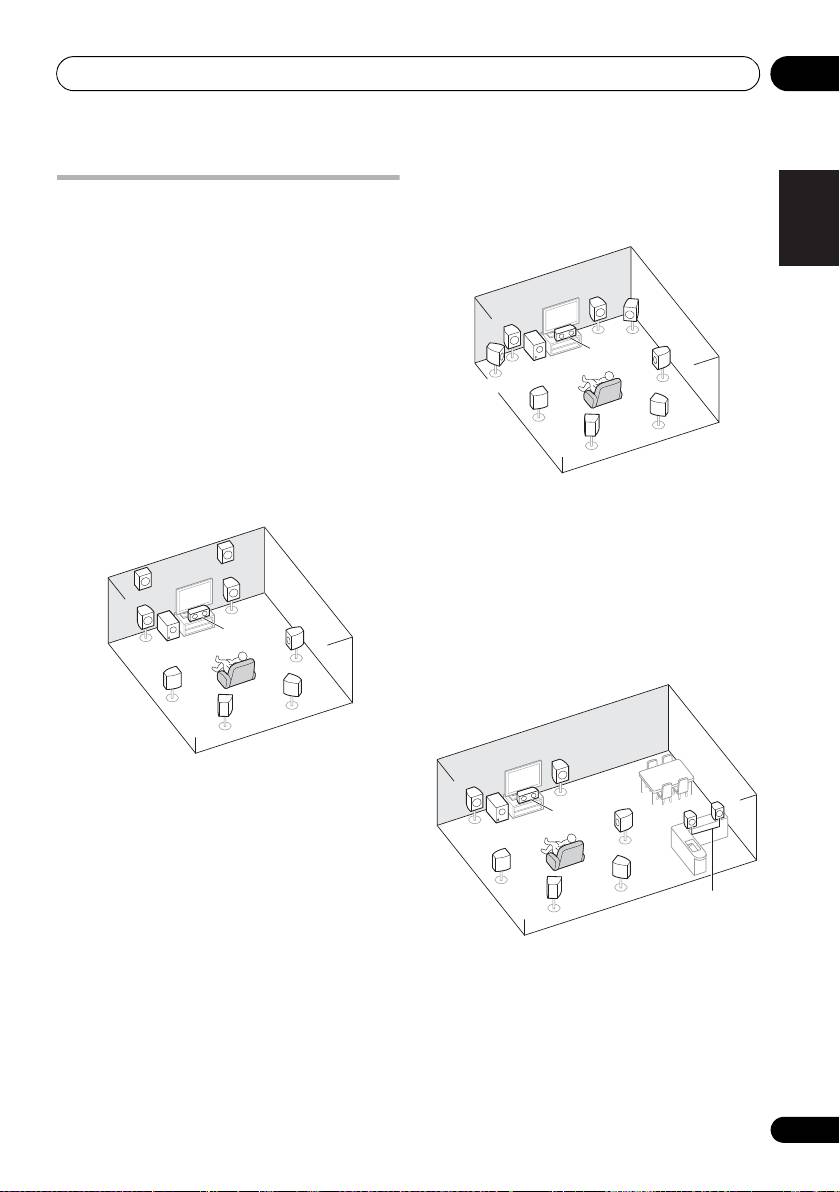
This unit permits you to build various surround
systems, in accordance with the number of
speakers you have.
R
Deutsch
FWR
• Be sure to connect speakers to the front
L
left and right channels (L and R).
C
SR
• It is also possible to only connect one of the
SW
surround back speakers (SB) or neither.
FWL
Choose one from Plans [A] to [E] below.
Français
SBR
SL
[A] 9.1 channel surround system (Front
SBL
height)
*Default setting
This plan replaces the left and right front
• Speaker System setting: Normal(SB/FH)
height speakers shown in [A] with the left and
Italiano
right front wide speakers (FWL/FWR).
FHR
This surround system produces a true-to-life
FHL
R
sound over a wider area.
[C] 7.1 channel surround system &
L
Nederlands
C
SR
Speaker B connection
SW
• Speaker System setting: Speaker B
SBR
SL
SBL
Español
R
A 9.1 ch surround system connects the left and
L
right front speakers (L/R), the center speaker
R
C
SR
L
(C), the left and right front height speakers
SW
(FHL/FHR), the left and right surround
speakers (SL/SR), the left and right surround
back speakers (SBL/SBR), and the subwoofer
SBR
SL
(SW).
SBL
This surround system produces a more true-to-
life sound from above.
With these connections you can
simultaneously enjoy 5.1-channel surround
sound in the main zone with stereo playback of
the same sound on the B speakers. The same
connections also allow for 7.1-channel
surround sound in the main zone when not
using the B speakers.
17
En
Speaker B
VSX-1020_SYXCN.book 17 ページ 2010年3月12日 金曜日 午前9時10分
Connecting your equipment03
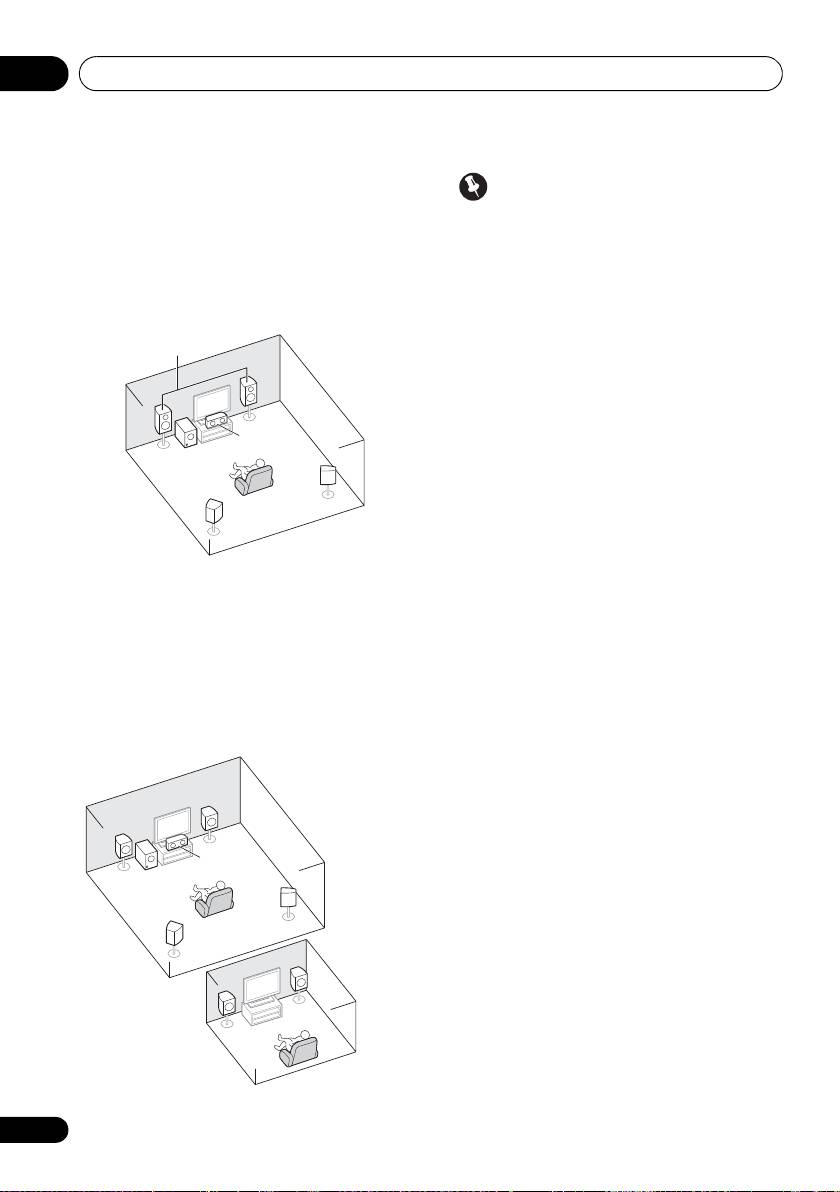
[D] 5.1 channel surround system & Front
Important
Bi-amping connection (High quality
•The Speaker System setting must be
surround)
made if you use any of the connections
• Speaker System setting: Front Bi-Amp
shown above other than [A] (see Speaker
Bi-amping connection of the front speakers for
system setting on page 101).
high sound quality with 5.1-channel surround
• Sound does not come through
sound.
simultaneously from the front height, front
wide, speaker B and surround back
speakers. Output speakers are different
depending on the input signal or listening
mode.
Other speaker connections
• Your favorite speaker connections can be
selected even if you have fewer than 5.1
speakers (except front left/right speakers).
• When not connecting a subwoofer,
connect speakers with low frequency
reproduction capabilities to the front
[E] 5.1 channel surround system & ZONE
channel. (The subwoofer’s low frequency
2 connection (Multi Zone)
component is played from the front
• Speaker System setting: ZONE 2
speakers, so the speakers could be
damaged.)
With these connections you can
simultaneously enjoy 5.1-channel surround
• After connecting, be sure to conduct
sound in the main zone with stereo playback
the Auto MCACC (speaker environment
on another component in ZONE 2 (The
setting) procedure.
selection of input devices is limited.)
See Automatically conducting optimum
sound tuning (Auto MCACC) on page 39.
18
En
R
L
C
SW
SR
SL
Front Bi-Amp
R
L
C
SW
SR
SL
R
L
Main zone
Sub zone
ZONE 2
VSX-1020_SYXCN.book 18 ページ 2010年3月12日 金曜日 午前9時10分
Connecting your equipment 03
Placing the speakers
Some tips for improving sound quality
English
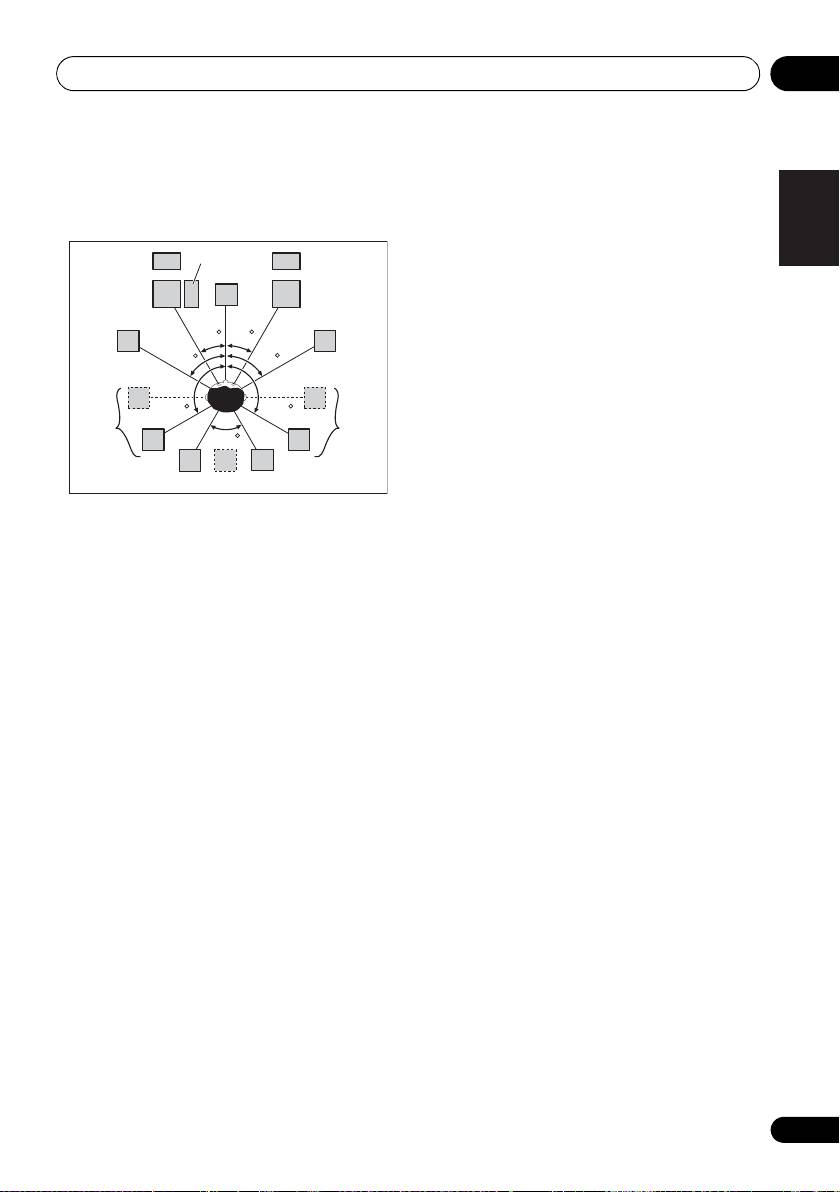
Refer to the chart below for placement of the
Where you put your speakers in the room has
speakers you intend to connect.
a big effect on the quality of the sound. The
following guidelines should help you to get the
best sound from your system.
• The subwoofer can be placed on the floor.
Deutsch
Ideally, the other speakers should be at
about ear-level when you’re listening to
them. Putting the speakers on the floor
(except the subwoofer), or mounting them
very high on a wall is not recommended.
Français
• For the best stereo effect, place the front
speakers 2 m to 3 m apart, at equal
distance from the TV.
• If you’re going to place speakers around
your CRT TV, use shielded speakers or
• Place the surround speakers at 120º from
place the speakers at a sufficient distance
Italiano
the center. If you, (1) use the surround back
from your CRT TV.
speaker, and, (2) don’t use the front height
• If you’re using a center speaker, place the
speakers / front wide speakers, we
front speakers at a wider angle. If not,
recommend placing the surround speaker
place them at a narrower angle.
right beside you.
Nederlands
• Place the center speaker above or below
• If you intend to connect only one surround
the TV so that the sound of the center
back speaker, place it directly behind you.
channel is localized at the TV screen. Also,
• Place the left and right front height
make sure the center speaker does not
speakers at least 1 m directly above the left
cross the line formed by the leading edge
and right front speakers.
of the front left and right speakers.
Español
• It is best to angle the speakers towards the
listening position. The angle depends on
the size of the room. Use less of an angle
for bigger rooms.
• Surround and surround back speakers
should be positioned 60 cm to 90 cm higher
than your ears and tilted slightly downward.
Make sure the speakers don’t face each
other. For DVD-Audio, the speakers should
be more directly behind the listener than for
home theater playback.
• Try not to place the surround speakers
farther away from the listening position
than the front and center speakers. Doing
so can weaken the surround sound effect.
19
En
SW
FHL
FHR
C
L
R
30 30
FWL
FWR
60
60
120 120
SL
SR
60
SBL
SB
SBR
VSX-1020_SYXCN.book 19 ページ 2010年3月12日 金曜日 午前9時10分
Connecting your equipment03
Important
Connecting the speakers
Each speaker connection on the receiver
• Please refer to the manual that came with
comprises a positive (+) and negative (–)
your speakers for details on how to connect
terminal. Make sure to match these up with the
the other end of the speaker cables to your
terminals on the speakers themselves.
speakers.
• Use an RCA cable to connect the subwoofer.
It is not possible to connect using speaker
CAUTION
cables.
• These speaker terminals carry
HAZARDOUS LIVE voltage. To prevent
CAUTION
the risk of electric shock when connecting
or disconnecting the speaker cables,
• Make sure that all speakers are securely
disconnect the power cord before touching
installed. This not only improves sound
any uninsulated parts.
quality, but also reduces the risk of
• Make sure that all the bare speaker wire is
damage or injury resulting from speakers
twisted together and inserted fully into the
being knocked over or falling in the event of
speaker terminal. If any of the bare speaker
external shocks such as earthquakes.
wire touches the back panel it may cause
the power to cut off as a safety measure.
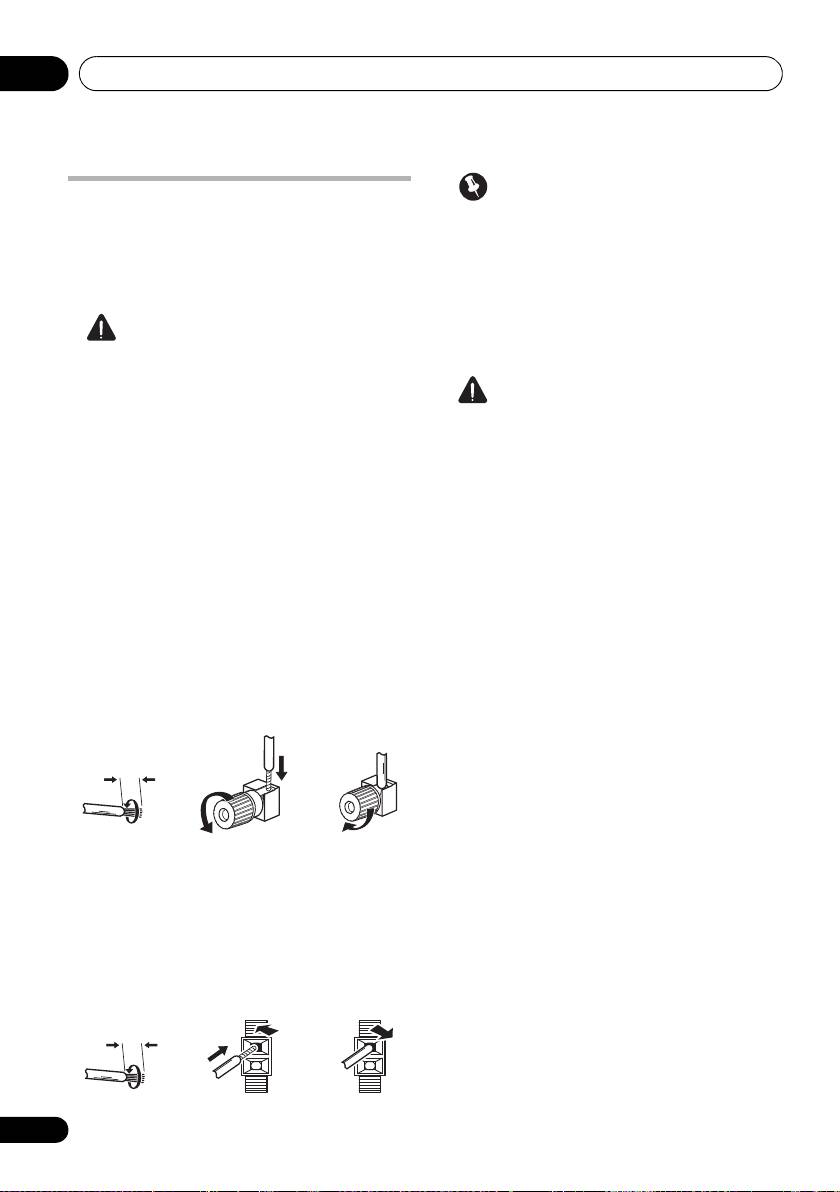
Bare wire connections
A-Speaker terminals:
1 Twist exposed wire strands together.
2 Loosen terminal and insert exposed wire.
3 Tighten terminal.
B-Speaker terminals:
1 Twist exposed wire strands together.
2 Push open the tabs and insert exposed
wire.
3 Release the tabs.
20
En
12 3
10 mm
12 3
10 mm
VSX-1020_SYXCN.book 20 ページ 2010年3月12日 金曜日 午前9時10分
