Pioneer X-CM31-T: instruction
Class: Household, kitchen appliances, electronics and equipment
Type: Home Theater System
Manual for Pioneer X-CM31-T
Table of contents
- IMPORTANT VENTILATION CAUTION Operating Environment
- Information for users on collection and disposal of old equipment and used batteries
- Contents
- Chapter 1: Before you start What’s in the box Loading the batteries in the remote control
- Chapter 2: Part names and functions Remote control
- Part names and functions 02 Speaker system
- Front panel
- Top panel
- Chapter 3: Connections Connecting a TV Speaker connection
- Connecting antennas Plugging in
- Chapter 4: Getting started General control Setting the clock
- Sound controls Setting the wake-up timer
- Using Headphones Using the sleep timer
- Chapter 5: iPod/iPhone/iPad playback Confirming what iPod/iPhone/iPad models are supported Connecting your iPod/iPhone/iPad
- Connecting iPod/iPhone to the top panel
- Watching iPod/iPhone videos on your Playing iPad Playing iPod/iPhone
- Chapter 6: Disc playback Playing discs or files
- Advanced CD or MP3/WMA disc playback
- Programmed play (CD or MP3/WMA) About downloading MP3/WMA About folder playback order
- Specify the folder to play Switch the display contents
- Chapter 7: USB playback Playing USB storage devices
- Playing in the desired order (Programmed Play)
- Chapter 8: Using the tuner Listening to the radio broadcasts
- Using the Radio Data System (RDS) Searching for RDS programs An introduction to RDS
- Information provided by RDS Notes for RDS operation Using the Auto Station program Memory (ASPM)
- Chapter 9: Other connections Connecting auxiliary components
- Chapter 10: Additional information Troubleshooting General problem Problem Check Remedy
- When a USB storage device is connected Problem Check Remedy When an iPod/iPhone/iPad is connected Problem Remedy
- Playable discs and formats Cautions on use
- Handling discs
- About iPod/iPhone/iPad
- Specifications
;&0B6<;(B&RYHUB$QNLIP࣮࣌ࢪ㸰㸮㸯㸱ᖺ㸴᭶㸯㸱᪥ࠉᮌ᭙᪥ࠉ༗ᚋ㸲㸰㸴ศ
X-CM31
-K/-W/-T/-R/-J/-N
CD Receiver System | Micro chaîne CD | Sistema receptor de CD |
CD-Receiversystem | Sistema CD con amplificatore |
CD Receiver System | Система ресивера CD
Discover the benefits of registering your product online at
http://www.pioneer.co.uk
(or http://www.pioneer.eu).
Découvrez les nombreux avantages offerts en enregistrant
votre produit en ligne maintenant sur
http://www.pioneer.fr
(ou http://www.pioneer.eu).
Bitte nutzen Sie die Möglichkeit zur Registrierung Ihres
Produktes unter
http://www.pioneer.de
(oder
http://www.pioneer.eu)
Registra il tuo prodotto su
http://www.pioneer.it
(o
http://www.pioneer.eu) e scopri subito quali vantaggi puoi
ottenere!
Ontdek nu de voordelen van online registratie! Registreer uw
Pioneer product via
http://www.pioneer.nl -
http://www.pioneer.be
(of http://www.pioneer.eu)
Registre su producto en
http://www.pioneer.es
(o en
http://www.pioneer.eu) Descubra los beneficios de
registrarse on-line:
Зарегистрируйт е Baшe изделие на
http://www.pioneer-rus.ru
(или http://www.pioneer.eu).
Oзнакомьт есь с преимуществами регистрации в Интернет
Operating Instructions
Mode d’emploi
Bedienungsanleitung
Istruzioni per l’uso
Handleiding
Manual de instrucciones
Инструкции по эксплуатации
IMPORTANT
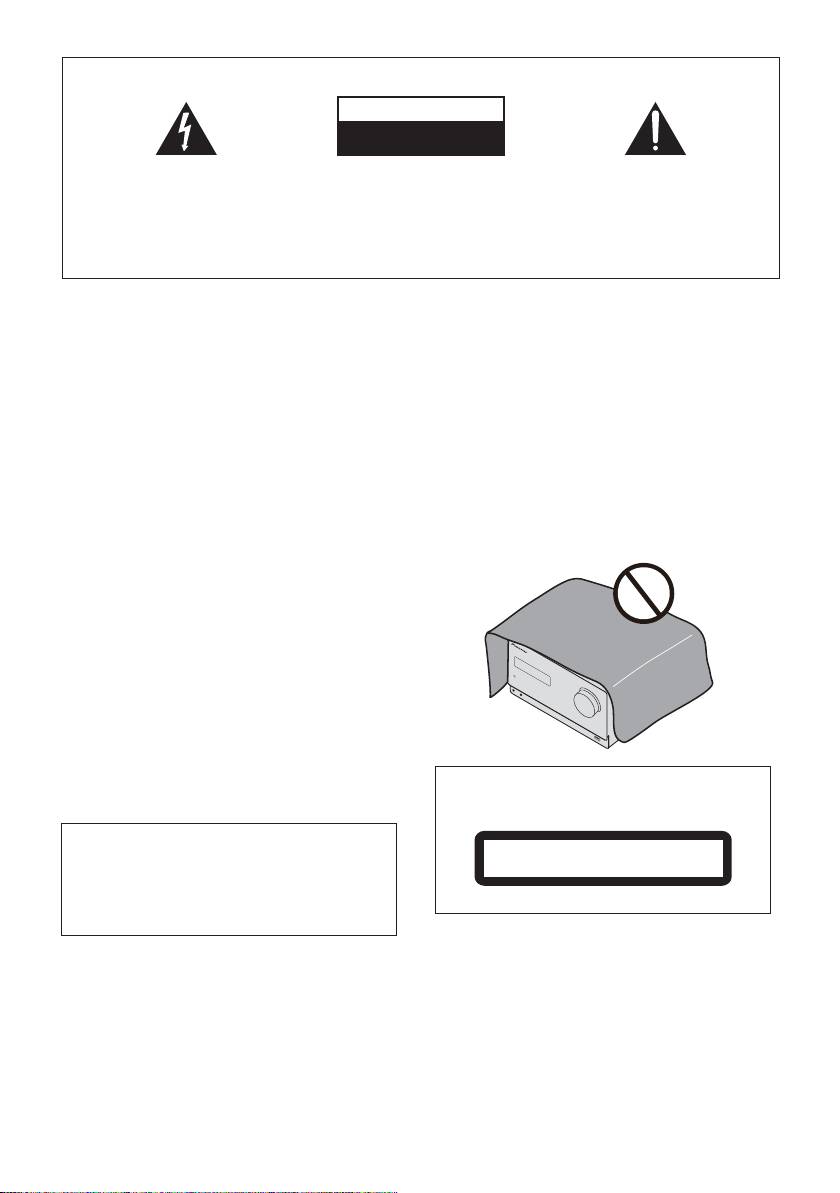
CAUTION
RISK OF ELECTRIC SHOCK
DO NOT OPEN
The lightning flash with arrowhead symbol,
CAUTION:
The exclamation point within an equilateral
within an equilateral triangle, is intended to
TO PREVENT THE RISK OF ELECTRIC
triangle is intended to alert the user to the
alert the user to the presence of uninsulated
SHOCK, DO NOT REMOVE COVER (OR
presence of important operating and
“dangerous voltage” within the product’s
BACK). NO USER-SERVICEABLE PARTS
maintenance (servicing) instructions in the
enclosure that may be of sufficient
INSIDE. REFER SERVICING TO QUALIFIED
literature accompanying the appliance.
magnitude to constitute a risk of electric
SERVICE PERSONNEL.
shock to persons.
D3-4-2-1-1_A1_En
WARNING
VENTILATION CAUTION
This equipment is not waterproof. To prevent a fire or
When installing this unit, make sure to leave space
shock hazard, do not place any container filled with
around the unit for ventilation to improve heat radiation
liquid near this equipment (such as a vase or flower
(at least 25 cm at top, 15 cm at rear, and 5 cm at each
pot) or expose it to dripping, splashing, rain or
side).
moisture.
WARNING
D3-4-2-1-3_A1_En
Slots and openings in the cabinet are provided for
WARNING
ventilation to ensure reliable operation of the product,
Before plugging in for the first time, read the following
and to protect it from overheating. To prevent fire
section carefully.
hazard, the openings should never be blocked or
The voltage of the available power supply differs
covered with items (such as newspapers, table-cloths,
according to country or region. Be sure that the
curtains) or by operating the equipment on thick carpet
power supply voltage of the area where this unit
or a bed.
D3-4-2-1-7b*_A1_En
will be used meets the required voltage (e.g., 230 V
or 120 V) written on the rear panel.
D3-4-2-1-4*_A1_En
WARNING
To prevent a fire hazard, do not place any naked flame
sources (such as a lighted candle) on the equipment.
D3-4-2-1-7a_A1_En
Operating Environment
Operating environment temperature and humidity:
+5 °C to +35 °C (+41 °F to +95 °F); less than 85 %RH
(cooling vents not blocked)
Do not install this unit in a poorly ventilated area, or in
locations exposed to high humidity or direct sunlight (or
CAUTION
strong artificial light)
D3-4-2-1-7c*_A1_En
This product is a class 1 laser product classified
under the Safety of laser products, IEC 60825-1:2007.
This product is for general household purposes. Any
failure due to use for other than household purposes
CLASS 1 LASER PRODUCT
(such as long-term use for business purposes in a
restaurant or use in a car or ship) and which requires
D58-5-2-2a_A1_En
repair will be charged for even during the warranty
period.
K041_A1_En
WARNING
Store small parts out of the reach of children and
infants. If accidentally swallowed, contact a doctor
immediately.
;&0B6<;(B(QERRN࣮࣌ࢪ㸰㸮㸯㸱ᖺ㸲᭶㸶᪥ࠉ᭶᭙᪥ࠉ༗๓㸯㸯㸲㸷ศ
Information for users on collection and disposal of old equipment and used batteries
Symbol for
These symbols on the products, packaging, and/or accompanying documents mean
equipment
that used electrical and electronic products and batteries should not be mixed with
general household waste.
For proper treatment, recovery and recycling of old products and used batteries,
please take them to applicable collection points in accordance with your national
legislation.
By disposing of these products and batteries correctly, you will help to save valuable
Symbol examples
resources and prevent any potential negative effects on human health and the
for batteries
environment which could otherwise arise from inappropriate waste handling.
For more information about collection and recycling of old products and batteries,
please contact your local municipality, your waste disposal service or the point of sale
where you purchased the items.
These symbols are only valid in the European Union.
For countries outside the European Union:
If you wish to discard these items, please contact your local authorities or dealer and
ask for the correct method of disposal.
Pb
K058a_A1_En
If the AC plug of this unit does not match the AC
CAUTION
outlet you want to use, the plug must be removed
The
STANDBY/ON switch on this unit will not
and appropriate one fitted. Replacement and
completely shut off all power from the AC outlet.
mounting of an AC plug on the power supply cord of
Since the power cord serves as the main disconnect
this unit should be performed only by qualified
device for the unit, you will need to unplug it from the
service personnel. If connected to an AC outlet, the
AC outlet to shut down all power. Therefore, make
cut-off plug can cause severe electrical shock. Make
sure the unit has been installed so that the power
sure it is properly disposed of after removal.
plug can be easily unplugged from the AC outlet in
The equipment should be disconnected by removing
case of an accident. To avoid fire hazard, the power
the mains plug from the wall socket when left unused
cord should also be unplugged from the AC outlet
for a long period of time (for example, when on
when left unused for a long period of time (for
vacation).
D3-4-2-2-1a_A1_En
example, when on vacation).
D3-4-2-2-2a*_A1_En
POWER-CORD CAUTION
Handle the power cord by the plug. Do not pull out the
plug by tugging the cord and never touch the power
cord when your hands are wet as this could cause a
short circuit or electric shock. Do not place the unit, a
piece of furniture, etc., on the power cord, or pinch the
cord. Never make a knot in the cord or tie it with other
cords. The power cords should be routed such that they
are not likely to be stepped on. A damaged power cord
can cause a fire or give you an electrical shock. Check
the power cord once in a while. When you find it
damaged, ask your nearest PIONEER authorized
service center or your dealer for a replacement.
S002*_A1_En
;&0B6<;(B(QERRN࣮࣌ࢪ㸰㸮㸯㸱ᖺ㸲᭶㸶᪥ࠉ᭶᭙᪥ࠉ༗๓㸯㸯㸲㸷ศ

;&0B6<;(B(QERRN࣮࣌ࢪ㸰㸮㸯㸱ᖺ㸲᭶㸶᪥ࠉ᭶᭙᪥ࠉ༗๓㸯㸯㸲㸷ศ
Thank you for buying this Pioneer product.
Please read through these operating instructions so that you will know how to operate your model properly. After you
have finished reading the instructions, put them in a safe place for future reference.
Contents
01 Contents
06 Disc playback
Playing discs or files . . . . . . . . . . . . . . . . . . . . . . . . . . . 18
01 Before you start
Advanced CD or MP3/WMA disc playback . . . . . . . . . 19
What’s in the box . . . . . . . . . . . . . . . . . . . . . . . . . . . . . . . 5
Direct track search . . . . . . . . . . . . . . . . . . . . . . . . . . . . . 19
Loading the batteries in the remote control . . . . . . . . . 5
Repeat play. . . . . . . . . . . . . . . . . . . . . . . . . . . . . . . . . . . . 19
Using the remote control . . . . . . . . . . . . . . . . . . . . . . . . . 5
Random play . . . . . . . . . . . . . . . . . . . . . . . . . . . . . . . . . . 19
Programmed play (CD or MP3/WMA) . . . . . . . . . . . . . . 20
02 Part names and functions
About downloading MP3/WMA . . . . . . . . . . . . . . . . . . . 20
Remote control . . . . . . . . . . . . . . . . . . . . . . . . . . . . . . . . 6
About folder playback order . . . . . . . . . . . . . . . . . . . . . . 20
Speaker system . . . . . . . . . . . . . . . . . . . . . . . . . . . . . . . . 7
Specify the folder to play. . . . . . . . . . . . . . . . . . . . . . . . . 21
Attaching the Non-skid pads . . . . . . . . . . . . . . . . . . . . . . 7
Switch the display contents . . . . . . . . . . . . . . . . . . . . . . 21
Front panel . . . . . . . . . . . . . . . . . . . . . . . . . . . . . . . . . . . . 8
Top panel . . . . . . . . . . . . . . . . . . . . . . . . . . . . . . . . . . . . . 9
07 USB playback
Playing USB storage devices . . . . . . . . . . . . . . . . . . . . 22
03 Connections
Repeat play. . . . . . . . . . . . . . . . . . . . . . . . . . . . . . . . . . . . 22
Speaker connection . . . . . . . . . . . . . . . . . . . . . . . . . . . 10
Random play . . . . . . . . . . . . . . . . . . . . . . . . . . . . . . . . . . 22
Connecting a TV . . . . . . . . . . . . . . . . . . . . . . . . . . . . . . 10
Specify the folder to play. . . . . . . . . . . . . . . . . . . . . . . . . 23
Connecting antennas . . . . . . . . . . . . . . . . . . . . . . . . . . 11
Switch the display contents . . . . . . . . . . . . . . . . . . . . . . 23
Using external antennas . . . . . . . . . . . . . . . . . . . . . . . . . 11
Playing in the desired order
Plugging in . . . . . . . . . . . . . . . . . . . . . . . . . . . . . . . . . . . 11
(Programmed Play) . . . . . . . . . . . . . . . . . . . . . . . . . . . . 23
04 Getting started
08 Using the tuner
To turn the power on . . . . . . . . . . . . . . . . . . . . . . . . . . . 12
Listening to the radio broadcasts . . . . . . . . . . . . . . . . 24
Setting the clock . . . . . . . . . . . . . . . . . . . . . . . . . . . . . . 12
Tuning. . . . . . . . . . . . . . . . . . . . . . . . . . . . . . . . . . . . . . . . 24
General control . . . . . . . . . . . . . . . . . . . . . . . . . . . . . . . 12
Saving station presets. . . . . . . . . . . . . . . . . . . . . . . . . . . 24
Input function. . . . . . . . . . . . . . . . . . . . . . . . . . . . . . . . . . 12
To recall a memorised station . . . . . . . . . . . . . . . . . . . . 25
Display brightness control . . . . . . . . . . . . . . . . . . . . . . . 12
To scan the preset stations. . . . . . . . . . . . . . . . . . . . . . . 25
Volume auto set-in. . . . . . . . . . . . . . . . . . . . . . . . . . . . . . 12
To erase entire preset memory. . . . . . . . . . . . . . . . . . . . 25
Volume control. . . . . . . . . . . . . . . . . . . . . . . . . . . . . . . . . 12
Using the Radio Data System (RDS) . . . . . . . . . . . . . . 25
Muting. . . . . . . . . . . . . . . . . . . . . . . . . . . . . . . . . . . . . . . . 12
An introduction to RDS. . . . . . . . . . . . . . . . . . . . . . . . . . 25
Sound controls . . . . . . . . . . . . . . . . . . . . . . . . . . . . . . . 13
Searching for RDS programs. . . . . . . . . . . . . . . . . . . . . 25
Equalizer. . . . . . . . . . . . . . . . . . . . . . . . . . . . . . . . . . . . . . 13
Information provided by RDS . . . . . . . . . . . . . . . . . . . . . 26
P.bass control . . . . . . . . . . . . . . . . . . . . . . . . . . . . . . . . . 13
Using the Auto Station program Memory (ASPM). . . . 26
Bass/treble control . . . . . . . . . . . . . . . . . . . . . . . . . . . . . 13
Notes for RDS operation. . . . . . . . . . . . . . . . . . . . . . . . . 26
Setting the wake-up timer . . . . . . . . . . . . . . . . . . . . . . . 13
09 Other connections
Calling the wake-up timer . . . . . . . . . . . . . . . . . . . . . . . . 14
Connecting auxiliary components . . . . . . . . . . . . . . . . 27
Cancelling the wake-up timer. . . . . . . . . . . . . . . . . . . . . 14
Using the wake-up timer. . . . . . . . . . . . . . . . . . . . . . . . . 14
010 Additional information
Using the sleep timer . . . . . . . . . . . . . . . . . . . . . . . . . . 14
Troubleshooting . . . . . . . . . . . . . . . . . . . . . . . . . . . . . . . 28
Using Headphones . . . . . . . . . . . . . . . . . . . . . . . . . . . . 14
Playable discs and formats . . . . . . . . . . . . . . . . . . . . . 30
05 iPod/iPhone/iPad playback
Regarding copy protected CDs . . . . . . . . . . . . . . . . . . . 30
Supported audio file formats . . . . . . . . . . . . . . . . . . . . . 30
Confirming what iPod/iPhone/iPad models are
Cautions on use . . . . . . . . . . . . . . . . . . . . . . . . . . . . . . . 30
supported . . . . . . . . . . . . . . . . . . . . . . . . . . . . . . . . . . . . 15
When moving this unit . . . . . . . . . . . . . . . . . . . . . . . . . . 30
Connecting your iPod/iPhone/iPad . . . . . . . . . . . . . . . 15
Place of installation. . . . . . . . . . . . . . . . . . . . . . . . . . . . . 30
Connecting iPod/iPhone to the top panel . . . . . . . . . . . 16
Do not place objects on this unit . . . . . . . . . . . . . . . . . . 31
Connecting iPod/iPhone/iPad using supplied stand . . 16
About condensation . . . . . . . . . . . . . . . . . . . . . . . . . . . . 31
Watching iPod/iPhone videos on your TV . . . . . . . . . . . 17
Cleaning the product. . . . . . . . . . . . . . . . . . . . . . . . . . . . 31
Playing iPod/iPhone . . . . . . . . . . . . . . . . . . . . . . . . . . . 17
Cleaning the lens. . . . . . . . . . . . . . . . . . . . . . . . . . . . . . . 31
Playing iPad . . . . . . . . . . . . . . . . . . . . . . . . . . . . . . . . . . 17
Handling discs . . . . . . . . . . . . . . . . . . . . . . . . . . . . . . . . 31
Storing . . . . . . . . . . . . . . . . . . . . . . . . . . . . . . . . . . . . . . . 31
Cleaning discs . . . . . . . . . . . . . . . . . . . . . . . . . . . . . . . . . 31
About specially shaped discs. . . . . . . . . . . . . . . . . . . . . 31
About iPod/iPhone/iPad . . . . . . . . . . . . . . . . . . . . . . . . 32
Restoring all the settings to the defaults . . . . . . . . . . 32
Specifications . . . . . . . . . . . . . . . . . . . . . . . . . . . . . . . . 33
4
En
Before you start 01
5
En
English Français Español
Chapter 1:
Before you start
• Batteries may have different voltages, even if they are the
same size and shape. Do not use different types of
What’s in the box
batteries together.
Please confirm that the following accessories are in the box
• To prevent leakage of battery fluid, remove the batteries
when you open it.
if you do not plan to use the remote control for a long
• Remote Control
period of time (1 month or more). If the fluid should leak,
•Power cord
wipe it carefully off the inside of the case, then insert
• AM antenna cable
new batteries. If a battery should leak and the fluid
should get on your skin, flush it off with large quantities
• FM wire antenna
of water.
• AAA batteries (R03) x 2
• When disposing of used batteries, please comply with
• Non-skid pads x 8
governmental regulations or environmental public
•iPad stand
institution’s rules that apply in your country/area.
• Warranty card
• WARNING
• Operating instructions (this document)
Do not use or store batteries in direct sunlight or other
excessively hot place, such as inside a car or near a
heater. This can cause batteries to leak, overheat,
explode or catch fire. It can also reduce the life or
Loading the batteries in the
performance of batteries.
remote control
Using the remote control
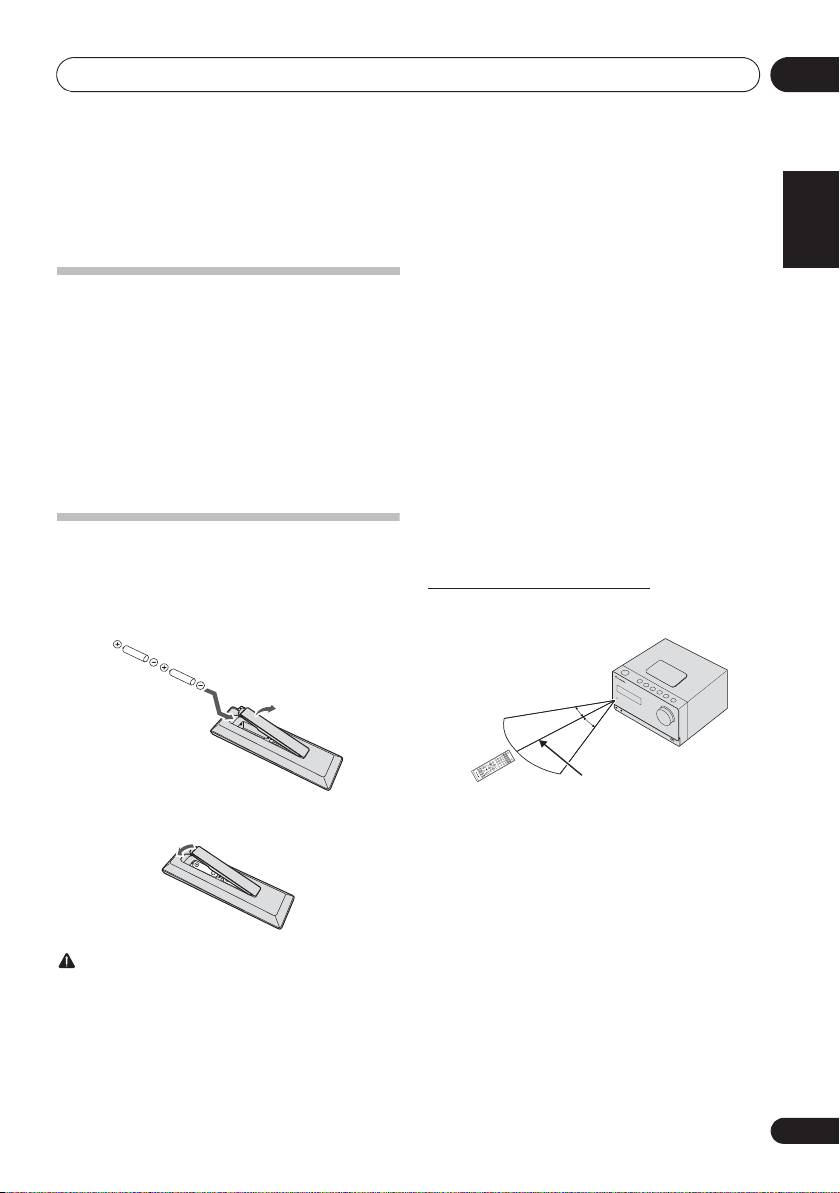
1 Open the rear lid and load the batteries as
The remote has a range of about 7 m at an angle of about 30º
illustrated below.
from the remote sensor.
Keep in mind the following when using the remote control:
2 Close the rear lid.
• Make sure that there are no obstacles between the
remote and the remote sensor on the unit.
• Remote operation may become unreliable if strong
sunlight or fluorescent light is shining on the unit’s
remote sensor.
• Remote controllers for different devices can interfere
with each other. Avoid using remotes for other
equipment located close to this unit.
• Replace the batteries when you notice a fall off in the
CAUTION
operating range of the remote.
• Do not use any batteries other than the ones specified.
Also, do not use a new battery together with an old one.
• When loading the batteries into the remote control, set
them in the proper direction, as indicated by the polarity
marks ( and ).
• Do not heat batteries, disassemble them, or throw them
into flames or water.
AUDIO IN/LIN
STANDBY/ON
123
E
TV O
iPod CD
DISPLAYFO
C
LE
789
4
M
AR RE
5
UT
CLOCK/TI
USB TUNE
ENU
6
EQULIZER
MER
SLEEP
R
OPEN/
CL
O
SE
ST/MONO ASPM
–
PRESET VOL
+
TUN
E
–
ENTER
TUNE+
0
R
A
NDOM
PEAT
BAS
S/
T
RE
B
LE
P.B
A
SS
RDS
D
IM
M
E
R
M
PT
U
T
YDISPLAY
E
MEMORY
/PROGR
L
D
E
R
–
+
U
ME
AM
;&0B6<;(B(QERRN࣮࣌ࢪ㸰㸮㸯㸱ᖺ㸲᭶㸶᪥ࠉ᭶᭙᪥ࠉ༗๓㸯㸯㸲㸷ศ
30°
30°
7 m
Part names and functions02
Chapter 2:
Part names and functions
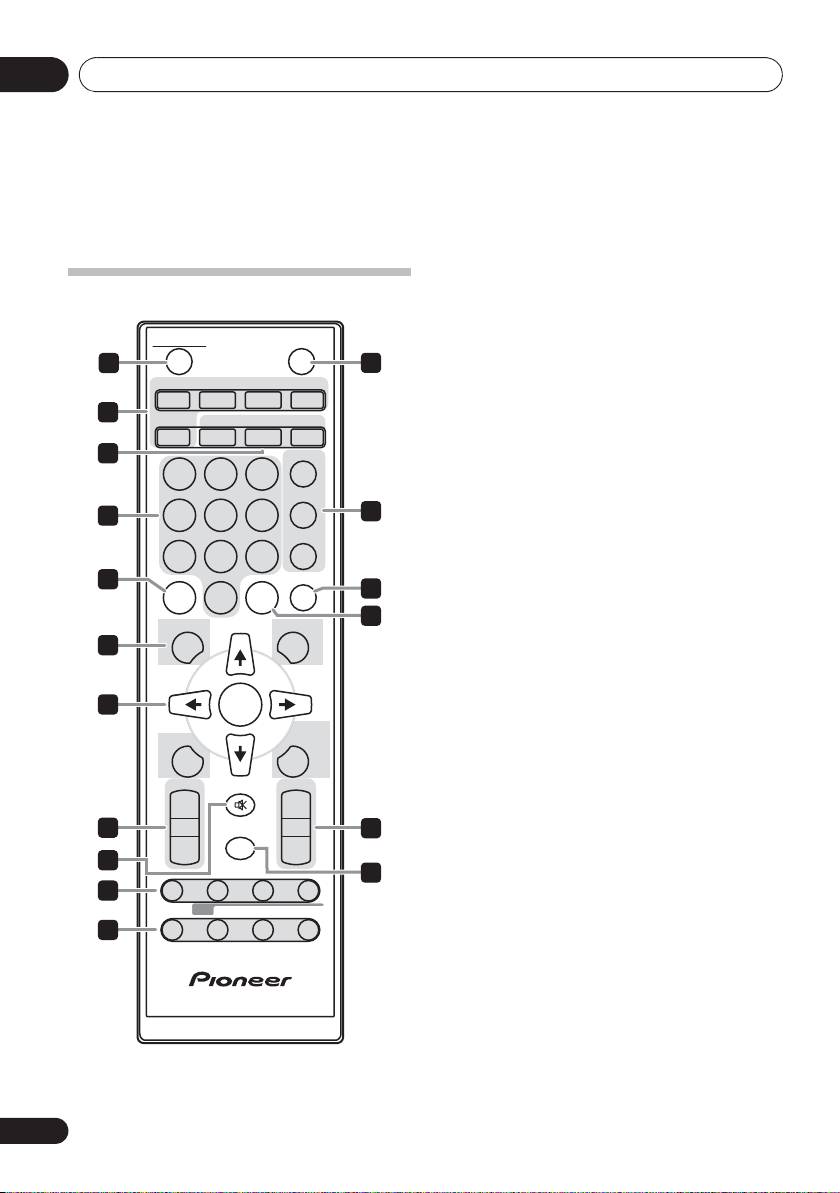
1 1 STANDBY/ON
Remote control
Switches the receiver between standby and on (page 18).
2 Input function buttons
Use to select the input source to this receiver (page 18).
3 CD Receiver control buttons
TV OUT
Setting iPod/iPhone video on/off.
CLOCK/TIMER
Use for setting the clock, as well as for setting and
checking the timers (page 12).
SLEEP
See Using the sleep timer on page 14.
4 Numeric buttons (0 to 9)
Use to enter the number (page 19).
5
CLEAR
Use to clear the programmed play (page 20).
6 CD Receiver control buttons
DISPLAY
Press to change the display for songs playing back from
CD or USB (page 21).
FOLDER
Use to select the folder of the MP3/WMA disc or USB
mass storage device (page 20).
MENU
Use to access the menu.
MEMORY/PROGRAM
Use to memory or program the MP3/WMA disc
(page 20).
7
F
/
G
/
H
/
I
(TUNE +/–), ENTER
Use to select/switch system settings and modes, and to
confirm actions.
Use TUNE +/– can be used to find radio frequencies
(page 24).
8 PRESET control buttons
Use to select preset radio stations (page 24).
9
MUTE
Mutes/unmutes the sound (page 12).
10 Playback control buttons
Use to control each function after you have selected it using
the input function buttons (page 18).
6
En
STANDBY/ON
OPEN/CLOSE
1
12
iPod CD USB TUNER
2
AUDIO IN/LINE
TV OUT
CLOCK/TIMER
SLEEP
3
EQUALIZER
123
P. BAS S
4
456
13
BASS/TREBLE
789
CLEAR REPEAT
RANDOM
5
14
0
15
DISPLAY FOLDER
TUNE+
6
7
ENTER
MEMORY
MENU
/PROGRAM
PRESET VOLUME
TUNE–
+
+
8
MUTE
16
–
–
9
DIMMER
17
10
ST/MONO ASPM PTY DISPLAY
RDS
11
;&0B6<;(B(QERRN࣮࣌ࢪ㸰㸮㸯㸱ᖺ㸲᭶㸶᪥ࠉ᭶᭙᪥ࠉ༗๓㸯㸯㸲㸷ศ
Part names and functions 02
7
En
English Français Español
11
Tuner
control buttons
ST/MONO
Speaker system
Use to switch the sound mode between stereo and
monaural. (page 24)
RDS ASPM
Use to search for RDS Auto station program memory
(page 25).
RDS PTY
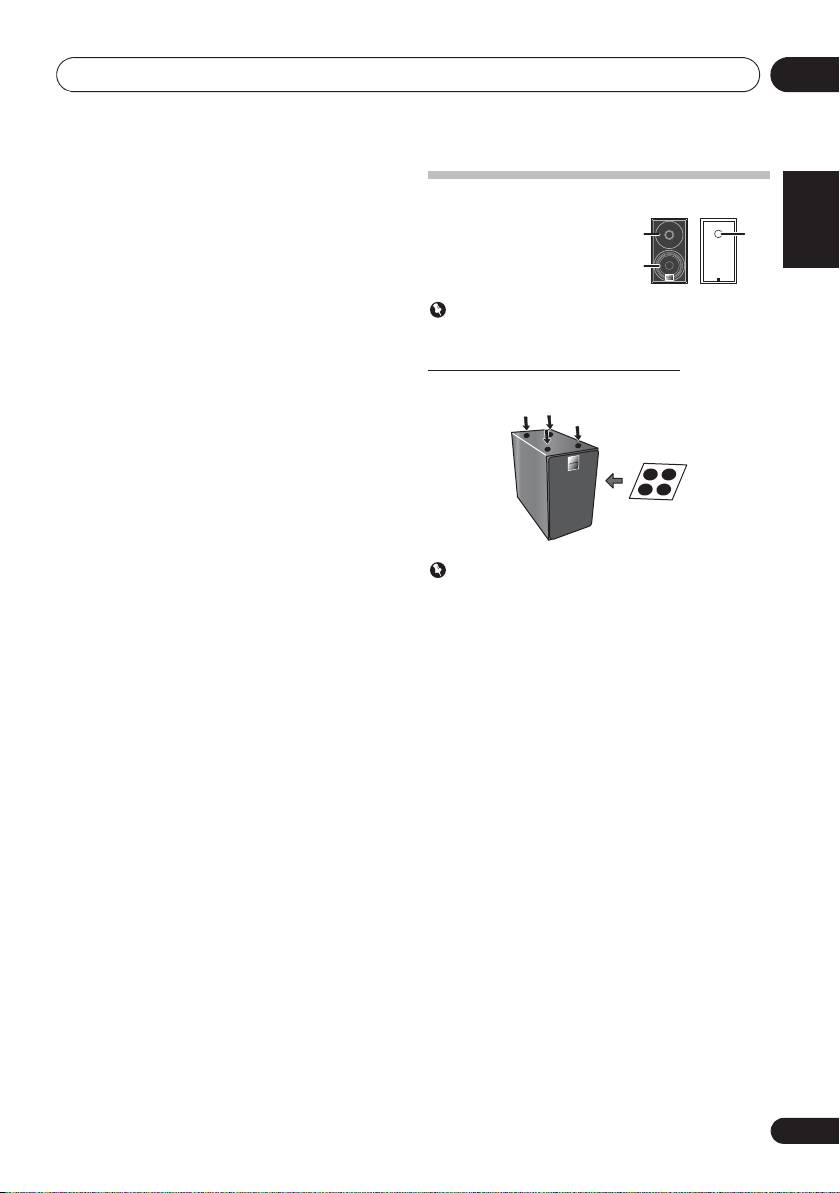
Important
Use to search for RDS program types (page 25).
Speaker grille cannot be removed.
RDS DISPLAY
Attaching the Non-skid pads
Press to change the RDS display for information mode
(page 25).
Apply the accessory non-skid pads to the bottom surfaces of
the speakers.
12 OPEN/CLOSE
Use to open or close the disc tray (page 18).
13 Sound control buttons
Adjust the sound quality (page 13).
14 RANDOM
Press to randomize order play setting from a CD, iPod or USB
(page 19).
15
REPEAT
Press to change the repeat play setting from a CD, iPod or
Important
USB (page 19).
Use the speaker is usually in an upright position.
16 Volume control buttons
Use to set the listening volume (page 12).
17
DIMMER
Dims or brightens the display. The brightness can be
controlled in four steps (page 12).
1
3
2
1 Tweeter
2Woofer
3 Bass Reflex Duct
;&0B6<;(B(QERRN࣮࣌ࢪ㸰㸮㸯㸱ᖺ㸲᭶㸶᪥ࠉ᭶᭙᪥ࠉ༗๓㸯㸯㸲㸷ศ

;&0B6<;(B(QERRN࣮࣌ࢪ㸰㸮㸯㸱ᖺ㸲᭶㸶᪥ࠉ᭶᭙᪥ࠉ༗๓㸯㸯㸲㸷ศ
Part names and functions02
Front panel
2 31
TIMER VOLUME
PHONES AUDIO IN iPad
4 5 6 7 8 9
1Main display
6 Remote sensor
Receives the signals from the remote control.
2 Volume control
Use to set the listening volume (page 12).
7 Disc tray
Place the disc, label side up (page 18).
3 Volume illumination
Light when the power on.
8
TIMER
indicator
Lights when the receiver is power off with timer setting.
4 Headphone socket
Use to connect headphones. When the headphones are
9 USB terminal
connected, there is no sound output from the speakers.
Use to connect your USB mass storage device or Apple iPod/
iPhone/iPad as an audio source (page 22).
5 AUDIO IN socket
Use to connect an auxiliary component using a stereo
minijack cable (page 27).
8
En

Part names and functions 02
9
En
English Français Español
Top panel
1 iPod/iPhone connector port
4 INPUT
To connect the iPod/iPhone, press the PUSH OPEN tab
Selects the input source.
(page 15).
5 Disc tray open/close button
2
1 STANDBY/ON
Use to open or close the disc tray (page 18).
Switches the receiver between standby and on (page 18).
3 Playback control buttons
Selects the desired track or file to be played back. Use to stop
the playback. Stops playback or resumes playback from the
pause point.
1
PUSH OPEN
STANDBY/ON
INPUT
2 5
3 4
;&0B6<;(B(QERRN࣮࣌ࢪ㸰㸮㸯㸱ᖺ㸲᭶㸶᪥ࠉ᭶᭙᪥ࠉ༗๓㸯㸯㸲㸷ศ
;&0B6<;(B(QERRN࣮࣌ࢪ㸰㸮㸯㸱ᖺ㸲᭶㸶᪥ࠉ᭶᭙᪥ࠉ༗๓㸯㸯㸲㸷ศ
Connections03
Chapter 3:
Connections
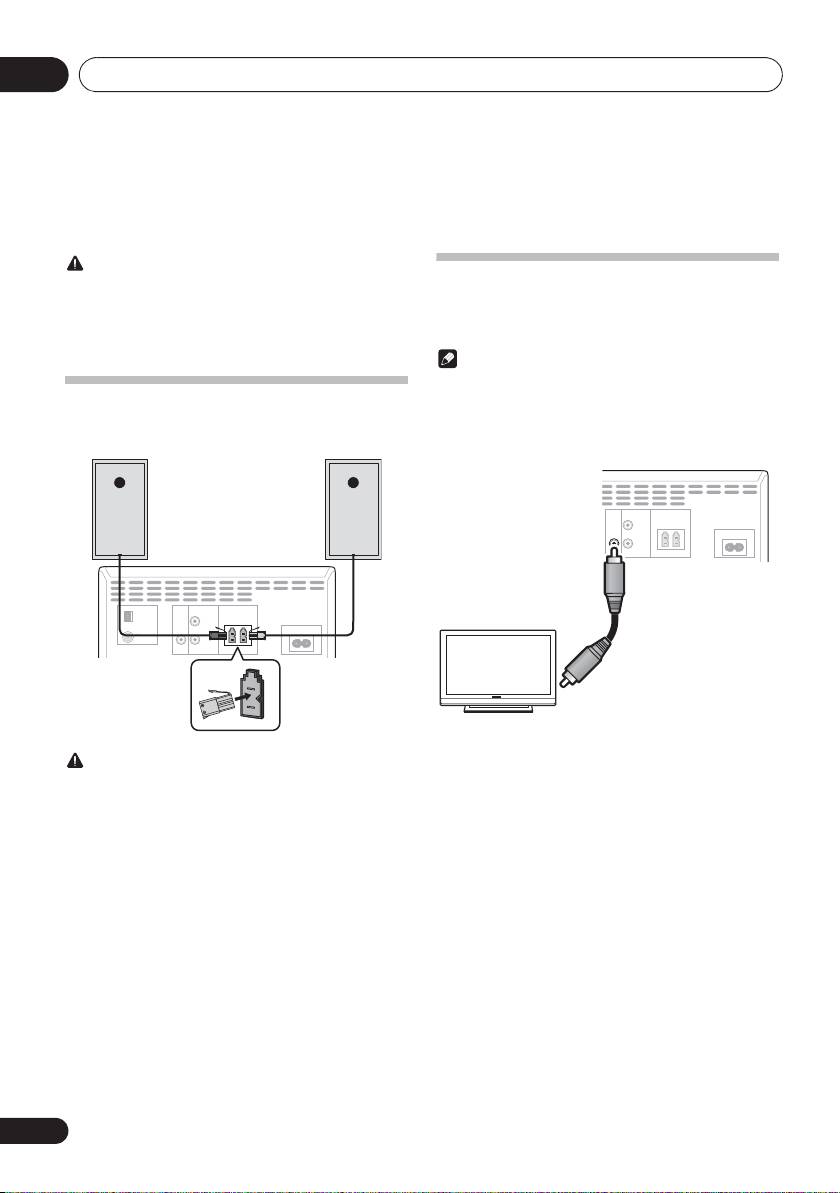
CAUTION
Connecting a TV
• Be sure to turn off the power and unplug the power cord
from the power outlet whenever making or changing
• When an iPod/iPhone is connected to this unit, the TV
connections.
output setting of iPod/iPhone is automatically set to
• Connect the power cord after all the connections
‘ON’.
between devices have been completed.
Note
• Some iPod allow the TV output setting to be changed
while connected.
Speaker connection
• When the iPod/iPhone is disconnected from this unit,
To connect the speaker cord to the connector, insert into the
the iPod/iPhone’s TV output setting returns to its original
speaker connector of the rear of the receiver.
state.
This unit’s rear panel
Right
Left
VIDEO LINE
SPEAKERS
speaker
speaker
OUT IN
R
AC IN
L
This unit’s rear panel
RL
Video cable
(commercially available)
Yellow
ANTENNA VIDEO LINE
SPEAKERS
AM
OUT IN
LOOP
R
TV
AC IN
FM
UNBAL 75 Ω
L
RL
To video input
terminal
CAUTION
• These speaker terminals carry HAZARDOUS LIVE
voltage. To prevent the risk of electric shock when
connecting or disconnecting the speaker cables,
disconnect the power cord before touching any
uninsulated parts.
• Do not connect any speakers other than those supplied
to this system.
• Do not connect the supplied speakers to any amplifier
other than the one supplied with this system.
Connection to any other amplifier may result in
malfunction or fire.
• Do not attach these speakers to the wall or ceiling. They
may fall off and cause injury.
• These speakers are magnetically shielded. However,
depending on the installation location, color distortion
may occur if the speaker system is installed extremely
close to the screen of a television set. If this happens,
turn off the television set, and then turn it on after 15 to
30 minutes. If the problem persists, move the speaker
system away from the television set.
10
En
Connections 03
11
En
English Français Español
Using external antennas
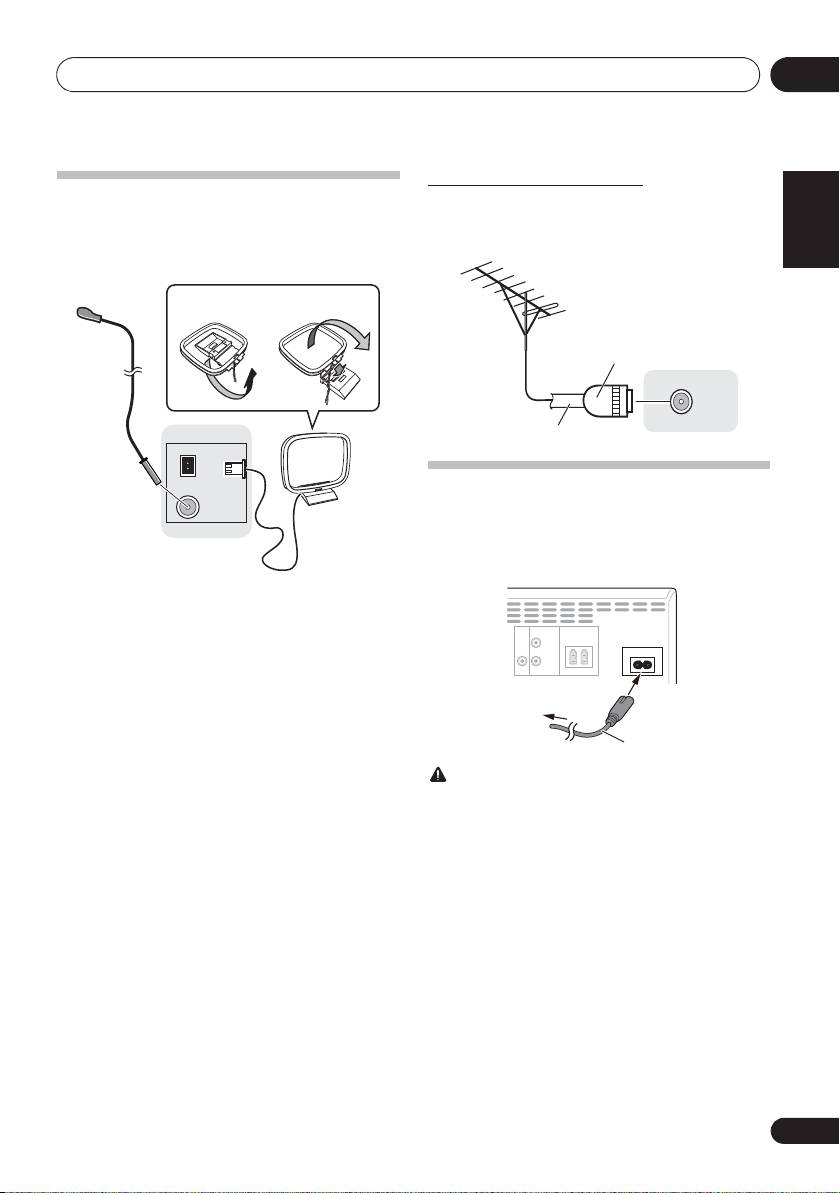
Connecting antennas
To improve FM reception
Connect the AM loop antenna and the FM wire antenna as
Use a PAL connector (not supplied) to connect an external
shown below. To improve reception and sound quality,
FM antenna.
connect external antennas (see Using external antennas
below).
fig. a
fig. b
One-touch PAL
connector
ANTENNA
FM
UNBAL 75 Ω
75 :coaxial
2
cable
ANTENNA
AM
1
LOOP
4
Plugging in
FM
UNBAL 75 Ω
Before making or changing the connections, switch off the
3
power and disconnect the power cord from the AC outlet.
After you’ve finished making all connections, plug the unit
into an AC outlet.
1 Connect the AM antenna wires.
Holding the connector to connect.
VIDEO LINE
SPEAKERS
OUT IN
2 Fix the AM loop antenna to the attached
R
AC IN
stand.
L
RL
To fix the stand to the antenna, bend in the direction indicated
by the arrow (fig. a) then clip the loop onto the stand (fig. b).
3 Place the AM antenna on a flat surface and
in a direction giving the best reception.
4 Connect the FM wire antenna into the FM
CAUTION
antenna socket.
• Do not use any power cord other than the one supplied
For best results, extend the FM antenna fully and fix to a wall
with this unit.
or door frame. Don’t drape loosely or leave coiled up.
• Do not use the supplied power cord for any purpose
other than that described below.
This unit’s rear panel
To AC outlet
Power cord
;&0B6<;(B(QERRN࣮࣌ࢪ㸰㸮㸯㸱ᖺ㸲᭶㸶᪥ࠉ᭶᭙᪥ࠉ༗๓㸯㸯㸲㸷ศ
Getting started04
Chapter 4:
Getting started
To turn the power on
General control
Press the 1 STANDBY/ON to turn the power on.
After use:
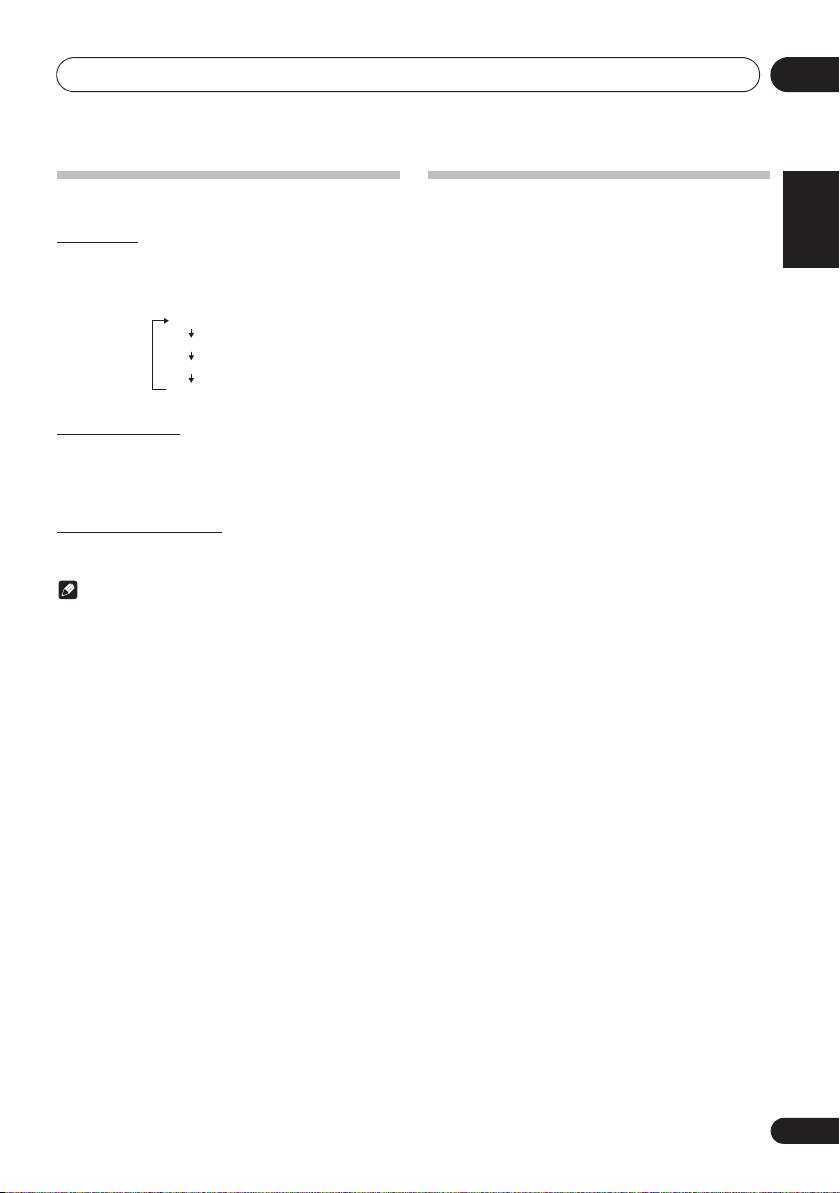
Input function
Press the 1 STANDBY/ON to enter the power stand-by mode.
When the INPUT on main unit is pressed, the current function
will change to different mode. Press the INPUT repeatedly to
Note
select desired function.
• In standby mode, if iPod/iPhone/iPad is connected, the
unit turns charge mode.
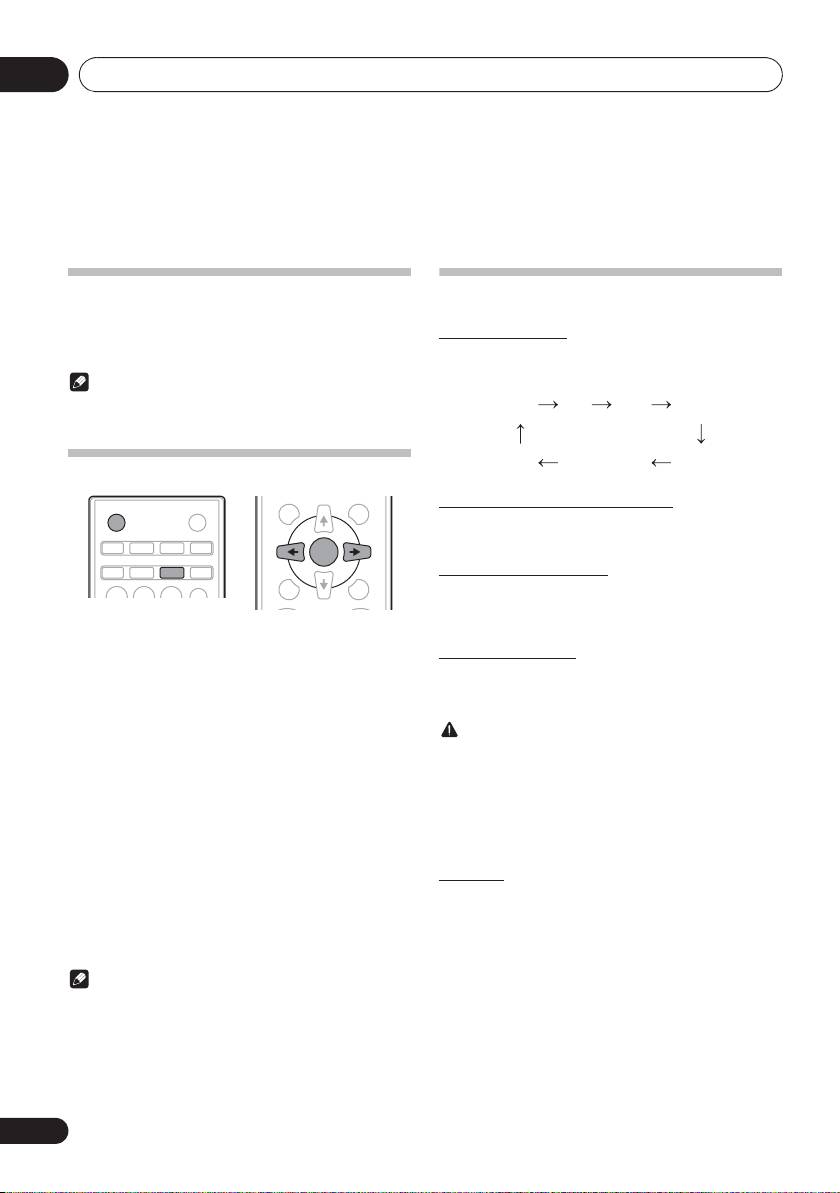
Setting the clock
Display brightness control
Press DIMMER to dims the display brightness. The
brightness can be controlled in four steps.
Volume auto set-in
If you turn off and on the main unit with the volume set to 17
or higher, the volume starts at 16 and sets in to the last set
level.
1 Press
1 STANDBY/ON
to turn the power on.
Volume control
2 Press
CLOCK/TIMER
on the remote control.
Turn the volume knob towards VOLUME (on main unit) or
“CLOCK” is shown on the main display.
press VOLUME +/- (on remote control) to increase or
decrease the volume.
3 Press
ENTER
.
CAUTION
4 Press
HI
to set the day, then press ENTER.
• The sound level at a given volume setting depends on
5 Press
HI
to set the hour, then press
speaker efficiency, location, and various other factors. It
ENTER.
is advisable to avoid exposure to high volume levels. Do
not turn the volume on to full at switch on. Listen to
6 Press
HI
to set the minute, then press
music at moderate levels. Excessive sound pressure
ENTER to confirm.
from earphones and headphones can cause hearing
loss.
7 Press
ENTER
.
To confirm the time display:
Muting
Press the CLOCK/TIMER. The time display will appear for
The volume is muted temporarily when pressing the MUTE on
about 10 seconds.
the remote control. Press again to restore the volume.
To readjust the clock:
Perform “Setting the clock” from step 1.
Note
• When power supply is restored after unit is plugged in
again or after a power failure, reset the clock.
12
En
STANDBY/ON
OPEN/CLOSE
iPod CD USB TUNER
AUDIO IN/LINE
TV OUT
CLOCK/TIMER
SLEEP
EQUALIZER
123
DISPLAY FOLDER
TUNE+
ENTER
MEMORY
MENU
/PROGRAM
PRESET VOLUME
TUNE–
CD AM
FM
USB/IPOD
LINE
AUDIO IN
IPOD
;&0B6<;(B(QERRN࣮࣌ࢪ㸰㸮㸯㸱ᖺ㸲᭶㸶᪥ࠉ᭶᭙᪥ࠉ༗๓㸯㸯㸲㸷ศ
Getting started 04
13
En
English Français Español
Sound controls
Setting the wake-up timer
Used to change the existing timer setting, or to set a new
timer.
Equalizer
When the EQUALIZER is pressed, the current mode setting
1 Press
1 STANDBY/ON
to turn the power on.
will be displayed. To change to a different mode, press the
EQUALIZER repeatedly until the desired sound mode
2 Press and hold
CLOCK/TIMER
.
appears.
3 Press
HI
to select “ONCE” or “DAILY”,
then press ENTER.
ONCE – Once timer play works for one time only at a
preset time.
DAILY – Daily timer play works at the same preset time
and days of week.
P.bass control
4 Press
HI
to select “TIMER SET”, then
When the power is first turned on, the unit will enter the
press ENTER.
P.bass mode which emphasises the bass frequencies. To
5 Press
HI
to select the timer playback
cancel the P.bass mode, press the P.BASS on the remote
control.
source, then press
ENTER
.
• CD, FM, AM, USB/IPOD, IPOD, AUDIO IN and LINE can
be selected as the playback source.
Bass/treble control
Press the BASS/TREBLE, then press HI to adjust the bass
6 Press
HI
to select the timer day, then
or treble.
press ENTER.
Note
7 Press
HI
to set the hour, then press
EQUALIZER, P.BASS and BASS/TREBLE, the simultaneous
ENTER.
operation is not possible. Among the features of these three,
one feature will only work you have selected.
8 Press
HI
to set the minute, then press
ENTER.
If you select one of three functions, features
• Set the time to finish as in steps 7 and 8 above.
that are not selected will be set as follows.
9 Adjust the volume press VOLUME +/- , then
1 If you change the settings of
P.BASS
(
ON
/
press ENTER.
OFF
).
• EQUALIZER : FLAT
10 Press
1 STANDBY/ON
to enter the power
• BASS/TREBLE : BASS=0, TREBLE=0
standby mode.
•The TIMER indicator lights up.
2 If you change the settings of EQUALIZER.
• P.BASS : OFF
• BASS/TREBLE : BASS=0, TREBLE=0
3 If you change the settings of BASS/TREBLE.
• P.BASS : OFF
• EQUALIZER : FLAT
FLAT Equalizer o.
JAZZ
For jazz.
ROCK
For rock.
POP
For pop music.
;&0B6<;(B(QERRN࣮࣌ࢪ㸰㸮㸯㸱ᖺ㸲᭶㸶᪥ࠉ᭶᭙᪥ࠉ༗๓㸯㸯㸲㸷ศ

;&0B6<;(B(QERRN࣮࣌ࢪ㸰㸮㸯㸱ᖺ㸲᭶㸶᪥ࠉ᭶᭙᪥ࠉ༗๓㸯㸯㸲㸷ศ
Getting started04
Calling the wake-up timer
It can be used to re-use an existing timer setting.
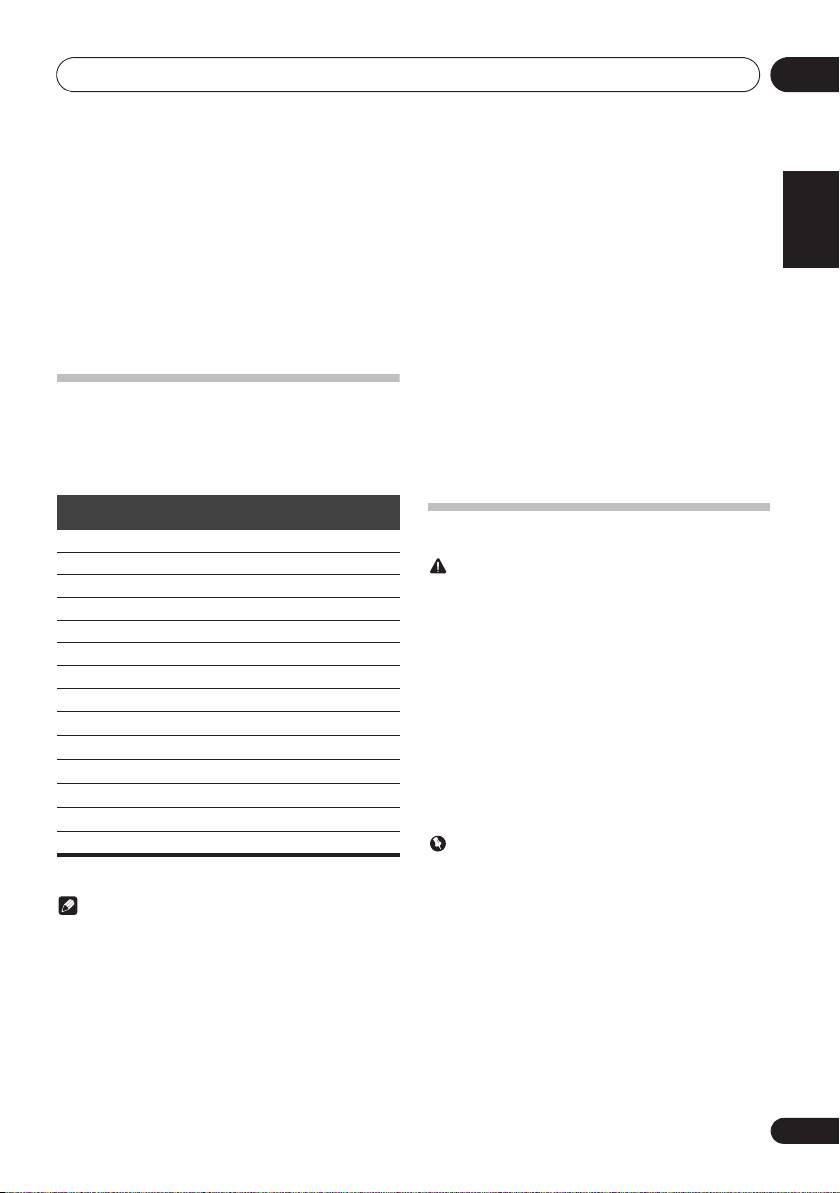
Using Headphones
Connect to the jack plug of the headphones.
1 As well as steps 1 through 3 in “Setting the
When the headphones are connected, there is no sound
wake-up timer”.
output from the speakers.
2 Press
HI
to select “TIMER ON”, then press
ENTER.
Cancelling the wake-up timer
It can be used to turn off the timer setting.
TIMER VOLUME
1 As well as steps 1 through 3 in “Setting the
PHONES AUDIO IN iPad
wake-up timer”.
2 Press
HI
to select “TIMER OFF”, then
press ENTER.
Using the wake-up timer
1 Press
1 STANDBY/ON
to turn the power
• Do not turn the volume on to full at switch on and listen
off.
to music at moderate levels. Excessive sound pressure
from earphones and headphones can cause hearing
2 At the wake-up time, this unit will turn on
loss.
automatically and play the selected input
• Before plugging in or unplugging the headphone,
function.
reduce the volume.
• Be sure your headphone has a 3.5 mm diameter plug
Note
and impedance between 16
: and 50 :. The
• If at the wake-up time iPod/iPhone/iPad is not connected
recommended impedance is 32
:.
to this unit or a disc is not inserted, this unit will be
• Audio from the iPod/iPhone/iPad cannot be heard via
turned to on and not play back the track.
the headphones connected to the unit. “HP MUTE” will
• Some discs may not be played automatically at the wake-
be displayed if you connect the headphones when the
up time.
iPod/iPhone/iPad function is selected.
• If you set the timer, take one minute or more between the
start and end time.
Using the sleep timer
The sleep timer switches off the unit after a specified time so
you can fall asleep without worrying about it.
1 Press
SLEEP
repeatedly to select a switch off
time.
Choose between 10 min, 20 min, 30 min, 60 min, 90 min, 120
min, 150 min, 180 min or OFF. The newly set value displays for
3 seconds, and then the setting is completed.
Note
• The sleep timer can be set by pressing SLEEP while the
remaining time is displayed.
14
En
iPod/iPhone/iPad playback 05
15
En
English Français Español
BL3RGB;&0IP࣮࣌ࢪ㸰㸮㸯㸱ᖺ㸲᭶㸯㸷᪥ࠉ㔠᭙᪥ࠉ༗๓㸯㸯㸳㸷ศ
Chapter 5:
iPod/iPhone/iPad playback
Merely by connecting your iPod/iPhone/iPad to this unit, you
• Pioneer cannot under any circumstances accept
can enjoy high-quality sound from your iPod/iPhone/iPad.
responsibility for any direct or indirect loss arising from
This unit can also be connected to a television set, letting you
any inconvenience or loss of recorded material resulting
view videos from your iPod/iPhone. Playback setting for iPod/
from iPod/iPhone/iPad failure.
iPhone/iPad music can be performed from this unit or the
• For detailed instructions on using the iPod/iPhone/iPad,
iPod/iPhone/iPad itself.
please refer to the manual supplied with the iPod/
• To connect a TV, see page 10.
iPhone/iPad.
• This system has been developed and tested for the
software version of iPod/iPhone/iPad indicated on the
website of Pioneer (http://pioneer.jp/homeav/support/
Confirming what iPod/iPhone/iPad
ios/eu/).
• Installing software versions other than indicated on the
models are supported
website of Pioneer to your iPod/iPhone/iPad may result
The iPod/iPhone/iPad playable on this unit are shown below.
in incompatibility with this system.
• Video output for iPod/iPhone is only compatible when
• This unit cannot be used to record CD, tuner or other
connected to the Dock connector.
content on an iPod/iPhone/iPad.
Dock connector
USB Terminal
iPod/iPhone/iPad
(Audio/Video)
(Audio only)
Connecting your iPod/iPhone/iPad
*
iPod nano 3G/4G/5G/6G
iPod nano 7G —
CAUTION
iPod touch 1G/2G/3G/4G
• Do not use an adaptor that converts into a Lightning
connector on the unit's iPod/iPhone connector to
iPod touch 5G —
connect an iPod/iPhone/iPad. This may lead to
iPhone
malfunction/damage to the connector.
Please connect these Lightning connector devices to the
iPhone 3G
USB port on the front of the unit.
iPhone 3GS
iPhone 5, iPad (4th generation), iPad mini, iPod touch
(5th generation), iPod nano (7th generation)
iPhone 4
• When connecting iPod/iPhone devices, always use the
iPhone 4S
dock adapter provided with iPod/iPhone devices, or a
commercially available adapter designed to support
iPhone 5 —
iPod/iPhone. The iPod/iPhone cannot be connected
iPad mini —
without a dock adapter; attempting to connect an iPod/
iPhone without it will cause damage or malfunction.
iPad —
• An iPod/iPhone universal dock adapter is not supplied
with this unit.
iPad 2 —
iPad 3G/4G —
Important
• If you are mounting the protective cover of a
* iPod nano 6G is supports audio only.
commercially available iPod/iPhone/iPad, you may not
be able to connect iPod/iPhone/iPad to this unit.
Note
• Pioneer does not guarantee that this unit plays iPod/
iPhone/iPad models other than the ones specified.
• Some functions may be restricted depending on the
model or software version.
• iPod/iPhone/iPad is licensed for reproduction of non-
copyrighted materials or materials the user is legally
permitted to reproduce.
• Features such as the equalizer cannot be controlled
using this system, and we recommend switching the
equalizer off before connecting.
iPod/iPhone/iPad playback05
Connecting iPod/iPhone to the top
• When iPod/iPhone is not connected to the unit, close
the iPod/iPhone connector port firmly.
panel
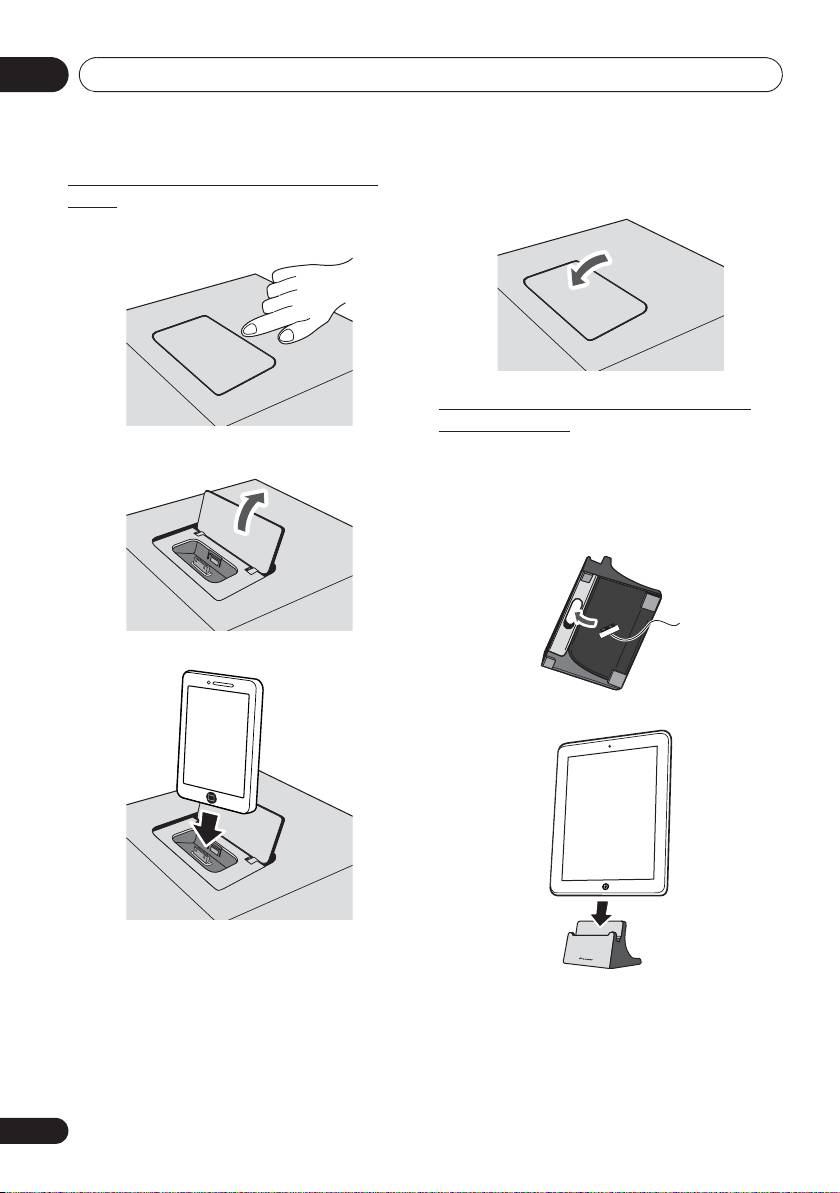
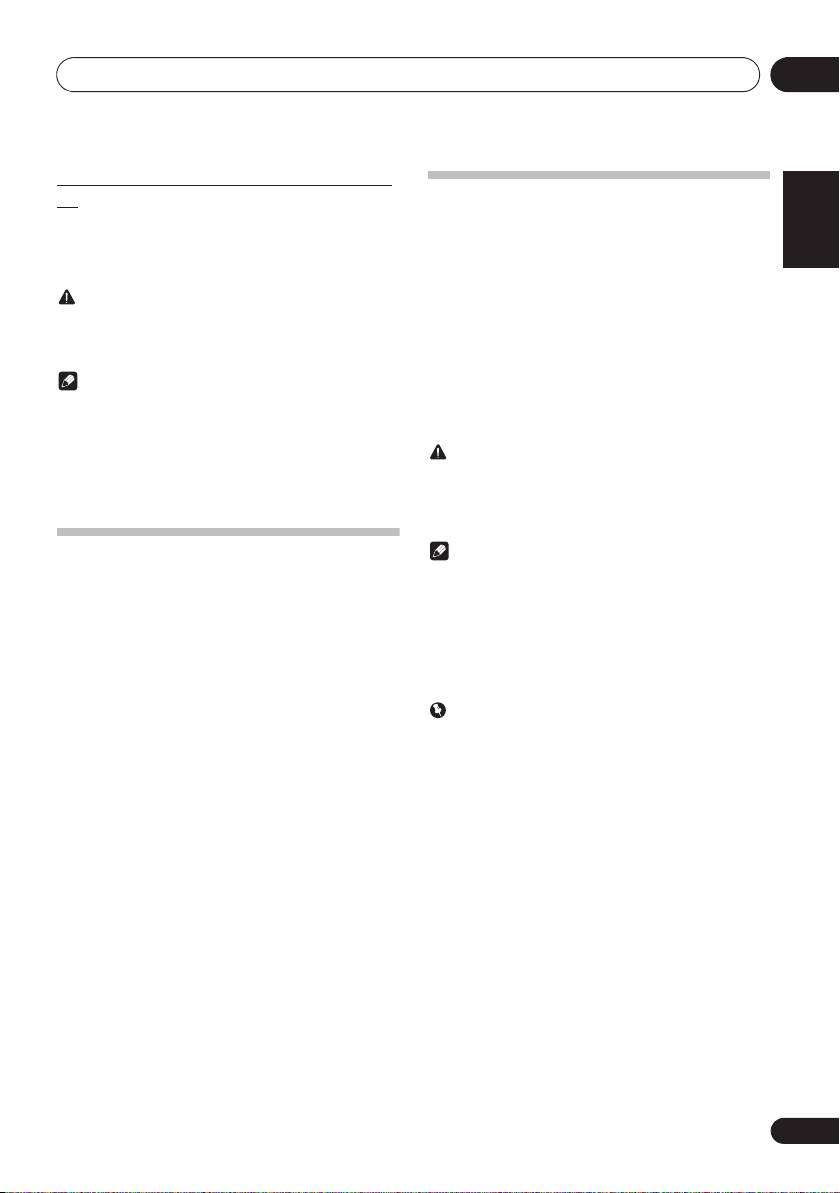
1 Press the PUSH OPEN.
PUSH OPEN
Connecting iPod/iPhone/iPad using
supplied stand
2 Open the iPod/iPhone connector port.
1 Connect the iPod/iPhone/iPad cable to the
unit.
2 Pass the iPod/iPhone/iPad cable through the
bottom of the stand and connect it to the iPod/
iPhone/iPad.
3 Connect your iPod/iPhone.
3 Set up to stand the iPod/iPhone/iPad.
16
En
PUSH OPEN
;&0B6<;(B(QERRN࣮࣌ࢪ㸰㸮㸯㸱ᖺ㸲᭶㸶᪥ࠉ᭶᭙᪥ࠉ༗๓㸯㸯㸲㸷ศ
iPod/iPhone/iPad playback 05
17
En
English Français Español
;&0B6<;(B(QERRN࣮࣌ࢪ㸰㸮㸯㸱ᖺ㸲᭶㸶᪥ࠉ᭶᭙᪥ࠉ༗๓㸯㸯㸲㸷ศ
Watching iPod/iPhone videos on your
TV
Playing iPad
To watch iPod/iPhone videos on a television, connect it using
1 Connect your iPad.
a video cable. When an iPod/iPhone is connected to this unit,
• If an iPad is connected when this unit is on, playback of
the TV output setting of the iPod/iPhone is automatically set
the iPad will not begin.
to ‘ON’.
2 Press
USB
as the input source.
CAUTION
“USB/IPOD” is shown on the main display.
• Before making or changing the connections, switch off
3 When the recognition is completed, will
the power and disconnect the power cord from the
power outlet. Plugging in should be the final step.
begin playing automatically.
• The available iPad playback control by this unit is !,
+ ), *,.
Note
• In the following case, operate your iPad directly:
• For detailed instructions on using the iPod/iPhone,
- Searching a file by artist name or genre.
please refer to the manual supplied with the iPod/
- Playing in the repeat or random mode.
iPhone.
• Some iPods allow the TV output setting to be changed
CAUTION
while connected.
• When your iPod/iPhone/iPad is connected to this unit
• When the iPod/iPhone is disconnected from this unit,
and you wish to operate the iPod/iPhone/iPad directly,
the iPod/iPhone’s TV output setting returns to its original
be sure to steady the iPod/iPhone/iPad with the other
state.
hand to prevent malfunctions due to faulty contacts.
Playing iPod/iPhone
Note
• For detailed instructions on using the iPod/iPhone/iPad,
1 Connect your iPod/iPhone.
please refer to the manual supplied with the iPod/
• If an iPod/iPhone is connected when this unit is on,
iPhone/iPad.
playback of the iPod/iPhone will not begin.
• iPod/iPhone/iPad recharging occurs whenever an iPod/
iPhone/iPad is connected to this unit. (This function is
2 Press
iPod
or
USB
as the input source.
supported in standby mode as well.)
“IPOD” or “USB/IPOD” is shown on the main display.
• When input is switched from iPod to another function,
iPod/iPhone/iPad playback is temporarily stopped.
3 When the recognition is completed, will
begin playing automatically.
Important
• The available iPod/iPhone playback control by this unit is
!, + ), *,.
If this unit cannot play your iPod/iPhone/iPad, perform the
• In the following case, operate your iPod/iPhone directly:
following troubleshooting checks:
- Searching a file by artist name or genre.
• Check whether the iPod/iPhone/iPad is supported by
- Playing in the repeat or random mode.
this unit.
- Watching videos stored in iPod/iPhone on your television.
• Reconnect the iPod/iPhone/iPad to the unit. If this
doesn’t seem to work, try resetting your iPod/iPhone/
iPad.
• Check the iPod/iPhone/iPad software is supported by
this unit.
If the iPod/iPhone/iPad cannot be operated, check the
following items:
• Is the iPod/iPhone/iPad connected correctly? Reconnect
the iPod/iPhone/iPad to the unit.
• Is the iPod/iPhone/iPad experiencing a hangup? Try
resetting the iPod/iPhone/iPad, and reconnect it to the
unit.
Disc playback06
Chapter 6:
Disc playback
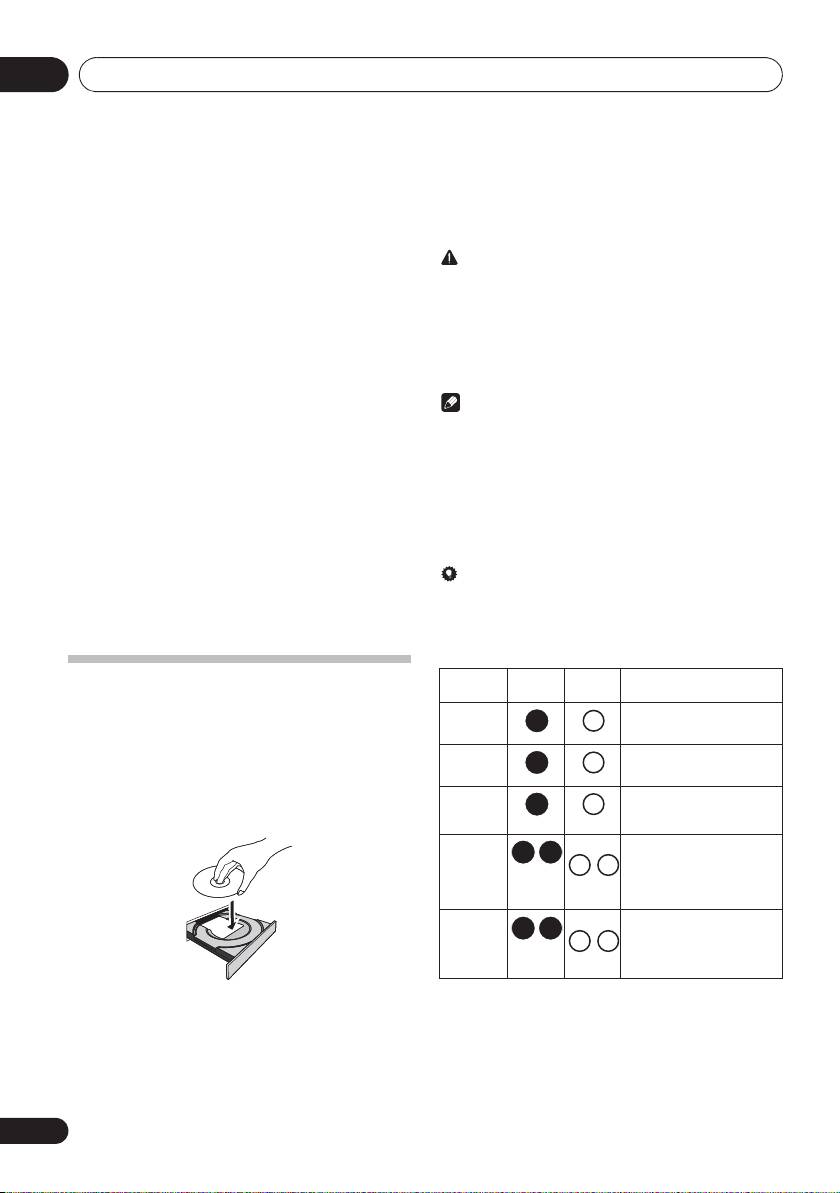
This system can play back a standard CD, CD-R/RW in the CD
CAUTION
format and CD-R/RW with MP3 or WMA files, but cannot
• Do not place two discs in one disc tray.
record on them. Some audio CD-R and CD-RW discs may not
be playable due to the state of the disc or the device that was
• Do not play discs of special shapes (heart, octagon, etc).
It may cause malfunctions.
used for recording.
• Do not push the disc tray whilst it is moving.
MP3:
• If the power fails whilst the tray is open, wait until the
MP3 is a form of compression. It is an acronym which stands
power is restored.
for MPEG Audio Layer 3. MP3 is a type of audio code which is
• Be sure to place 8 cm disc in the middle of the disc tray.
processed by significant compression from the original audio
source with very little loss in sound quality.
Note
• This system supports MPEG-1/2 Audio Layer 3 (Sampling
• Due to the structure of the disc information, it takes longer
rates: 8 kHz to 48 kHz; Bit rates: 64 kbps to 384 kbps).
to read an MP3/WMA disc than a normal CD
• During VBR file playback, time counter in the display
(approximately 20 to 90 seconds).
may differ from its actual playback time.
• When the beginning of the first track is reached during fast
reverse, the unit will enter the playback mode (only for CD).
WMA:
• Rewritable multi-session discs with unfinished writing, can
WMA (Windows Media Audio) files are Advanced System
still be played.
Format files that include audio files which are compressed
• If TV or radio interference occurs during CD operation,
with Windows Media Audio codec. WMA is developed by
move the unit away from the TV or radio.
Microsoft as an audio format file for Windows Media Player.
• This system supports WMA (Sampling rates: 32 kHz/44.1
Tip
kHz/48 kHz; Bit rates: 64 kbps to 320 kbps).
• When no operation has done in CD mode and the audio
• During VBR file playback, time counter in the display
file is not played for more than 15 minutes, the power will
may differ from its actual playback time.
automatically turn off.
Various disc functions
Function Main
Remote
Operation
Playing discs or files
unit
control
1 Press
1 STANDBY/ON
to turn the power on.
Play
Press in the stop mode.
2 Press
CD
on the remote control or
INPUT
Stop
Press in the playback mode.
repeatedly on the main unit to select CD input.
3 Press
$ OPEN/CLOSE
to open the disc tray.
Pause
Press in the playback mode.
Press
!
to resume playback
4 Place the disc on the disc tray, label side up.
from the paused point.
Track up/
Press in the playback or stop
down
mode.
If you press the button in the
stop mode, press
!
to start
the desired track.
Fast
Press and hold down in the
forward/
playback mode.
reverse
Release the button to resume
playback.
5 Press
$ OPEN/CLOSE
to close the disc tray.
6 Press
!
to start playback.
After the last track is played, the unit will stop automatically.
18
En
;&0B6<;(B(QERRN࣮࣌ࢪ㸰㸮㸯㸱ᖺ㸲᭶㸶᪥ࠉ᭶᭙᪥ࠉ༗๓㸯㸯㸲㸷ศ
Disc playback 06
19
En
English Français Español
Repeat play
Advanced CD or MP3/WMA disc
Repeat play can play one track, all tracks or a programmed
sequence continuously.
playback
To repeat one track:
Press REPEAT repeatedly until “RPT ONE” appears. Press
ENTER.
To repeat all tracks:
Press REPEAT repeatedly until “RPT ALL” appears. Press
ENTER.
To repeat desired tracks:
Perform steps 1 - 5 in “Programmed play” section on next
page and then press REPEAT repeatedly until “RPT ALL”
appears. Press ENTER.
To cancel repeat play:
Press REPEAT repeatedly until “RPT OFF” appears. Press
ENTER.
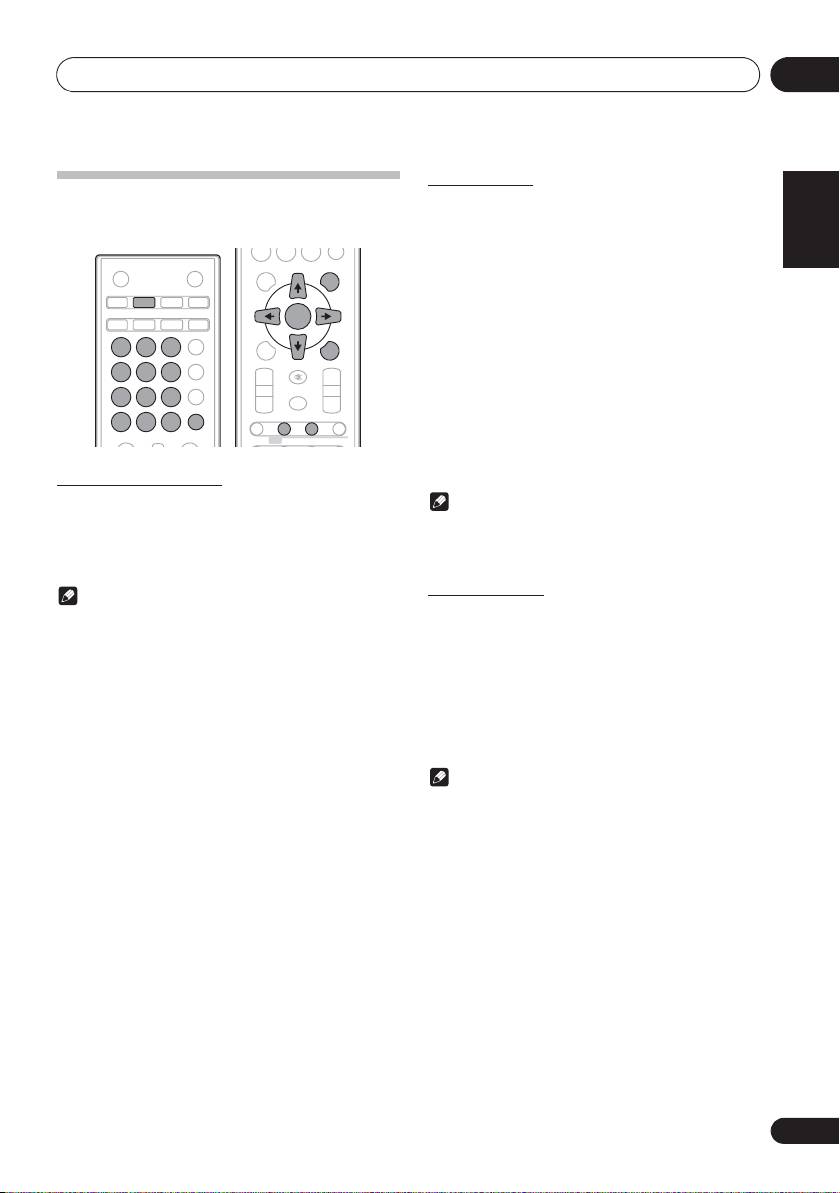
Direct track search
By using the numeric buttons, the desired tracks on the
Note
current disc can be played.
• After performing repeat play, be sure to press #.
Use the numeric buttons on the remote control to
Otherwise, the disc will play continuously.
select the desired track whilst playing the selected
• During repeat play, random play is not possible.
disc.
Random play
Note
The tracks on the disc can be played in random order
• A track number higher than the number of tracks on the
automatically.
disc cannot be selected.
To random play all tracks:
To stop playback:
Press RANDOM repeatedly until “RDM ON” appears. Press
Press #.
ENTER.
To cancel random play:
Press RANDOM repeatedly until “RDM OFF” appears. Press
ENTER.
Note
• If you press the , during random play, you can move
to the track selected next by the random operation. On
the other hand, the + does not allow you to move to
the previous track. The beginning of the track being
played will be located.
• In random play, the unit will select and play tracks
automatically. (You cannot select the order of the
tracks.)
• During random play, repeat play is not possible.
0
STANDBY/ON
OPEN/CLOSE
DISPLAY FOLDER
TUNE+
iPod CD USB TUNER
AUDIO IN/LINE
TV OUT
CLOCK/TIMER
SLEEP
ENTER
MEMORY
EQUALIZER
MENU
/PROGRAM
123
P.BASS
PRESET VOLUME
TUNE–
4 5 6
+
+
BASS/TREBLE
MUTE
7 89
–
–
CLEAR REPEAT
RANDOM
DIMMER
0
DISPLAY FOLDER
TUNE+
ST/MONO ASPM PTY DISPLAY
RDS
;&0B6<;(B(QERRN࣮࣌ࢪ㸰㸮㸯㸱ᖺ㸲᭶㸶᪥ࠉ᭶᭙᪥ࠉ༗๓㸯㸯㸲㸷ศ
;&0B6<;(B(QERRN࣮࣌ࢪ㸰㸮㸯㸱ᖺ㸲᭶㸶᪥ࠉ᭶᭙᪥ࠉ༗๓㸯㸯㸲㸷ศ
Disc playback06
Programmed play (CD or MP3/WMA)
About downloading MP3/WMA
You can choose up to 32 selections for playback in the order
There are many music sites on the internet that you can
you like.
download MP3/WMA music files. Follow the instructions
from the website on how to download the music files. You can
1 Whilst in the stop mode, press
MEMORY
/
then play back these downloaded music files by burning them
PROGRAM
on the remote control to enter the
to a CD-R/RW disc.
programming save mode.
• Your downloaded song/files are for personal use only.
Any other usage of the song without owner’s permission,
2 Press
+,
or the numeric buttons on the
is against the law.
remote control to select the desired tracks.
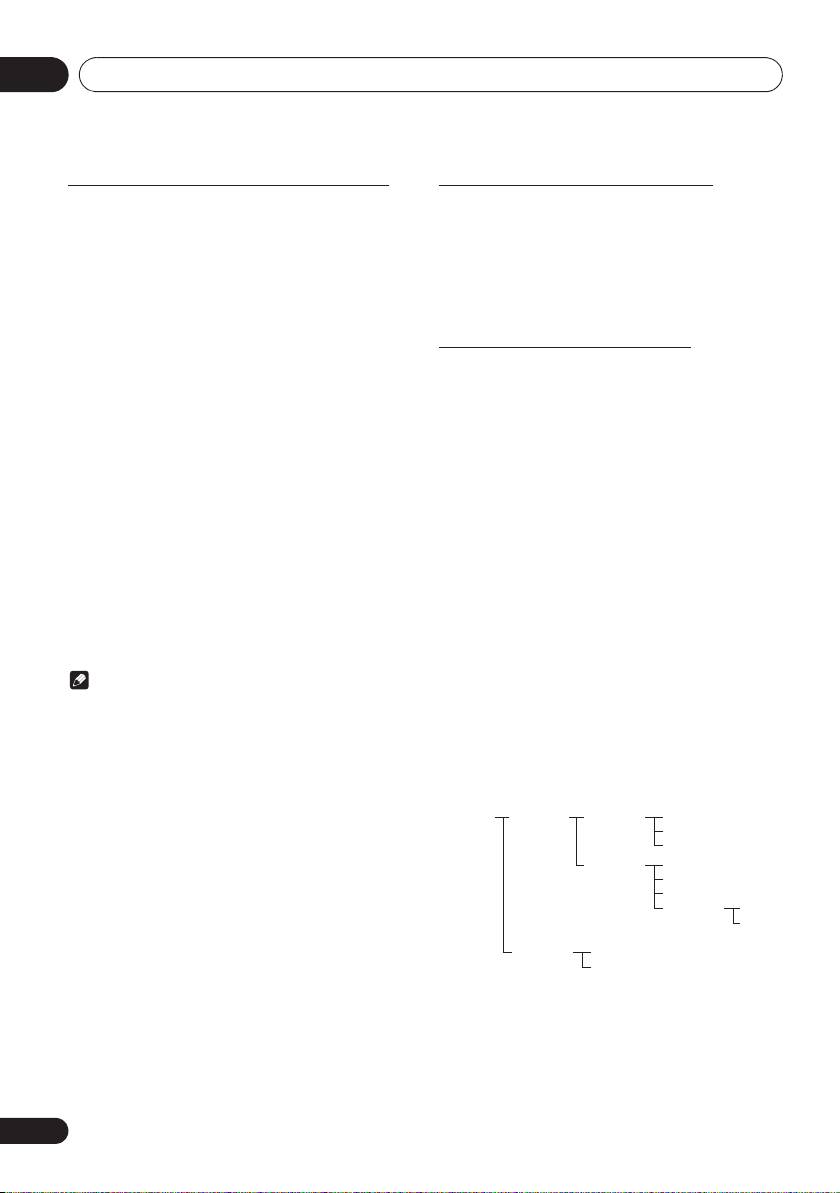
About folder playback order
3 Press ENTER to save folder and track
If MP3/WMA files are recorded in several folders, a folder
number.
number will be set to each folder automatically.
These folders can be selected by the FOLDER on the remote
4 Repeat steps 2 - 3 for other folder/tracks. Up
control. If there is no supported file formats inside the
to 32 tracks can be programmed.
selected folder, the folder is skipped and the next folder will be
• If you want to check the programmed tracks, press
selected.
MEMORY/PROGRAM.
Example: How to set folder number if MP3/WMA format files
• If you make a mistake, the last programmed tracks will
are recorded as below figure.
be canceled by pressing CLEAR.
1 ROOT folder is set as folder 1.
5 Press
!
to start playback.
2 As for folders inside ROOT folder (Folder A
To cancel the programmed play mode:
and Folder B), the folder which is recorded
To cancel the programmed play, press twice # on the remote
earlier on the disc will be set as folder 2 and
control. The display will show “PRG CLR” and all the
programmed contents will be cleared.
folder 3.
Adding tracks to the program:
3 As for folder inside Folder A (Folder C and
Press the MEMORY/PROGRAM. Then follow steps 2 - 3 to
Folder D), the folder which is recorded earlier on
add tracks.
the disc will be set as folder 4 and folder 5.
4 Folder E that is inside Folder D will be set as
Note
folder 6.
• When a disc is ejected, the program is automatically
• The folder and file order information which is recorded
cancelled.
on the disc depends on the writing software. There
• If you press the 1 STANDBY/ON to enter the standby
maybe possibilities that this unit will playback the files
mode or change the function from CD to another, the
not according to our expected playback order.
programmed selections will be cleared.
• From a disc with MP3/WMA files up to 255 folders and
• During the program operation, random play is not
999 files (including non playable files) can be read.
possible.
ROOT
FOLDER A
FOLDER C
FILE 3
(FOLDER 1)
(FOLDER 2)
(FOLDER 4)
FILE 4
FILE 5
FOLDER D
FILE 6
(FOLDER 5)
FILE 7
FILE 8
FOLDER E
FILE 9
(FOLDER 6)
FILE 10
FOLDER B
FILE 1
(FOLDER 3)
FILE 2
20
En