
Beurer BM 65: 6. Evaluating results Cardiac arrhythmia: WHO classification: Range of blood pressure values Systolic
6. Evaluating results Cardiac arrhythmia: WHO classification: Range of blood pressure values Systolic: Beurer BM 65
Table of contents
- 2. Important information Signs and symbols 1. Getting to know your instrument
- Advice on use
- Storage and Care Advice on batteries
- 3. Unit description Repair and disposal
- Icons in the display: System requirements for the Beurer “Health Manager” computer software 1. Supported operating systems: 2. Supported architectures: 3. Hardware requirements:
- 4. Prepare measurement Setting date and time Inserting battery Operation with the mains part
- 5. Measuring blood pressure Positioning cuff
- Correct posture Measuring blood pressure
- 6. Evaluating results Cardiac arrhythmia: WHO classification: Range of blood pressure values Systolic
- 8. Error messages/trouble-shooting 7. Saving, retrieving and deleting results
- 10. Specifications Technical alarm – description 9. Cleaning and storing the instrument
- Technical information is subject to change without notifica- tion to allow for updates.
- 11. Adapter
6. Evaluating results
move during the measurement. If the icon appears
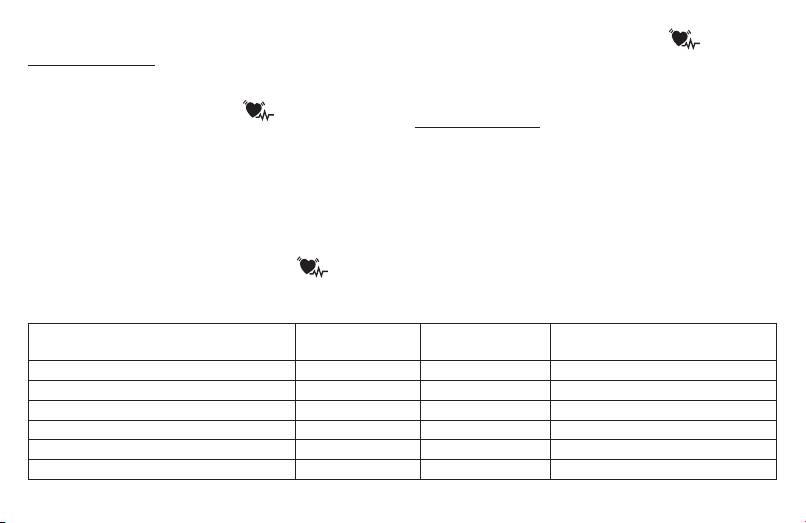
Cardiac arrhythmia:
often, please contact your doctor. Any self-diagnosis and
This instrument can identify possible cardiac arrhythmia dis-
treatment based on the test results may be dangerous. It is
orders during measurement and if necessary indicates the
vital to follow your doctor‘s instructions.
measurement with the flashing icon .
WHO classification:
This may be an indicator for arrhythmia. Arrhythmia is a
In accordance with the guidelines/definitions of the World
condition where the heart rhythm is abnormal as a result of
Heath Organization and the latest findings, the measure-
defects in the bioelectrical system controlling the heart beat.
ments can be classified and assessed according to the
The symptoms (omitted or premature heart beats, slow or
following table.
excessively fast heart rate) may be caused, among other
However, these standard values serve only as a general
things, by heart disease, age, physical predisposition, ex-
guideline, as the individual blood pressure varies in different
cessive use of stimulants, stress or lack of sleep. Arrhythmia
people and different age groups etc.
can only be ascertained through examination by your doctor.
It is important to consult your doctor regularly for advice.
Repeat the measurement if the flashing icon is dis-
Your doctor will tell you your individual values for normal
played after the measurement. Please note that you should
blood pressure as well as the value above which your blood
rest for 5 minutes between measurements and not talk or
pressure is classified as dangerous.
Range of blood pressure values Systolic
Diastolic
Measure
(in mmHg)
(in mmHg)
Grade 3: Severe hypertension > = 180 > = 110 Seek medical advice
Grade 2: Moderate hypertension 160 – 179 100 – 109 Seek medical advice
Grade 1: Mild hypertension 140 – 159 90 – 99 Have it checked regularly by doctor
High-normal 130 – 139 85 – 89 Have it checked regularly by doctor
Normal 120 – 129 80 – 84 Check it yourself
Optimal < 120 < 80 Check it yourself
Source: WHO, 1999
24
