
Beurer BC 60: 5.3 Evaluating results WHO classification:
5.3 Evaluating results WHO classification:: Beurer BC 60
Table of contents
- 2. Important information Advice on use 1. Getting to know your instrument
- Storage and Care Advice on batteries
- 3. Unit description Repair and disposal
- 4. Getting started 5. Measuring blood pressure
- 5.2 Measuring blood pressure
- 5.3 Evaluating results WHO classification:
- 5.4 Resting indicator measurement (using HSD : lack of haemodynamic stability diagnostics) : haemodynamic stability
- 6. Calling up stored values 7. Cleaning and care 8. Rectifying faults
- 9. Specifications
5.3 Evaluating results
ascertained through examination by your doctor. Repeat the
Cardiac arrhythmia:
measurement if the flashing icon
is displayed after the
This instrument can identify possible cardiac arrhythmia dis-
measurement. Please note that you should rest for 5 minutes
orders during measurement and if necessary indicates the
between measurements and not talk or move during the
measurement with the flashing icon
.
measurement. If the icon
appears often, please contact
This may be an indicator for arrhythmia. Arrhythmia is a
your doctor. Any self-diagnosis and treatment based on the
condition where the heart rhythm is abnormal as a result of
test results may be dangerous.
defects in the bioelectrical system controlling the heart beat.
It is vital to follow your doctor’s instructions.
The symptoms (omitted or premature heart beats, slow or ex-
WHO classification:
cessively fast heart rate) may be caused, among other things,
According to WHO Guidelines/Definitions and the latest find-
by heart disease, age, physical predisposition, excessive use
ings, the test results can be classified and evaluated accord-
of stimulants, stress or lack of sleep. Arrhythmia can only be
ing to the following chart:
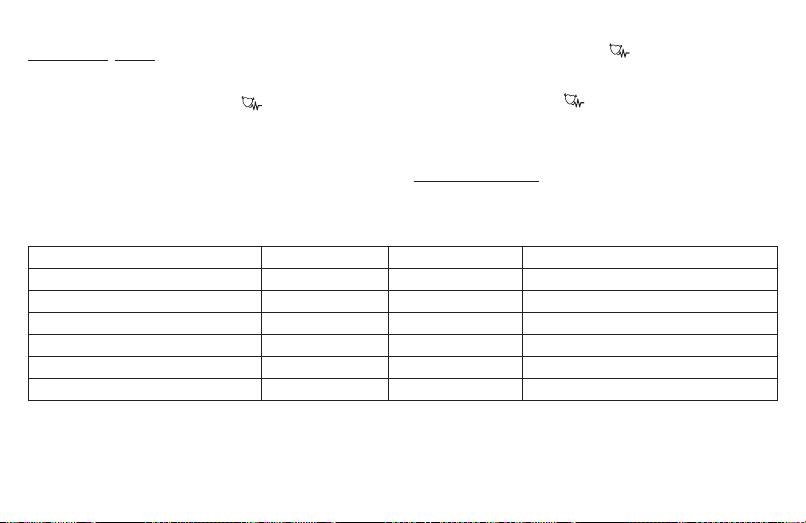
Range of blood pressure values Systolic (in mmHg) Diastolic (in mmHg) Measure
Grade 3: Severe hypertension >=180 >=110 Seek medical advice
Grade 2: Moderate hypertension 160 -179 100 -109 Seek medical advice
Grade 1: Mild hypertension 140 -159 90 - 99 Have it checked regularly by doctor
High-normal 130 -139 85 - 89 Have it checked regularly by doctor
Normal 120 -129 80 - 84 Check it yourself
Optimal <120 <80 Check it yourself
Source: WHO, 1999
The bar graph in the display and the scale on the unit indicate
diastolic pressure in the normal range) the graphic WHO clas-
the range of the blood pressure which has been recorded. If
sification on the unit indicates the higher range (high-normal
the values for systolic and diastolic pressure are in two differ-
in the example described).
ent WHO ranges (e.g. systolic in the high-normal range and
18
