
Beurer BF 750: Body water percentage Man Woman Muscle percentage Man Woman Bone mass BMR
Body water percentage Man Woman Muscle percentage Man Woman Bone mass BMR: Beurer BF 750
Table of contents
- 1. Getting to know your instrument 2. Signs and symbols 3. Safety notes
- Storage and maintenance Batteries
- Repairs 4. Unit description 5. Initial use 6. Information
- 7. Settings
- 8. Taking measurements 9. Evaluation of results
- Body water percentage Man Woman Muscle percentage Man Woman Bone mass BMR
- AMR 0. Replacing batteries 11. Cleaning and care of the unit 12. Disposal
- 13. What if there are problems?
A lower value is often found in athletes. Depending on the type of sports, training intensity and physical
constitution, values may result which are below the recommended values stated. It should, however, be
noted that there could be a danger to health in the case of extremely low values.
Body water percentage
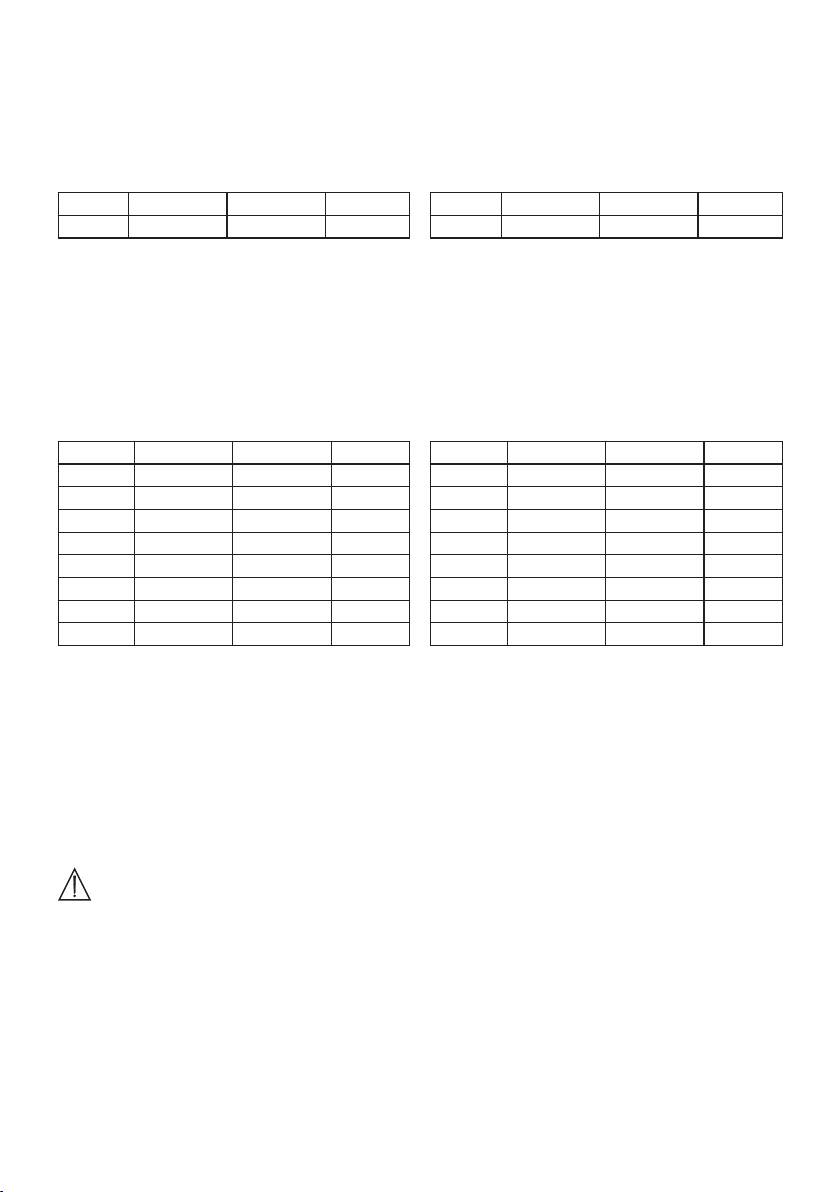
The body water percentage is normally within the following ranges:
Man Woman
Age poor good very good
Age poor good very good
10 –100 <50 % 50 – 65 % >65 %
10 –100 <45 % 45 – 60 % >60 %
Body fat contains relatively little water. Therefore persons with a high body fat percentage have body
water percentages below the recommended values. With endurance athletes, however, the recommended
values could be exceeded due to low fat percentages and high muscle percentage.
This scale is unsuitable for measuring body water in order to draw medical conclusions concerning age-
related water retention, for example. If necessary ask your physician. Basically, a high body water percent-
age should be the aim.
Muscle percentage
The muscle percentage is normally within the following ranges:
Man Woman
Age low normal high
Age low normal high
10 –14 <44 % 44 – 57 % >57 %
10 –14 <36 % 36 – 43 % >43 %
15 –19 <43 % 43 – 56 % >56 %
15 –19 <35 % 35 – 41 % >41 %
20 – 29 <42 % 42 - 54 % >54 %
20 – 29 <34 % 34 – 39 % >39 %
30 – 39 <41 % 41– 52 % >52 %
30 – 39 <33 % 33 – 38 % >38 %
40 – 49 <40 % 40 – 50 % >50 %
40 – 49 <31 % 31– 36 % >36 %
50 – 59 <39 % 39 – 48 % >48 %
50 – 59 <29 % 29 – 34 % >34 %
60 – 69 <38 % 38 – 47 % >47 %
60 – 69 <28 % 28 – 33 % >33 %
70 –100 <37 % 37 – 46 % >46 %
70 –100 <27 % 27 – 32 % >32 %
Bone mass
Like the rest of our body, our bones are subject to the natural development, degeneration and ageing pro-
cesses. Bone mass increases rapidly in childhood and reaches its maximum between 30 and 40 years of
age. Bone mass reduces slightly with increasing age. You can reduce this degeneration somewhat with
healthy nutrition (particularly calcium and vitamin D) and regular exercise.
With appropriate muscle building, you can also strengthen your bone structure. Note that this scale will
not show you the calcium content of your bones, but will measure the weight of all bone constituents
(organic substances, inorganic substances and water). Little influence can be exerted on bone mass, but
it will vary slightly within the influencing factors (weight, height, age, gender). no recognised guidelines or
recommendations relating to bone mass measurement.
ATTENTION:
Please do not confuse bone mass with bone density.
Bone density can be determined only by means of a medical examination (e.g. computer tomogra-
phy, ultrasound). It is therefore not possible to draw conclusions concerning changes to the bones
and bone hardness (e.g. osteoporosis) using this scale.
BMR
The basal metabolic rate (BMR) is the amount of energy required by the body at complete rest to maintain its
basic functions (e.g. while lying in bed for 24 hours). This value largely depends on weight, height and age.
It is displayed on the diagnostic scale in kcal/day units using the scientifically recognized Harris-Benedict
formula.
Your body requires this amount of energy in any case and it must be reintroduced into your body in the
form of nutrition. If you take on less energy over the longer term, this can be harmful to your health.
16
