
Nikon 28mm-f-18G-AF-S-Nikkor: инструкция
Раздел: Аксессуары для фото- и видеотехники
Тип: Объектив
Инструкция к Объективу Nikon 28mm-f-18G-AF-S-Nikkor
Оглавление
Jp
En
De
Fr
Es
AF‑S NIKKOR 28mm f/1.8G
Sv
Nano Crystal Coat
Ru
AF
Nl
‑
S NIKKOR 28mm f/1.8G
Pt
使用説明書
Manuale d’uso
Pb
User’s Manual
Návod k obsluze
It
Benutzerhandbuch
Užívateľská príručka
Manuel d’utilisation
Manualul utilizatorului
Cz
Manual del usuario
Посібник користувача
Sk
Användarhandbok
使用说明书
Ro
Pykoводство пользoвaтеля
使用說明書
Gebruikshandleiding
사용설명서
Ua
Manual do utilizador
Manual bagi Pengguna
使用説明書の内容が破損などによって判読できなくなったときは、
Ck
ニコンサービス機関にて新しい使用説明書をお求めください(有料)。
Manual do usuário
Ch
No reproduction in any form of this manual, in whole or in part
(except for brief quotation in critical articles or reviews), may be
Kr
made without written authorization from NIKON CORPORATION.
Id
Ar
Printed in China
SB2B02(K3)
© 2012 Nikon Corporation
7MAA86K3-02 pG12
Cover_02
Jp
安全上のご注意
お使いになる前に「安全上のご注意」をよくお読みの上、正しくお使い
ください。この「安全上のご注意」は、製品を安全に正しく使用し、あ
なたや他の人々への危害や財産への損害を未然に防止するために重要な
内容を記載しています。お読みになった後は、お使いになる方がいつで
も見られるところに必ず保管してください。
表示と意味は次のようになっています。
この表示を無視して、誤った取り扱いをすると、人が死亡または
警告
A
重傷を負う可能性が想定される内容を示しています。
この表示を無視して、誤った取り扱いをすると、人が傷害を負う
可能性が想定される内容および物的損害の発生が想定される内容
注意
A
を示しています。
お守りいただく内容の種類を、次の絵表示で区分し、説明しています。
絵表示の例
L
記号は、注意(警告を含む)を促す内容を告げるものです。図の中や近
I
くに具体的な注意内容(左図の場合は感電注意)が描かれています。
F
記号は、禁止の行為(してはいけないこと)を告げるものです。図の中
E
や近くに具体的な禁止内容(左図の場合は分解禁止)が描かれています。
D
記号は、行為を強制すること(必ずすること)を告げるものです。図の
K
中や近くに具体的な強制内容(左図の場合はバッテリーを取り出す)が描
かれています。
警告
A
分解したり、修理や改造をしないこと
分解禁止
E
感電したり、異常動作をしてケガの原因となります。
落下などによって破損し、内部が露出したときは、露出
部に手を触れないこと
接触禁止
G
感電したり、破損部でケガをする原因となります。
すぐに
カメラのバッテリー、電源を抜いて、ニコンサービス機
C
修理依頼を
関に修理を依頼してください。
2
Jp
警告
A
熱くなる、煙が出る、こげ臭いなどの異常時は、すみや
バッテリー
かにカメラのバッテリーを取り出すこと
K
を取る
そのまま使用すると火災、やけどの原因となります。
すぐに
バッテリーを取り出す際、やけどに充分注意してください。
C
修理依頼を
バッテリーを抜いて、ニコンサービス機関に修理を依頼
してください。
水につけたり、水をかけたり、雨にぬらしたりしないこと
水かけ禁止
J
発火したり感電の原因となります。
引火、爆発のおそれのある場所では使用しないこと
使用禁止
プロパンガス・ガソリンなど引火性ガスや粉塵の発生す
F
る場所で使用すると、爆発や火災の原因となります。
レンズまたはカメラで直接太陽や強い光を見ないこと
使用禁止
F
失明や視力障害の原因となります。
注意
A
ぬれた手でさわらないこと
感電注意
I
感電の原因になることがあります。
製品は、幼児の手の届くところに置かない
保管注意
A
ケガの原因になることがあります。
逆光撮影では、太陽を画角から充分にずらすこと
太陽光がカメラ内部で焦点を結び、火災の原因になるこ
使用注意
A
とがあります。画角から太陽をわずかに外しても火災の
原因になることがあります。
使用しないときは、レンズにキャップを付けるか、太陽
保管注意
光のあたらない所に保管すること
A
太陽光が焦点を結び、火災の原因になることがあります。
三脚にカメラやレンズを取り付けたまま移動しないこと
移動注意
転倒したりぶつけたりして、ケガの原因になることがあ
A
ります。
窓を閉め切った自動車の中や直射日光が当たる場所な
ど、異常に温度が高くなる場所に放置しないこと
放置禁止
F
内部の部品に悪影響を与え、火災の原因になることがあ
ります。
3
Jp
このたびはニッコールレンズをお買い上げくださいまして、誠にあり
がとうございます。ご使用の前に、この使用説明書をよくお読みの上、
正しくお使いください。また、カメラの使用説明書もご覧ください。
•
DX
フォーマットのニコンデジタル一眼レフカメラ(
D300
シリー
ズ、
D7000
など)に装着すると、対角線画角は
53
°となり、
35 mm
判換算では焦点距離約
42 mm
相当のレンズになります。
■
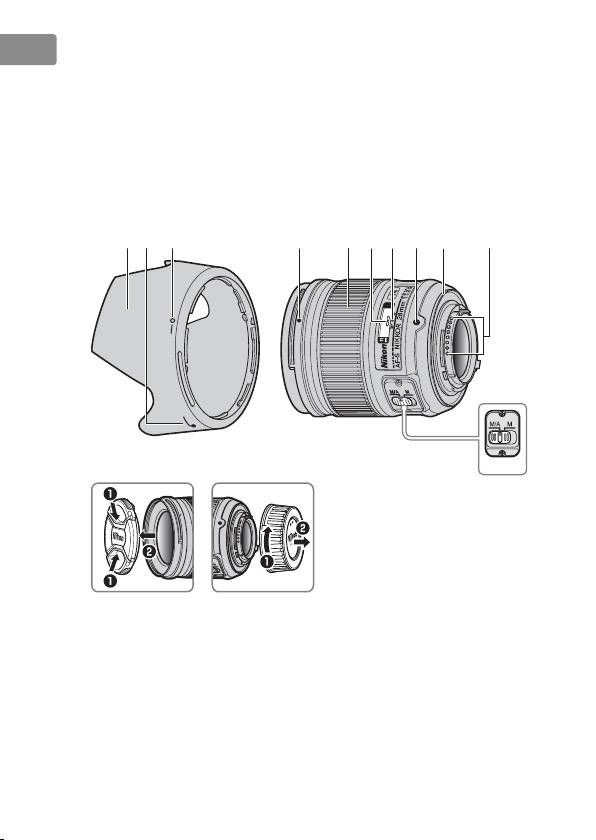
各部の名称
we r tyuio
!0q
!1
q
フード
.........................................P. 8
u
距離目盛基準線
......................P. 7
w
フード取り付け指標
............ P. 8
i
レンズ着脱指標
e
フードセット指標
.................P. 8
o
レンズマウント
ゴムリング
............................ P. 10
r
フード着脱指標
......................P. 8
t
フォーカスリング
.................P. 6
!0
CPU
信号接点
......................P. 10
フォーカスモード切り換え
y
距離目盛
.................................... P. 7
!1
スイッチ
.................................... P. 6
4
Jp
■
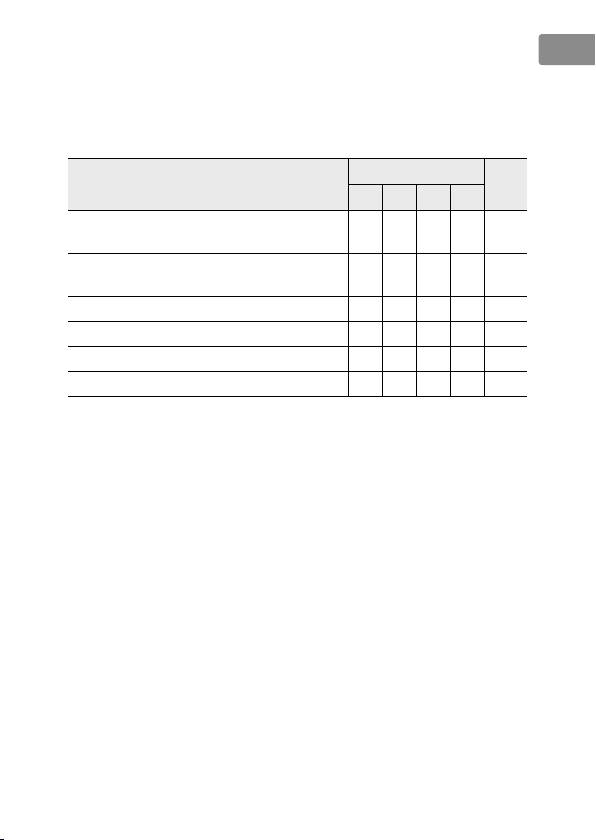
使用できる機能
カメラによって、使用できる機能には制限・制約がありますので、
カメラの使用説明書でもご確認ください。
○:使用可
×:使用不可
露出(撮影)モード
※
3
カメラ
AF
※
2
P
SAM
FX
フォーマット
/DX
フォーマットの二コンデジ
○○○○ ○
タル一眼レフカメラ
F6
、
F5
、
F100
、
F80
シリーズ、ニコン
U2
、ニコン
U
、
○○○○ ○
※
1
プロネア
600i
、プロネア
S
F4
シリーズ、
F90X
シリーズ、
F90
シリーズ、
F70D
○○×× ○
ニコン
Us
、
F60D
、
F50D
、
F-401
シリーズ
○○○○ ×
F-801
シリーズ、
F-601M
○○×× ×
F3AF
、
F-601
、
F-501
、
MF
カメラ(
F-601M
を除く)
×××× ×
※
1 M
モードの設定はありません。
※
2 P
には
AUTO
(オート)モード、シーンモード(イメージプログラムモード)
を含みます。
※
3 AF
:オートフォーカス
5
Jp
■
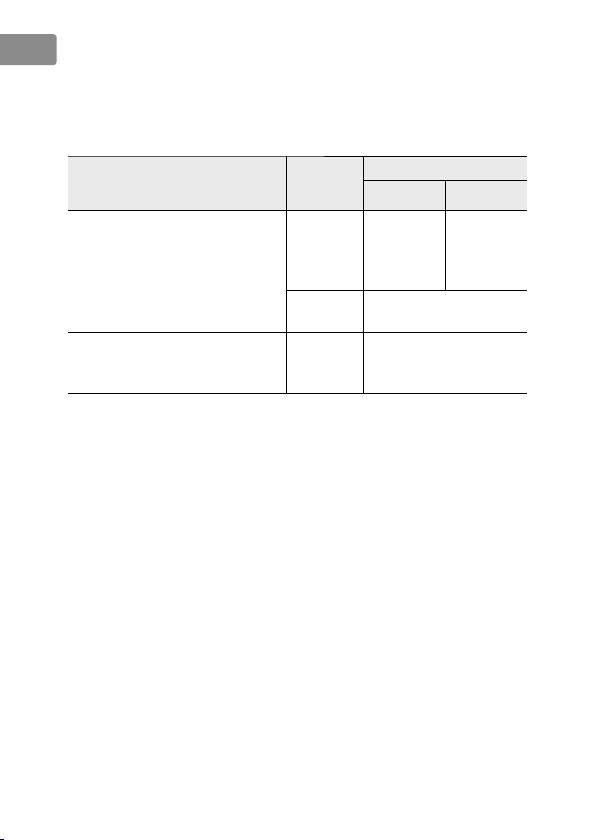
ピント合わせの方法
ご使用のカメラや撮影目的によって、下表のようなピント合わせが
選択できます。
•
カメラのフォーカスモードについては、カメラの使用説明書をご覧ください。
カメラの
レンズのフォーカスモード
カメラ
フォーカス
M/A M
モード
マニュアル
FX
フォーマット
/DX
フォーマット
マニュアル
フォーカス
の二コンデジタル一眼レフカメラ、
AF
優先オート
(フォーカス
F6
、
F5
、
F4
シリーズ、
F100
、
F90X
フォーカス
エイド可)
シリーズ、
F90
シリーズ、
F80
シリー
ズ、
F70D
、ニコン
U2
、ニコン
U
、
マニュアルフォーカス
プロネア
600i
、プロネア
S
MF
(フォーカスエイド可)
マニュアルフォーカス
ニコン
Us
、
F60D
、
F50D
、
F-801
シ
AF
(
F-601M
を除き
リーズ、
F-401
シリーズ、
F-601M
MF
フォーカスエイド可)
M/A
(マニュアル優先オートフォーカスモード)の使い方
z
レンズのフォーカスモード切り換えスイッチを
[M/A]
にセット
する
x
オートフォーカス撮影時、カメラのシャッターボタンを半押しし
たまま、あるいは
AF
作動(
AF-ON
)ボタンを保持したまま、フォー
カスリングを手で回転させる
•
瞬時にマニュアルフォーカス撮影が行えます。
•
カメラのシャッターボタンの半押しや
AF
作動(
AF-ON
)ボタン
を再度操作するとオートフォーカスで撮影が可能となります。
6
Jp
■
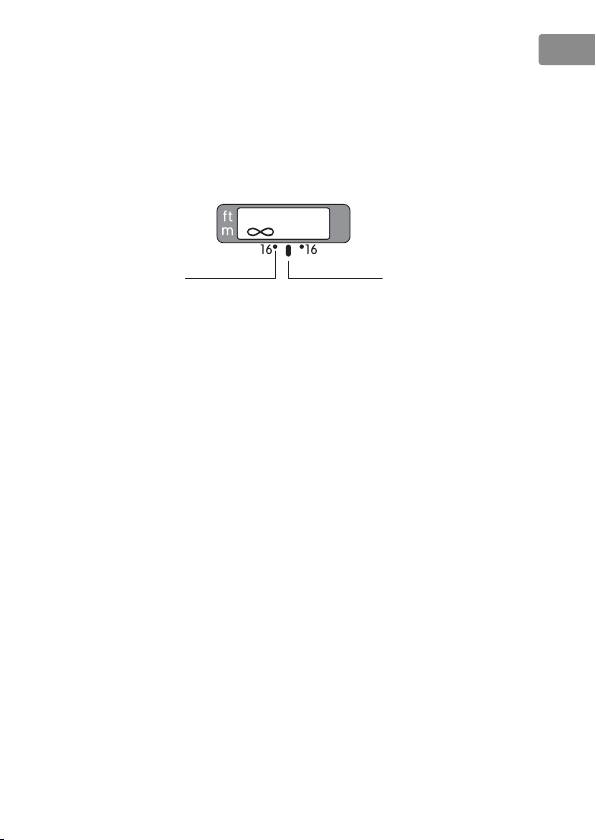
被写界深度
•
被写体の前後のピントが合う範囲(被写界深度)は、距離目盛基
準線の両側の被写界深度目盛によって、おおよそ判ります。
•
プレビュー(絞り込み)機構を持つカメラでは、撮影前にファイ
ンダー内で被写界深度を確認できます。
•
詳しい被写界深度は、被写界深度表(
P. 172
)をご覧ください。
3
1.5
0.7
0.4
被写界深度目盛 距離目盛基準線
■
絞り値の設定
絞り値は、カメラ側で設定してください。
■
カメラの内蔵フラッシュ使用時のご注意
•
撮影距離
0.6 m
以上で使用してください。
•
ケラレを防止するために、レンズのフードは取り外して使用して
ください。
※
カメラの内蔵フラッシュのケラレとは、フラッシュの光がレンズの先端でさ
えぎられて影になり、画像に映り込む現象です。
7
Jp
■
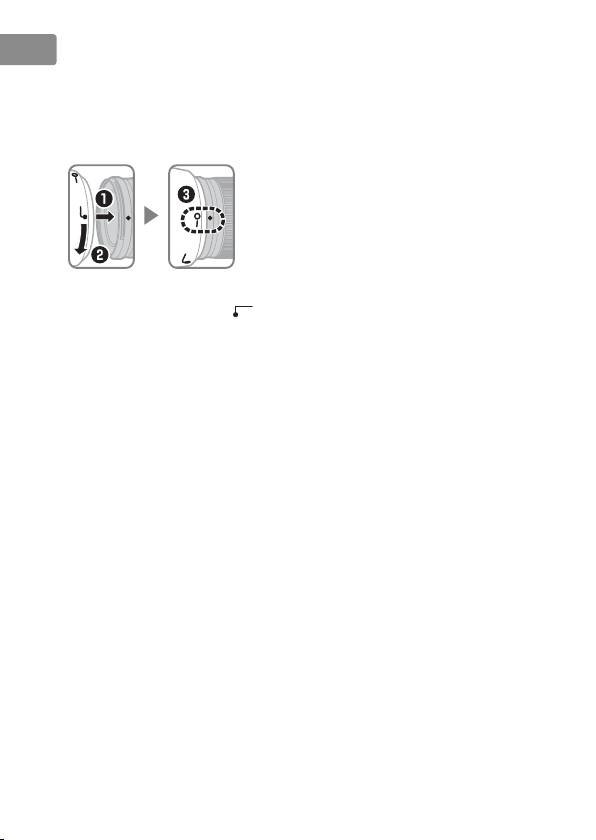
フードの使い方
画像に悪影響を及ぼす光線をカットし、レンズ面の保護にも役立ち
ます。
取り付け方
•
フード着脱指標(●)とフードセット指
標(
{
)が合っていることを確認して
ください(
e
)。
•
フード先端を強くつかむと着脱が困難になります。着脱の際は、
フード取り付け指標( )付近を持って回転させてください。
•
フードが正しく取り付けられないと画像にケラレを生じますので
ご注意ください。
•
収納時はフードを逆向きにしてレンズに取り付けられます。着脱
の際は、フードセット指標(
{
)付近を持って回転させてくだ
さい。
8
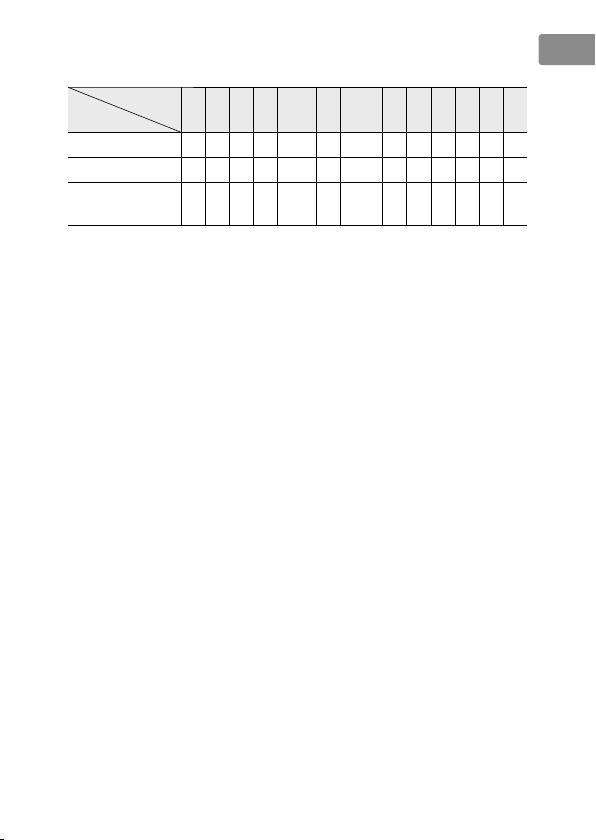
Jp
■
ファインダースクリーンとの組み合わせ
スクリーン
EC-B
ABCE
G1 G2 G3 G4 J L M U
EC-E
カメラ
F6
◎◎◎ ◎◎ ◎
F5+DP-30
◎◎ ◎ ◎ ◎ ◎◎ ◎
◎
F5+DA-30
◎◎ ◎ ◎
◎◎ ◎
(
+0.5
)
構図の決定やピント合わせの目的には
◎
:
好適です。
○
:
視野の一部が多少見にくくなりますが、撮影結果には全く影響がありま
せん。
:
各カメラに存在しないファインダースクリーンです。
(
)
:
中央部重点測光時の補正値です。
F6
カメラの場合、測光値の補正は、
カメラのカスタムメニュー[
b6
:スクリーン補正]を[
BorE
以外]にセッ
トして行います。
B
型および
E
型以外を使用する場合は、補正量が
0
でも、
[
BorE
以外]にセットしてください。
F5
カメラの場合は、カスタムセッ
ティング
No.18
の設定で測光値の補正を行います。詳しくはカメラの使
用説明書をご覧ください。
空欄
:
使用不適当です。ただし、
M
スクリーンの場合、撮影倍率
1/1
倍以上の
近接撮影に用いるため、この限りではありません。
ご注意
F5
カメラの場合、マルチパターン測光は
A
、
B
、
E
、
EC-B
、
EC-E
、
J
、
L
スクリーンのみ可能です。
9

Jp
■
レンズのお手入れと取り扱い上のご注意
•
フードをレンズに装着した状態で、フードだけを持たないでくだ
さい。
•
CPU
信号接点は汚さないようにご注意ください。
•
レンズマウントゴムリングが破損した場合は、そのまま使用せず
販売店またはニコンサービス機関に修理を依頼してください。
•
レンズ面の清掃は、ホコリを拭う程度にしてください。指紋がつ
いたときは、柔らかい清潔な木綿の布に無水アルコール(エタノー
ル)または市販のレンズクリーナーを少量湿らせ、レンズの中心
から外周へ渦巻状に、拭きムラ、拭き残りのないように注意して
拭いてください。
•
シンナーやベンジンなどの有機溶剤は絶対に使用しないでくださ
い。
•
レンズ表面の汚れや傷を防ぐためには、
NC
フィルターをお使い
いただけます。また、レンズのフードも役立ちます。
•
レンズをケースに入れるときは、必ずレンズキャップと裏ぶたを
取り付けてください。
•
レンズを長期間使用しないときは、カビやサビを防ぐために、高
温多湿のところを避けて風通しのよい場所に保管してください。
また、直射日光のあたるところ、ナフタリンや樟脳のあるところ
も避けてください。
•
レンズを水に濡らすと、部品がサビつくなどして故障の原因とな
りますのでご注意ください。
•
ストーブの前など、高温になるところに置かないでください。極
端に温度が高くなると、外観の一部に使用している強化プラスチッ
クが変形することがあります。
10
Jp
■
付属アクセサリー
•
67 mm
スプリング式レンズキャップ
LC-67
•
裏ぶた
LF-4
•
バヨネットフード
HB-64
•
ソフトケース
CL-0915
■
使用できるアクセサリー
•
67 mm
ネジ込み式フィルター
※
•
ワイヤレスリモートスピードライト
SB-R200
※
レンズ先端に
2
個まで装着できます。
■
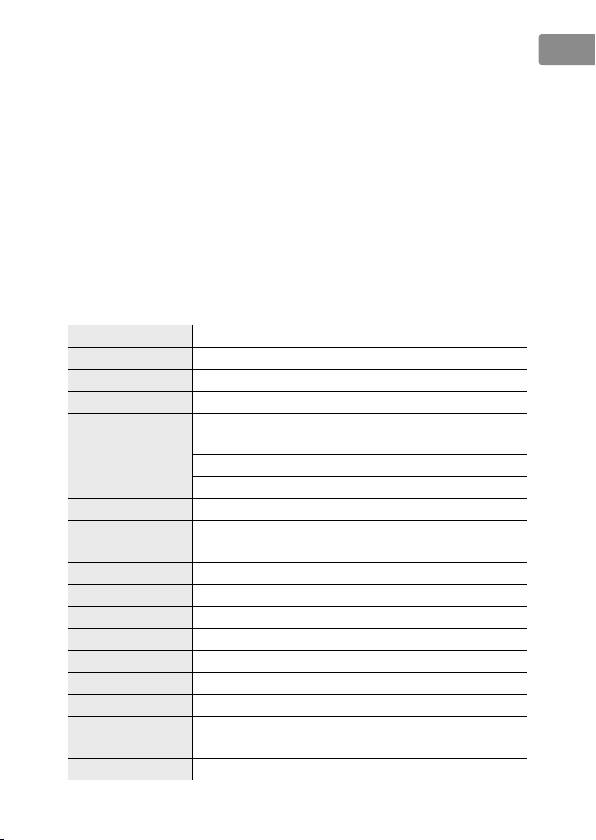
仕様
型式 ニコン
F
マウント
CPU
内蔵
G
タイプ、
AF-S
レンズ
焦点距離
28 mm
最大口径比
1
:
1.8
レンズ構成
9
群
11
枚(非球面レンズ
2
枚、ナノクリスタルコートあり)
75
°(
35mm
判一眼レフカメラ、
FX
フォーマットの
デジタル一眼レフカメラ)
画角
53
°
(
DX
フォーマットのデジタル一眼レフカメラ
)
63
°
(
IX240
カメラ
)
撮影距離情報 カメラへの撮影距離情報を出力可能
RF
(リアフォーカス)方式、超音波モーターによる
ピント合わせ
オートフォーカス、マニュアルフォーカス可能
撮影距離目盛 ∞〜
0.25 m
最短撮影距離 撮像面から
0.25 m
絞り羽根枚数
7
枚(円形絞り)
絞り方式 自動絞り
絞りの範囲
f/1.8
16
測光方式 開放測光
アタッチメントサイズ
67 mm
(
P=0.75 mm
)
約
73 mm
(最大径)×
80.5 mm
(レンズマウント
寸法
基準面からレンズ先端まで)
質量 約
330 g
※
仕様、外観の一部を、改善のため予告なく変更することがあります。
11
For Your Safety
En
A
CAUTIONS
•
Do not disassemble.
Touching the internal parts of the camera or lens
could result in injury.
In the event of malfunction, the product
should be repaired only by a qualified technician.
Should the
product break open as the result of a fall or other accident, remove
the camera battery and/or disconnect the AC adapter and then take
the product to a Nikon-authorized service center for inspection.
•
Turn the camera off immediately in the event of malfunction.
Should
you notice smoke or an unusual smell coming from the
equipment, immediately unplug the AC adapter and remove the
camera battery, taking care to avoid burns.
Continued operation
could result in fire or injury.
After removing the battery, take the
equipment to a Nikon authorized service center for inspection.
•
Do not use in the presence of flammable gas.
Operating electronic
equipment in the presence of flammable gas could result in
explosion or fire.
•
Do not look at the sun through the lens or the camera viewfinder.
Viewing the sun or other bright light source through the lens
or viewfinder could cause permanent visual impairment.
•
Keep out of reach of children.
Failure to observe this precaution
could result in injury.
•
Observe the following precautions when handling the lens and camera:
-
Keep the lens and camera dry.
Failure to observe this
precaution could result in fire or electric shock.
-
Do not handle the lens or camera with wet hands.
Failure to
observe this precaution could result in electric shock.
-
Keep the sun well out of the frame when shooting backlit
subjects.
Sunlight focused into the camera when the sun is
in or close to the frame could cause a fire.
-
If the lens will not be used for an extended period, attach the
front and rear lens caps and store the lens out of direct
sunlight.
If left in direct sunlight, the lens could focus the
sun’s rays onto flammable objects, causing fire.
•
Do not carry tripods with a lens or camera attached.
You could trip or
accidentally strike others, resulting in injury.
•
Do not leave the lens where it will be exposed to extremely high temperatures,
such as in an enclosed automobile or in direct sunlight.
Failure to observe this
12
precaution could adversely affect the lens’ internal parts, causing fire.
Thank you for your purchase of an AF-S NIKKOR 28mm f/1.8G
lens.
Before using this product, please carefully read both
En
these instructions and the camera manual.
Note: When mounted on a DX-format digital single-lens reflex
camera such as the D7000 or cameras in the D300 series, this
lens has an angle of view of 53° and a focal length equivalent to
42 mm (35 mm format).
■
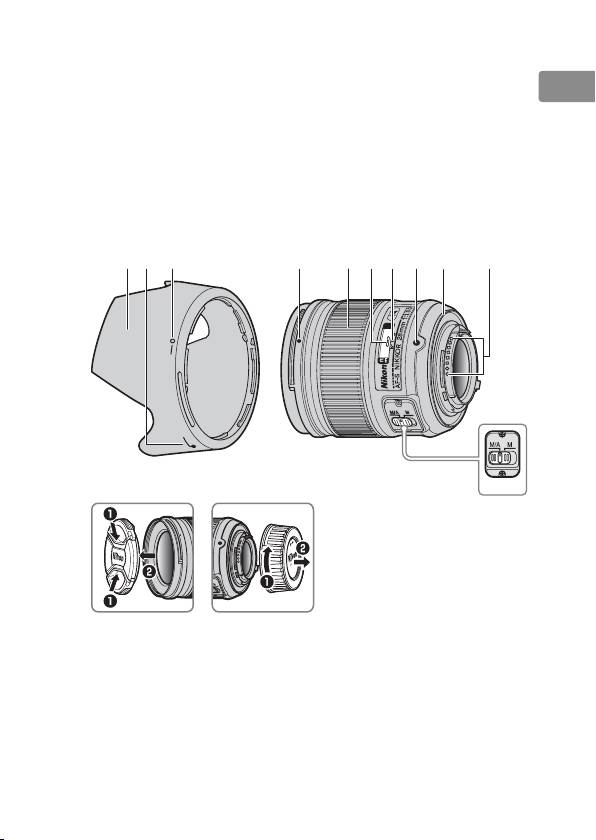
Parts of the Lens
we r tyuio
!0q
!1
q Lens hood ............................... 16
u Focus distance mark ........ 16
w Lens hood alignment
i Lens mounting mark
mark ...................................... 16
o Rubber lens-mount
e Lens hood lock mark ........ 16
gasket .................................. 18
r Lens hood mounting
!0 CPU contacts ........................ 18
mark ...................................... 16
!1 Focus-mode switch .......... 15
t Focus ring ............................... 15
y
Focus distance indicator
... 16
13
■
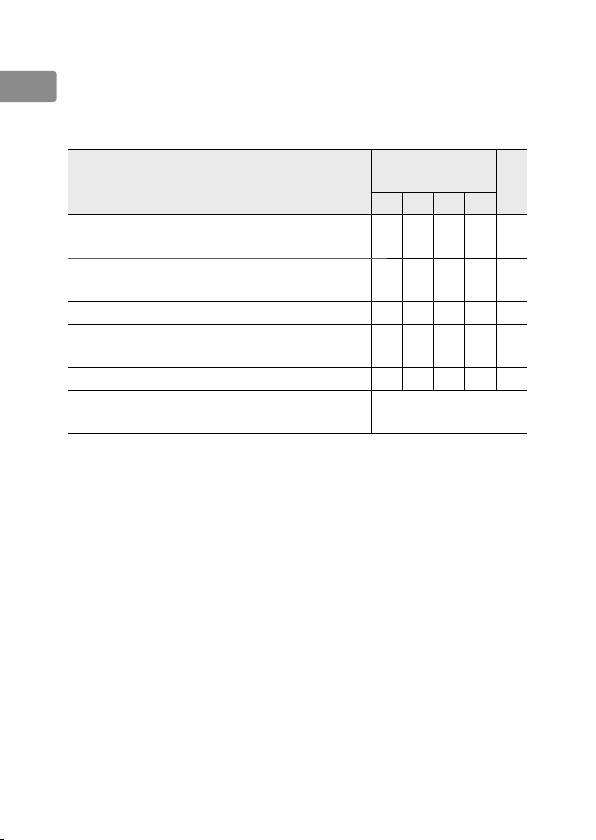
Compatibility
En
Check marks (“✔“) indicate supported features, dashes (“—”)
features that are not supported.
Some limitations may apply;
see the camera manual for details.
Exposure
(Shooting) mode
4
5
Camera
P
SAM
AF
Nikon FX-format and DX-format digital single-lens reflex
✔✔✔✔✔
cameras
1
1
1
F6, F5, F100, F/N80-series
, F/N75-series
, F/N65-series
,
✔✔✔✔✔
1
2
Pronea 600i/6i
, Pronea S
1
1
1
F4-series, F90X/N90s
, F90-series/N90
, F70-series/N70
✔✔
——
✔
1
1
1
F60-series/N60
, F/N55-series
, F50-series/N50
, F-401x/
✔✔✔✔
—
1
1
1
N5005
, F-401s/N4004s
, F-401/N4004
1
1
1
F-801s/N8008s
, F-801/N8008
, F-601M/N6000
✔✔
———
1
3
F3AF, F-601/N6006
, F-501/N2020
, Nikon manual focus
—
1
cameras (excluding F-601M/N6000
)
1
N-series cameras and
3
N2020 sold in U. S. A. and
Pronea 6i sold in U. S. A.
Canada only.
only.
4
Includes AUTO and scene
2
Exposure mode M (manual)
(Digital Vari-Program) modes.
not available.
5
Autofocus.
14
■
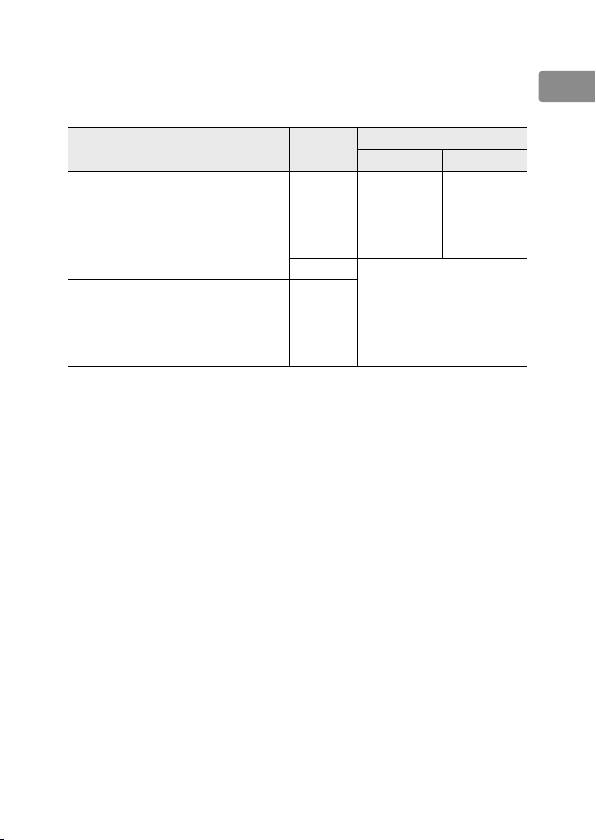
Focus
Supported focus modes are shown in the following table (for
En
information on camera focus modes, see the camera manual).
Camera
Lens focus mode
Camera
focus mode
M/A M
Nikon FX-format and DX-format digital
Autofocus
Manual
single-lens reflex cameras, F6, F5, F4-series,
with
focus with
AF
F100, F90X/N90s *, F90-series/N90 *, F/N80-
manual
electronic
series *, F/N75-series *, F70-series/N70 *,
override
rangefinder
F/N65-series *, Pronea 600i/6i *, Pronea S
MF
Manual focus
F60-series/N60 *, F/N55-series *, F50-
(electronic rangefinder
series/N50 *, F-801s/N8008s *, F-801/
available with all
AF, MF
N8008 *, F-601
M/N6000 *, F-401x/
cameras except
N5005 *, F-401s/N4004s *, F-401/N4004 *
F-601
M/N6000 *)
*
N-series cameras and Pronea 6i sold in U. S. A. only.
M/A (Autofocus with Manual Override)
To focus using autofocus with manual override (M/A):
z
Slide the lens focus-mode switch to M/A.
x
Focus.
If desired, autofocus can be over-ridden by rotating the
lens focus ring while the shutter-release button is
pressed halfway (or, if the camera is equipped with an
AF-ON button, while the AF-ON button is pressed).
To
refocus using autofocus, press the shutter-release button
halfway or press the AF-ON button again.
15
■
Depth of Field
En
The depth-of-field indicators on the lens show the
approximate depth of field (see page 172 for more
information).
If the camera offers depth-of-field preview (stop
down), depth of field can also be previewed in the viewfinder.
3
1.5
0.7
0.4
Depth-of-field
Focus distance
indicators
mark
■
Aperture
Aperture is adjusted using camera controls.
■
Built-in Flash Units
When using the built-in flash on cameras equipped with a
built-in flash unit, shoot at ranges of 0.6 m (2 ft) or more and
remove the lens hood to prevent vignetting (shadows
created where the end of the lens obscures the built-in flash).
■
The Lens Hood
The lens hoods protect the lens and block stray light that
would otherwise cause flare or ghosting.
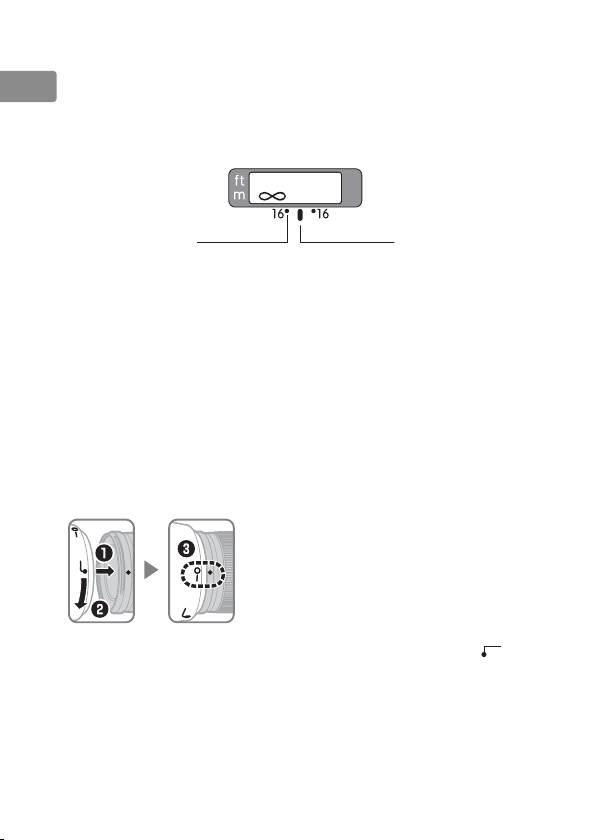
Align the lens hood lock mark (—{)
with the lens hood mounting mark (●)
on the lens (e).
When attaching or removing the hood, hold it near the
symbol on its base and avoid gripping it too tightly.
Vignetting may occur if the hood is not correctly attached.
The hood can be reversed and mounted on the lens when
not in use.
When the hood is reversed, it can be attached and
removed by rotating it while holding it near the lock mark
(—{).
16
■
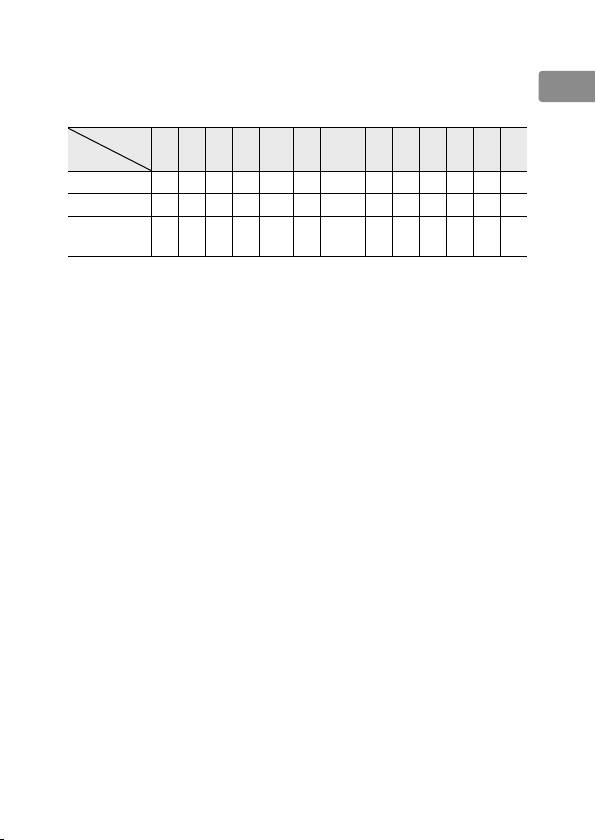
Focusing Screens
The following cameras support a variety of focusing screens
En
for use in different situations.
Screen
EC-B
Camera A B C E
EC-E G1 G2 G3 G4 J L M U
F6
—
—————
F5+DP-30
F5+DA-30
(+0.5)
: Recommended.
{: Vignetting visible in viewfinder (photographs are not
affected).
—: Not compatible with camera.
( ): Figures in parentheses give the exposure
compensation for center-weighted metering.
Select
“Other screen” for Custom Setting b6 (“Screen comp.”)
when adjusting exposure compensation for the F6;
note that with screens other than B or E, “Other screen”
must be selected even when the value for exposure
compensation is 0.
Exposure compensation for the F5
can be adjusted using Custom Setting 18; see the
camera manual for details.
Empty cell: Not suited to use with this lens.
Note that type M
screens can however be used for photomicrography
and macro photography at magnifications of 1 : 1 or
higher.
Note: The F5 supports matrix metering with A, B, E, EC-B/EC-E, J,
and L focusing screens only.
17

■
Lens Care
En
•
Do not pick up or hold the lens or camera using only the
lens hood.
•
Keep the CPU contacts clean.
•
Should the rubber lens-mount gasket be damaged, cease
use immediately and take the lens to a Nikon-authorized
service center for repair.
•
Use a blower to remove dust and lint from the lens surfaces.
To remove smudges and fingerprints, apply a small amount
of ethanol or lens cleaner to a soft, clean cotton cloth or
lens-cleaning tissue and clean from the center outwards
using a circular motion, taking care not to leave smears or
touch the glass with your fingers.
•
Never use organic solvents such as paint thinner or benzene
to clean the lens.
•
The lens hood or NC filters can be used to protect the front
lens element.
•
Attach the front and rear caps before placing the lens in its
flexible pouch.
•
If the lens will not be used for an extended period, store it in
a cool, dry location to prevent mold and rust.
Do not store
in direct sunlight or with naphtha or camphor moth balls.
•
Keep the lens dry.
Rusting of the internal mechanism can
cause irreparable damage.
•
Leaving the lens in extremely hot locations could damage
or warp parts made from reinforced plastic.
■
Supplied Accessories
•
67 mm snap-on Front Lens Cap LC-67
•
Rear Lens Cap LF-4
•
Bayonet Hood HB-64
•
Flexible Lens Pouch CL-0915
18
■
Compatible Accessories
•
67 mm screw-on filters
En
•
Wireless Remote Speedlight SB-R200: Up to two SB-R200 wireless
remote flash units can be mounted at the end of the lens.
■
Specifications
Type Type G AF-S lens with built-in CPU and
F mount
Focal length 28 mm
Maximum aperture f/1.8
Lens construction 11 elements in 9 groups (including 2 aspherical
lens elements, and lens elements with Nano-Crystal coatings)
Angle of view Nikon film SLR and FX-format D-SLR cameras: 75°
•
•
Nikon DX-format D-SLR cameras: 53°
•
IX240 system cameras: 63°
Distance information Output to camera
Focusing Rear Focusing (RF) System with autofocus
controlled by Silent Wave Motor and
separate focus ring for manual focus
Focus distance
0.25 m to infinity (∞)
indicator
Minimum focus
0.25 m (0.82 ft) from focal plane
distance
Diaphragm blades 7 (rounded diaphragm opening)
Diaphragm Fully automatic
Aperture range f/1.8 to f/16
Metering Full aperture
Filter-attachment size
67 mm (P = 0.75 mm)
Dimensions Approx. 73 mm maximum diameter ×
80.5 mm (distance from camera lens mount flange)
Weight Approx. 330 g (11.6 oz)
Nikon reserves the right to change the specifications of the
hardware described in this manual at any time and without
prior notice.
19

Für Ihre Sicherheit
A
SICHERHEITSHINWEISE
•
Nicht auseinanderbauen.
Das Berühren der Innenteile von Kamera oder Objektiv
De
könnte zu Verletzungen führen.
Im Falle einer Fehlfunktion sollte das Produkt
auschließlich von einem qualifizierten Fachmann repariert werden.
Sollte das
Produkt aufgrund eines Herunterfallens oder eines Unfalles aufbrechen,
entfernen Sie den Kamera-Akku und/oder trennen Sie den Netzadapter vom
Netz und bringen Sie das Produkt zur Inspektion zum Nikon-Kundendienst.
•
Schalten Sie die Kamera im Falle einer Fehlfunktion unverzüglich ab.
Wenn Sie Rauch
oder einen ungewöhnlichen Geruch aus Ihrer Ausrüstung wahrnehmen,
trennen Sie sofort den Netzadapter vom Netz und entfernen Sie den Kamera-
Akku.
Geben Sie dabei acht, dass Sie sich nicht verbrennen.
Ein weiterer
Betrieb könnte zu einem Brand oder zu Verletzungen führen.
Nach Entfernen
des Akkus bringen Sie die Ausrüstung zur Inspektion zum Nikon-Kundendienst.
•
Nicht in Gegenwart von entflammbarem Gas verwenden.
Der Betrieb von
Elektrogeräten in Gegenwart von entflammbarem Gas könnte zu einer
Explosion oder zu einem Brand führen.
•
Blicken Sie nicht durch das Objektiv oder den Kamerasucher in die Sonne.
Das
Betrachten der Sonne oder einer anderen hellen Lichtquelle durch das
Objektiv oder den Sucher kann zu permanenten Sehstörungen führen.
•
Außerhalb der Reichweite von Kindern aufbewahren.
Ein Nichtbeachten dieser
Vorsichtsmaßnahme kann zu Verletzungen führen.
•
Beachten Sie die folgenden Vorsichtsmaßnahmen beim Umgang mit Kamera und Objektiv:
-
Halten Sie Objektiv und Kamera stets trocken.
Ein Nichtbeachten dieser
Vorsichtsmaßnahme kann zu Feuer oder Stromschlägen führen.
-
Bedienen Sie die Kamera oder das Objektiv nicht mit nassen Händen.
Ein
Nichtbeachten dieser Vorsichtsmaßnahme kann zu Stromschlägen führen.
-
Halten Sie die Sonne sicher außerhalb des Bildbereiches, wenn Sie Motive
im Gegenlicht aufnehmen.
Sonnenlicht, das in der Kamera fokussiert wird,
wenn sich die Kamera im oder nah beim Bildmotiv befindet, kann zu einem
Brand führen.
-
Wird das Objektiv für längere Zeit nicht verwendet, bringen Sie den
vorderen und hinteren Objektivdeckel an und lagern Sie das Objektiv an
einem Ort ohne direkte Sonneneinstrahlung.
Wird es in direktem
Sonnenlicht gelagert, könnte das Objektiv die Sonnenstrahlen auf
entflammbare Objekte fokussieren und Sie so entzünden.
•
Tragen Sie Stative nicht mit aufgesetzter Kamera oder aufgesetztem Objektiv.
Es
besteht die Gefahr zu stolpern oder versehentlich andere Personen zu
stoßen, was zu Verletzungen führen kann.
•
Lagern Sie das Objektiv nicht an Orten, an denen es extrem hohen Temperaturen
ausgesetzt ist, wie beispielsweise in einem geschlossenen Auto oder direkt in der Sonne.
Andernfalls können die internen Teile des Objektivs nachteilig beeinflusst
werden und es könnte zu einem Brand kommen.
20
