
Nikon 24mm-f-35D-PC-E-Nikkor: 8. Focusing
8. Focusing: Nikon 24mm-f-35D-PC-E-Nikkor
Table of contents
- Notes on Safety Operations
- Observe the following precautions when handling the camera and lens
- 1. Nomenclature
- 2. Major features
- Note on the shift and tilt lock-release knobs 3. Usable cameras and available functions
- Cameras
- Aperture stop-down button (one-touch preset aperture operation)
- Important 4. Mounting lens
- 5. Using bayonet hood HB-41
- 6. Determining exposure When using the Nikon D4, D3-Series, Df, When using other Nikon cameras
- Determining exposure (with an external exposure meter) 7. The shift/tilt function Important
- The shift function
- The tilt function Revolving
- 8. Focusing
- 9. Depth of field
- 10. Taking flash pictures using cameras with a built-in flash
- 11. Recommended focusing screens
- 12. Lens care 13. Standard accessories
- 14. Optional accessories 15. Specifications
- Weight: Approx. 730 g (25.7 oz) 16. Customer service
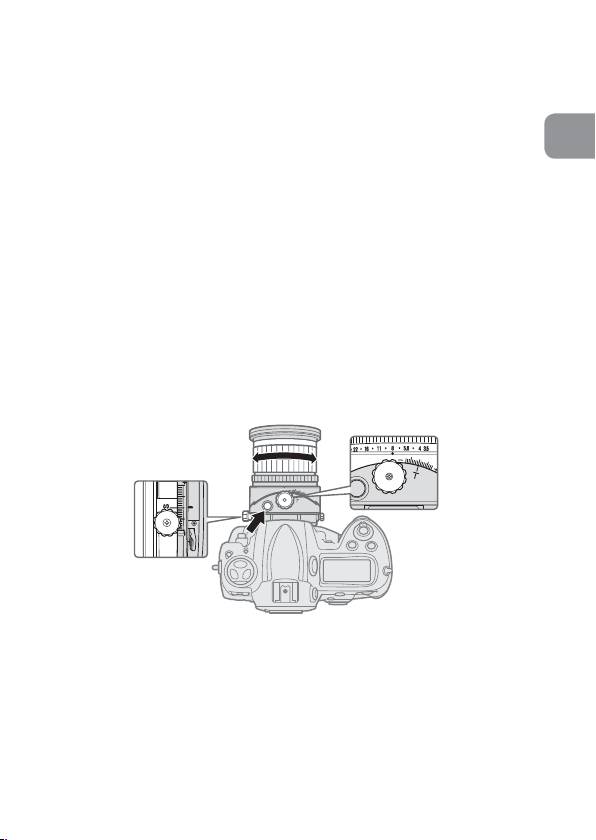
This lens can be revolved up to 90° right or left. By
revolving the lens, the shift function can be changed to
operate vertically, and the tilt function can be changed to
operate horizontally.
En
• Before rotating the lens, set the shift and tilt amount to
“0” by rotating the shift and tilt knob.
Note:
When revolving the lens while using tilt and/or shift,
be careful to avoid nipping your fingers between the
lens and the camera body or scratching the camera
body with the lens. Failure to lock each knob can also
have the same effect.
• Push the revolving lever and rotate the lens holding the
square parts of the lens.
• Click stops are provided in 30° steps both right and left.
At 30° and 60°, you can rotate the lens without pushing
the revolving lever.
8. Focusing
Fig. 10
a
Set the aperture to its maximum by pressing the
aperture stop-down button, and focus by rotating the
focus ring.
b
Before shooting, press the aperture stop-down button
again to stop-down the aperture.
31
