Nikon 85mm-f-35G-ED-AF-S-VR-DX-Micro-Nikkor: ■ Vibration reduction mode (VRII)
■ Vibration reduction mode (VRII): Nikon 85mm-f-35G-ED-AF-S-VR-DX-Micro-Nikkor
Table of contents
- Notes on Safety Operations
- ■ Nomenclature
- ■ Major features
- ■ Using the lens ■ Focusing
- ■ Setting the aperture ■ Depth of field ■ Focusing at a predetermined reproduction ratio ■ Notes on close-up photography and reproduction work
- ■ Exposure factor ■ Effective f-number variation (P. 146)
- ■ Vibration reduction mode (VRII)
- ■ Lens care ■ Standard accessories ■ Optional accessory
- ■ Specifications
■ Vibration reduction mode (VRII)
Jp
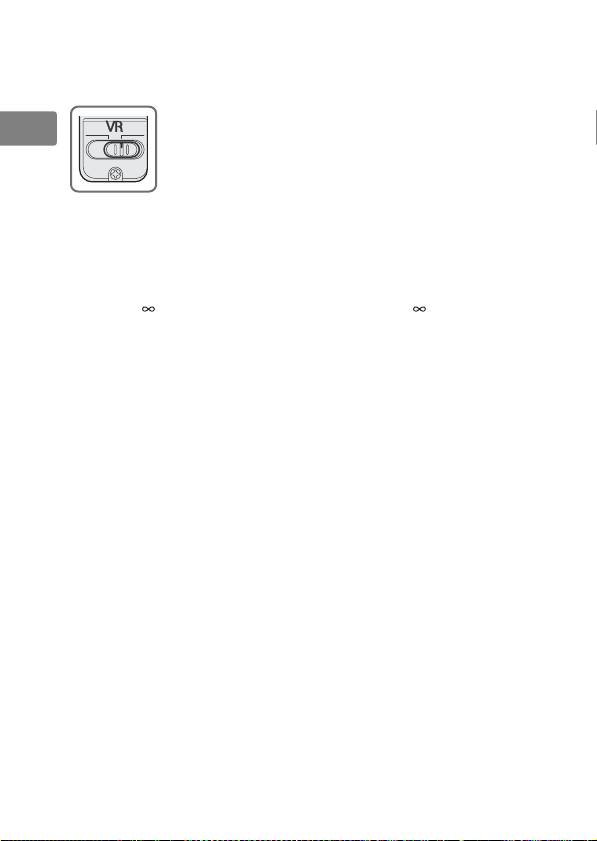
Setting the vibration reduction ON/OFF switch
ON: The effects of camera shake are reduced while the
ON
OFF
En
shutter- release button is pressed halfway and also
at the instant the shutter is released. Because
vibration is reduced in the viewfinder, auto/
De
manual focusing and exact framing of the subject
are easier.
Fr
OFF: The effects of camera shake are not reduced.
Notes on using vibration reduction
Es
• By enabling vibration reduction (VR), slower shutter speeds
(approximately four stops*) can be used when shooting distance is
Sv
between and 2.6 m (the reproduction ratio from to 1/30×). The
higher the reproduction ratio from 1/30× is, the more the effects of
Ru
vibration reduction will decrease gradually. (*Based on results achieved
under Nikon measurement conditions. The effects of vibration
reduction may vary according to shooting conditions and use.)
Nl
• After pressing the shutter-release button halfway, wait until the image
in the viewfinder stabilizes before pressing the shutter-release button
It
the rest of the way down.
• Due to the characteristics of the vibration reduction mechanism, the
Cz
image in the viewfinder may be blurred after the shutter is released.
This is not a malfunction.
Sk
• If the camera is panned in a wide arc, compensation for camera shake
in the panning direction is not performed. For example, only the effects
of vertical camera shake is reduced with horizontal panning.
Ck
• Do not turn the camera off or remove the lens from the camera while
vibration reduction is operating. Failure to observe this note could
Ch
result in the lens sounding and feeling as if an internal component is
loose or broken when it is shaken. This is not a malfunction. Turn the
Kr
camera on again to correct this.
• With cameras featuring a built-in flash, vibration reduction does not
function while the built-in flash is charging.
• With autofocus cameras featuring an AF-ON button, vibration
reduction does not function even when the AF-ON button is pressed.
• When the camera is mounted on a tripod, set the vibration reduction
ON/OFF switch a to OFF. However, set the switch to ON when using
a tripod without securing the tripod head, or when using a monopod.
18
■ The built-in flash and vignetting
• The built-in flash cannot be used over distances of less than 0.6 m (2.0
Jp
ft.).
• To prevent vignetting, do not use the lens hood.
En
* Vignetting is the darkening of the corners around the image that occurs
when light emitted by the camera’s built-in flash is obstructed by the
De
lens barrel.
■ Using the lens hood
Fr
The lens hood blocks light rays that have harmful effects on pictures. It
also helps to protect the glass surface of the lens.
Es
Attaching the hood
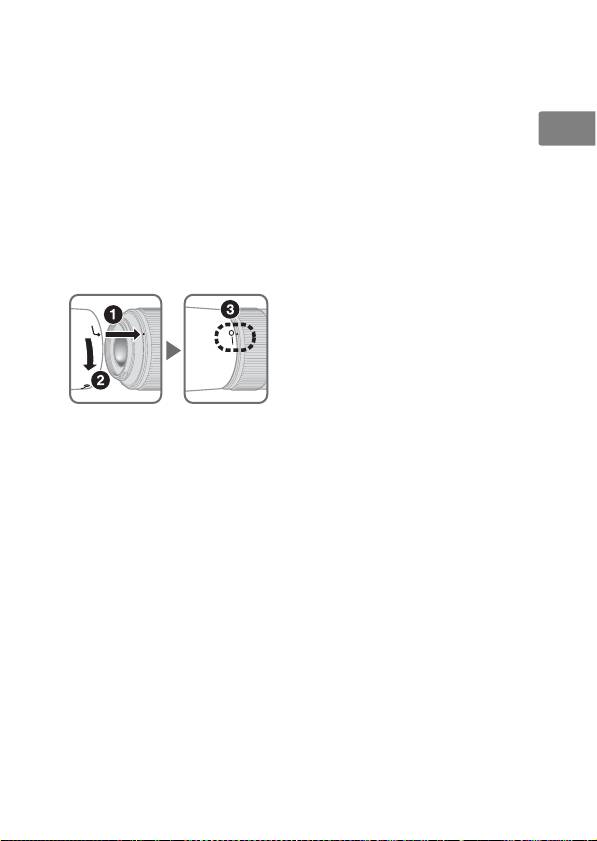
• Be sure that the lens hood
Sv
mounting index (C) is aligned
with the lens hood setting index
Ru
(
B) (3).
Nl
• To facilitate attachment or removal of the hood, hold it by the lens
It
hood attachment index (
A) rather than its outer edge.
• If the lens hood is not correctly attached, vignetting may occur.
Cz
• The lens can be stored with the lens hood attached in the reverse
position.
Sk
Ck
Ch
Kr
19