Nikon 85mm-f-28D-PC-E-Nikkor: 9. Depth of field 10. Focusing at a predetermined reproduction ratio 11. Notes on close-up photography and duplication work
9. Depth of field 10. Focusing at a predetermined reproduction ratio 11. Notes on close-up photography and duplication work: Nikon 85mm-f-28D-PC-E-Nikkor
Table of contents
- Notes on Safety Operations
- 1. Nomenclature
- 2. Major features
- 3. Usable cameras and available functions
- Aperture stop-down button (one-touch preset aperture operation)
- Important! 4. Mounting lens
- 5. Using bayonet hood HB-22 6. Determining exposure
- When using other Nikon cameras Determining exposure (with an external exposure meter)
- 7. The shift/tilt function Important The shift function The tilt function
- Revolving
- 8. Focusing
- 9. Depth of field 10. Focusing at a predetermined reproduction ratio 11. Notes on close-up photography and duplication work
- 12. Taking flash pictures using cameras with a built-in flash
- 13. Recommended focusing screens
- 14. Lens care 15. Standard accessories 16. Optional accessories
- 17. Specifications
- Weight: Approx. 635 g (22.4 oz)
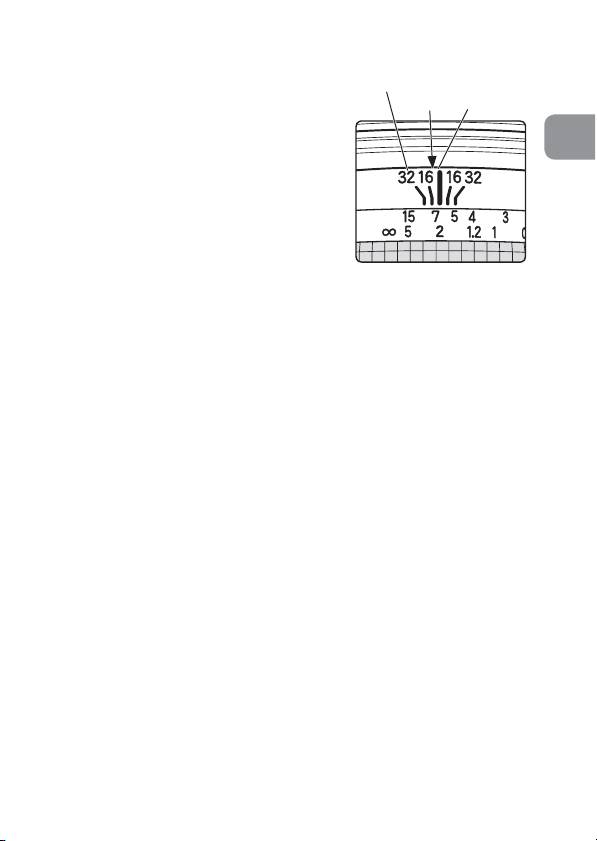
9. Depth of field
Depth of field scale
• Approximate depth of field can be
Distance index
determined by checking the depth of
field scale.
En
•
Using the aperture stop-down button
of the lens or the camera’s depth-of-
field preview (stop-down) button (with
the D3 or D300 camera), the depth of
field can be observed while looking
through the camera viewfinder.
• For more information, see p. 248.
Fig. 11
Note: When the lens is tilted, neither
the depth of field scale nor the distance scale can be used.
(Both scales can be used when the lens is shifted only.)
10. Focusing at a predetermined reproduction
ratio
The reproduction ratio is the relation between the size of the
image recorded on film and the actual subject size. If, for example,
the image on the focusing screen is one-fifth the actual subject
size, the reproduction ratio is 1:5.
To obtain the appropriate reproduction ratio for each focused
distance, see the table on page 248.
11. Notes on close-up photography and
duplication work
Camera shake
The PC-E Micro NIKKOR 85mm f/2.8D provides such exceptionally
high image magnification that even the slightest movement during
shooting can cause the image to blur. Be sure to mount the camera
on a tripod and use a cable release or remote cord to release the
shutter.
Close working distance
At the high reproduction ratios used in close-up shooting, the depth
of field is very shallow. To ensure greater depth of field, stop down
the lens, then carefully position the camera to ensure the most
important surface of the subject is in the same zone of sharp focus.
29