
Blomberg KWD 9330 X A+ – page 2
Manual for Blomberg KWD 9330 X A+
4 Preparation
C Your refrigerator should be installed at
least 30 cm away from heat sources
such as hobs, ovens, central heater
and stoves and at least 5 cm away
from electrical ovens and should not be
located under direct sunlight.
C The ambient temperature of the room
where you install your refrigerator
should at least be 10°C. Operating your
refrigerator under cooler conditions
than this is not recommended with
regard to its efficiency.
C Please make sure that the interior of
your refrigerator is cleaned thoroughly.
C If two refrigerators are to be installed
side by side, there should be at least 2
cm distance between them.
C When you operate your refrigerator
for the first time, please observe the
following instructions during the initial
six hours.
- The door should not be opened
frequently.
- It must be operated empty without
any food in it.
- Do not unplug your refrigerator. If
a power failure occurs out of your
control, please see the warnings in
the “Recommended solutions for the
problems” section.
C Original packaging and foam
materials should be kept for future
transportations or moving.
20
EN
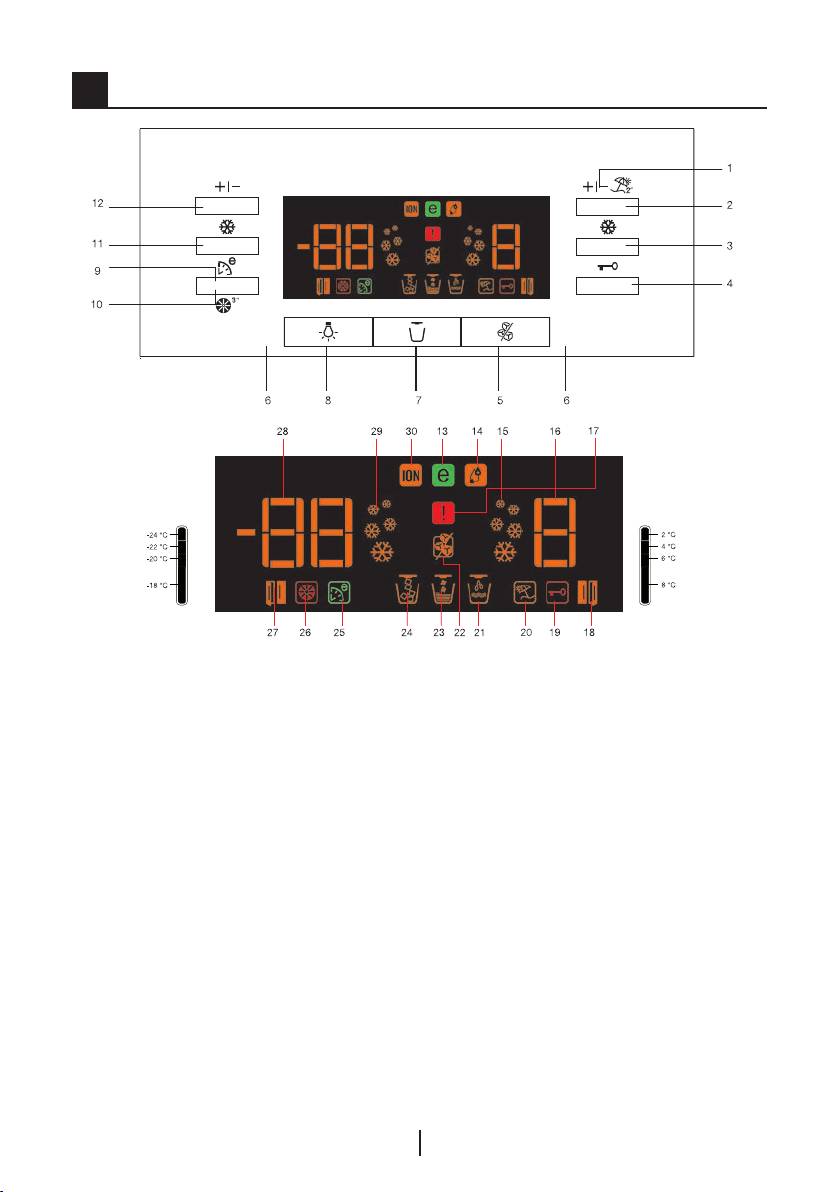
5 Using your refrigerator
18. Fridge door open indicator
1. Fridge Set button
19. Key Lock indicator
2. Vacation mode button
20. Vacation mode indicator
3. Quick fridge button
21. Water indicator
4. Key lock button
22. No ice indicator
5. Ice Off button
23. Crash Ice indicator
6. Water Dispenser Lights
7. Ice / Wate selection button
24. Cube Ice indicator
8. Water Dispenser light button
25. Auto Eco indicator
9. Filter Reset button
26. Filter reset indicator
10. Auto Eco button
27. Freezer door open indicator
11. Quick freeze button
28. Freezer Compartment Temperature Setting
12. Freezer Set button
indicator
13. Economy mode indicator
29. Fast Freeze indicator
14. High humidity indicator
30. Ioniser indicator
15. Quick cool indicator
OPTIONAL
16. Fridge temperature setting indicator
17. High temperature/error warning indicator
21
EN
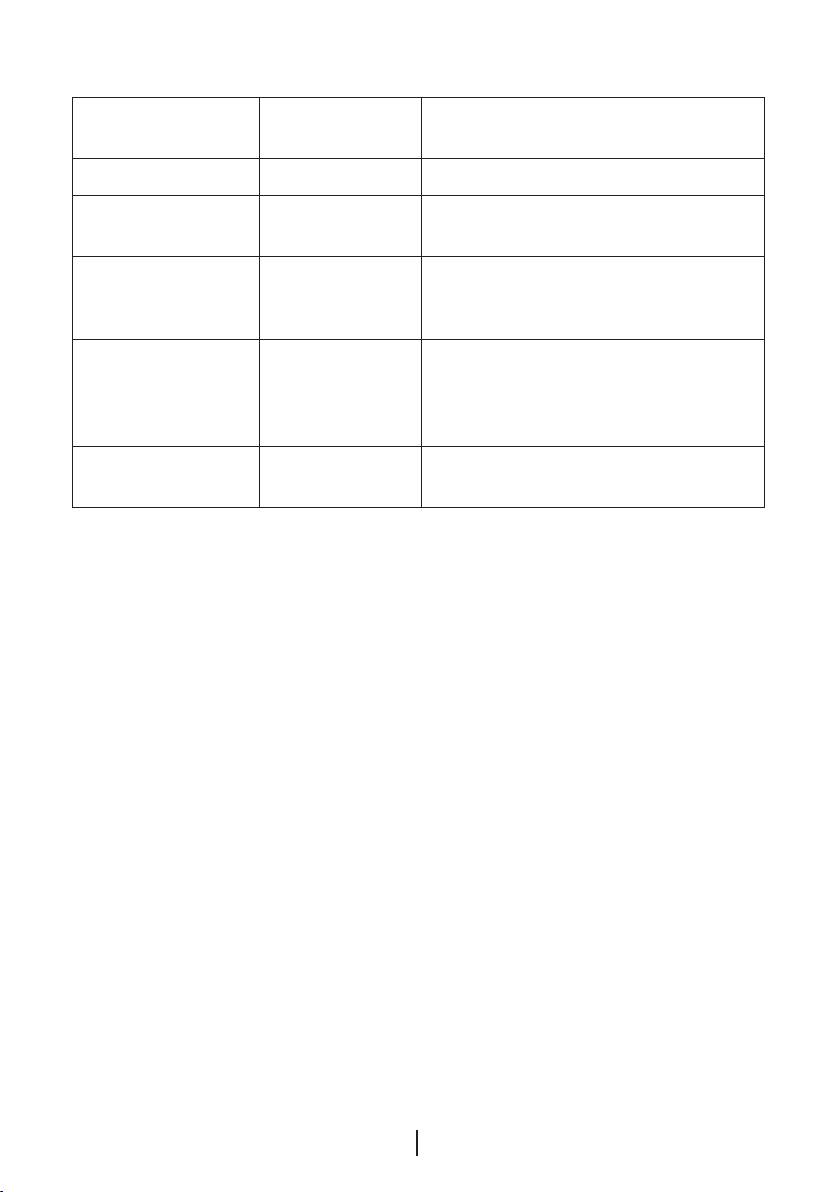
Freezer
Fridge
Explanations
Compartment
Compartment
Adjustment
Adjustment
-15°C 4°C This is the normal recommended
setting.
-18,-21 or -24°C 4°C These settings are recommended
when the ambient temperature
exceeds 30°C.
Fresh Freeze 4°C Use this when you wish to freeze your
food or make ice in a short time. Your
refrigerator will return to its previous
mode when the process is over.
-15°C or colder 2°C If you think that your fridge
compartment is not cold enough
because of the hot conditions or
frequent opening and closing of the
door.
-15°C or colder Quick Cool You can use it when your fridge
compartment is overloaded or if you
wish to cool down your food rapidly.
temperature will go down and then
Setting the fridge
return to the highest setting. Release at
compartment temperature
the desired temperature and the new set
temperature will be stored.
Fridge compartment temperature can be
set at one of the following temperatures:
Fresh Freeze Function
8,6,4 and 2°C
When you press “Fresh Freeze” button,
Press the Fridge Set button to change.
the compressor will run for about 14
The temperature will decrease by 2°C.
hours. Fresh Freeze indicator will glow.To
Every time you press the button, the
cancel this function press Fresh Freeze
temperature will go down and then
button again. Fresh Freeze indicator
return to the highest setting. Release at
will turn off and return to its normal
the desired temperature and the new set
settings. Fresh Freeze will cancel itself
temperature will be stored.
automatically after about 12 hours if you
do not cancel it.
If you think that your food is colder
than you desire, you can adjust
If you want to freeze large amounts
the temperature setting of fridge
of fresh food, press the Fresh Freeze
compartment to 6 or 8.
button 14 hours before putting the food
into the freezer compartment.
Setting the freezer
compartment temperature
Quick Cool Function
Freezer temperature can be set at one of
When you press Quick Cool button, the
the following temperatures : -15 / -18 /
temperature of the compartment will be
-21 / -24 and -24°C
colder than the adjusted values. This
function can be used for food placed in
Press the Freezer Set button to change.
the fridge compartment and required to
The temperature will decrease by 2°C.
be cooled down rapidly.
Every time you press the button, the
22
EN
After pressing the Quick Cool button,
water dispenser lamp will light up and
Quick Cool indicator will glow.To cancel
it will go off when the button is pressed
this function press Quick Cool button
again. This illumination will also light
again. Quick Cool indicator will turn
up when the water dispenser latch is
off and return to its normal settings.
pressed, and it will go off a short while
Quick Cool function will cancel itself
after the latch is released.
automatically in case you do not cancel
Water/Ice Type Selection
it.
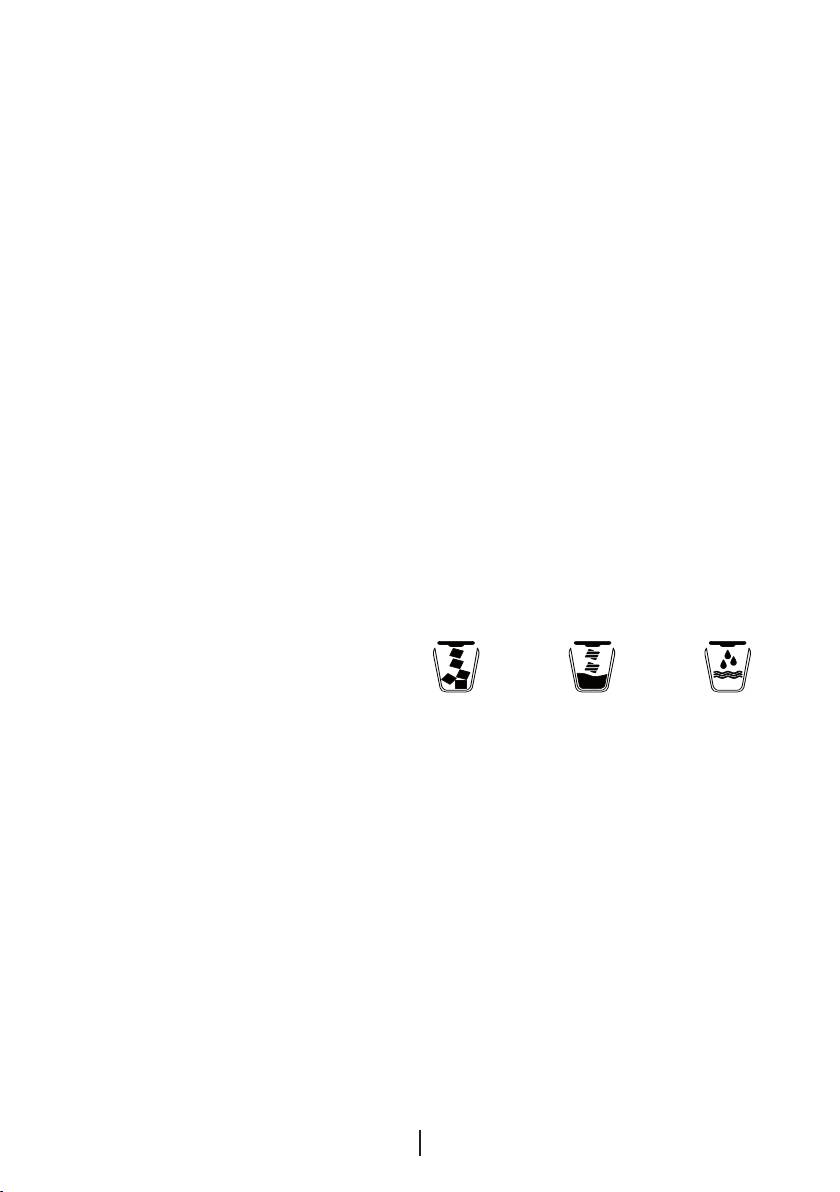
With Dispenser Selection button, either
Vacation Button
one of “water”, “ice cube” or “crushed
In case the fridge compartment will not
ice” options is selected.
be used for a long time, the usage of the
Ice/Water Dispenser
fridge compartment may be cancelled by
With its three different functions, the
pressing on the Vacation Button. By this
dispenser efficiently meets your cold
way, the refrigerator may operate more
water, cube ice and crushed ice needs
economically. Press on Vacation Button
without having to open the door of the
for 3 seconds to activate this function.
refrigerator. It is a continuous cold water
When this function is active, the door of
and ice source without adding water.
the fridge compartment must be kept
User friendly control panel provides the
closed and no food must be left in the
following dispensing functions:
fridge compartment.
Note:
Auto Eco Button (Special
• Water or ice can be dispensed for a
Economy function)
maximum of 90 seconds at each use.
When “Auto Eco” button is pressed,
• When the freezer door is open, the
Auto Economy Function will be
dispenser will not work.
activated. If the door of the fridge
compartment is kept closed for a long
time when this function is selected,
Ice Cube Crushed Ice Cold
the fridge compartment will switch to
Water
a more economic operation mode to
save electricity automatically. When the
Auto Eco button is pressed again, this
Using the Ice Dispenser
function is deactivated.
C
Please note, first ice cubes will not be
Ioniser
ready before 12 hours after switching on
the appliance.
The ioniser helps purify the air in the
fridge and is carried out automatically
In case you do not need ice, such as
during winter or in case you are on
Key Lock Button
vacation, select the ice off function.
The key lock is activated when this
C Ice device produces approximately
button is pressed for 3 seconds and all
110 cubes of ice in 24 hours and this
buttons and the dispenser latch will not
amount may change according to
work. If you want to deactivite key lock
the frequency of opening of doors,
press again for 3 seconds.
refrigerator settings and power outage.
Water Dispenser Illumination
Produced ice may be obtained from the
When the Light button is pressed, the
dispenser as cube ice or crushed ice.
23
EN

It is normal to get crushed ice from the
FILTER Reset Button:
dispenser in a longer time than in getting
the ice cubes and also flowing of some
Water filter should be replaced every six
crushed ice before the ice cubes drop
months. Filter reset indicator lits if water
if crushed ice option had been selected
filter needs to be changed Press filter
before selecting ice cube option.
Reset Button for 3 seconds to remove
C If the ice dispenser hasn’t been used
filter reset indicator warning.
for a long time or after a power cut the
ice may form clumps or if the ice has
taken on a change in smell or taste then
the ice must be disposed of and the
icebox cleaned thoroughly.
Warnings
C No ice must be added to the ice
dispenser compartment. This may
adversely affect the ice supply or
crushing the ice.
A It is normal to have a couple of ice
cubes stuck together in the icebank.
A Moving parts such as blades in
a housing at the ice outlet of the
dispenser must not be touched to
avoid injury.
A Never use sharp objects to break
the ice in the icebox. This may cause
damage on the icebox.
A Food stuff should never be placed into
the icebox for quick cooling purposes.
A When the icebox is to be removed for
any reason, first of all Ice Off Button
must be pressed.
Ice Off
C
To stop ice formation, Ice Off button
is pressed. When Ice Off is selected, no
water will be taken into the Icematic.
However, already existing ice can be
taken from the dispenser. To restart
ice formation, Ice Off button must be
pressed again.
Warning: If you do not use the ice
dispenser, do not forget to put ice duct
cover into the ring inside of the freezer
door. (See. Your Refrigerator section)
24
EN
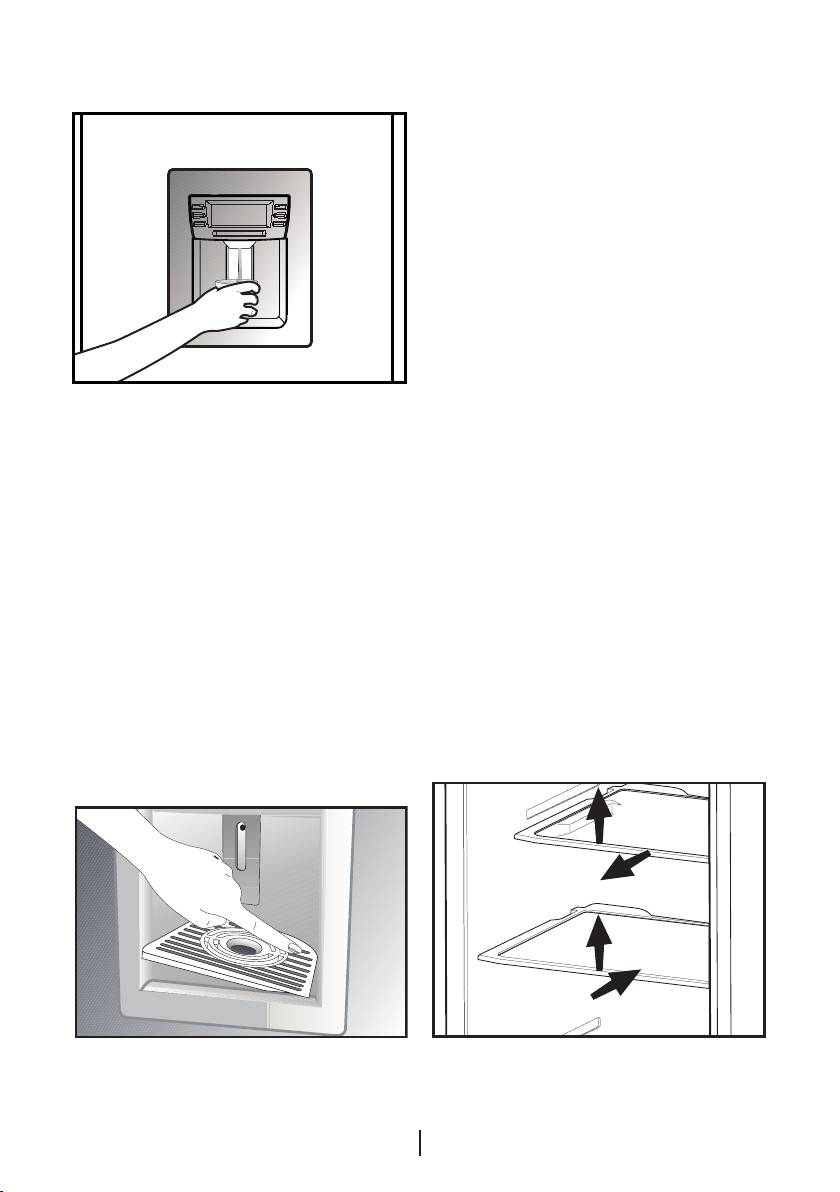
Using the water spring
Sliding Body Shelves
Sliding body shelves can be pulled by
slightly lifting up from the front and moved
back and forth. They come to a stop point
when pulled towards front to allow you
reach the foods placed at the back of the
shelf; when it is pulled after slightly lifting
upwards at the second stop point, the
body shelf will be released.
The shelf should be held tightly from the
bottom as well in order to prevent it from
tipping over. The body shelf is placed on
the rails at the sides of the refrigerator body
by bringing it to one lower or one upper
Warnings
level.
The body shelf should be pushed
It is normal for the first few glasses of
backwards to seat it completely.
water taken from the dispenser to be
warm.
In cases where the water dispenser
has not been used frequently, sufficient
amount of water must be drained from
the dispenser to get fresh water.
Spillage Tray
Water drops that drip during use,
accumulates in the spillage tray. You
can remove spillage tray by pulling it to
yourself. You can remove the water with
a sponge or a soft cloth.
1
2
3
4
25
EN
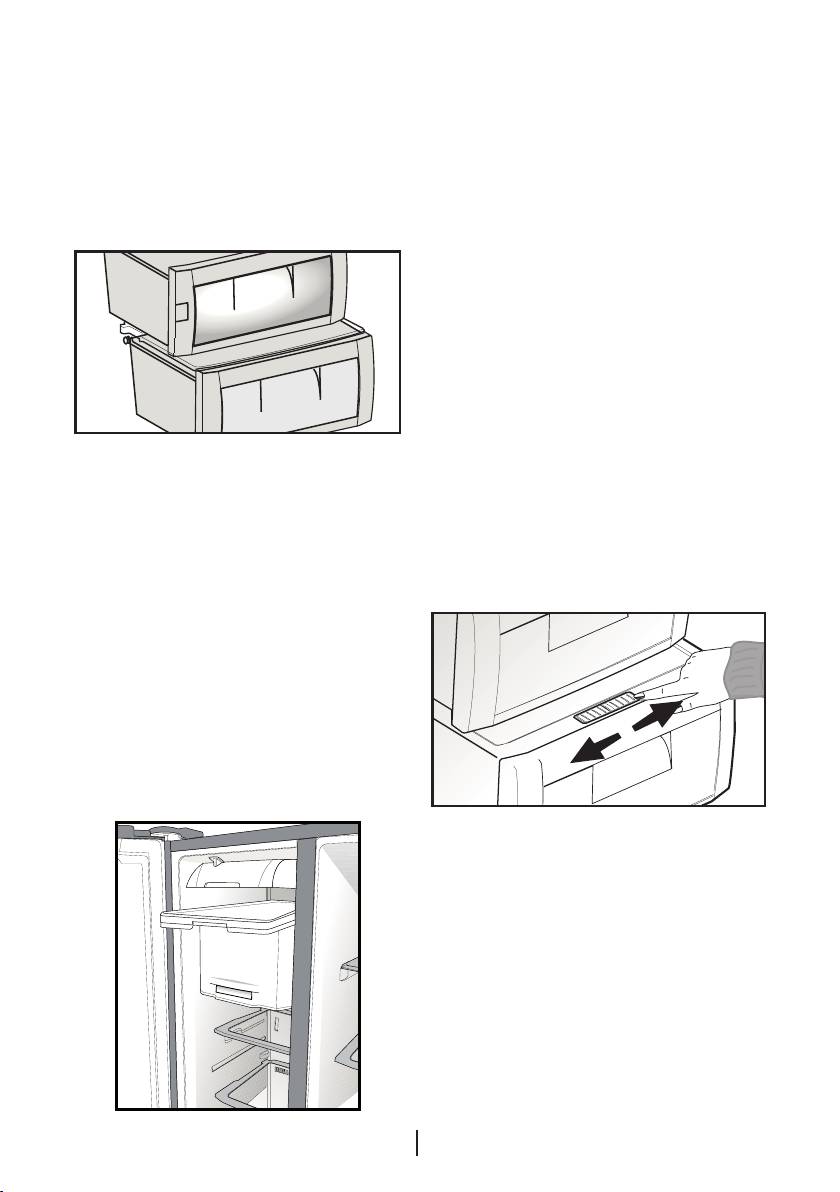
Blue light
Crisper humidity control
sliders
Foodstuff stored in the crispers that are
enlightened with a blue light continue
Using the crisper humidity control sliders
their photosynthesis by means of the
Crisper of your refrigerator is designed
wavelength effect of blue light and thus,
specially to keep your vegetables fresh
preserve their freshness and increase
without loosing their humidity. Cold air
their vitamin content.
circulates basically around the crisper
and the amount of the cold air passing
through the crisper is controlled by the
sliders on the front side of the crisper
cover.
You can adjust the humidity control
sliders to a suitable position according
to the humidity and cooling condition of
your food in the crisper.
If you want your food in the crisper
Ion:
to cool more, open the holes of the
Air is ionized by means of the ionizer
humidity control sliders and if you want
system in the fridge compartment air
them to cool less and keep their humidity
duct. Thanks to this system, air-borne
for a longer time, close the holes.
bacteria and particles that cause odor
are removed.
Egg tray
• You can install the egg holder to the
desired door or body shelf.
• Never store the egg holder in the
freezer compartment.
Fresh Freeze Compartment
This compartment freezes your food
quickly and preserves their tastes and
nutritional values.
26
EN
Recommendations for
Replacing the Interior Light
preservation of frozen food
Bulb
• Prepacked commercially frozen food
Should the light fail to work, proceed as
should be stored in accordance with the
follows:
frozen food manufacturer’s instructions
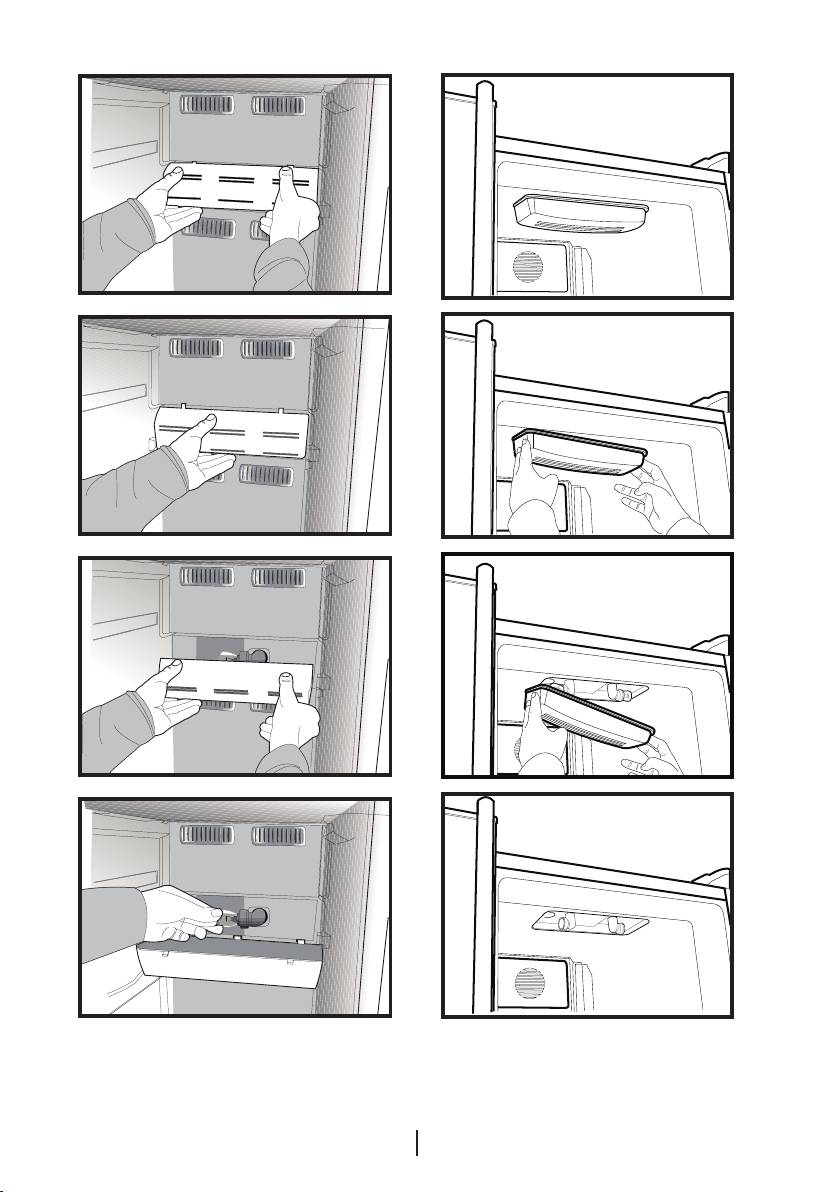
1. Switch off at the socket outlet and pull
for a
( 4 star) frozen food storage
out the mains plug.
compartment.
Remove all shelves and drawers for easy
• To ensure that the high quality
access.
achieved by the frozen food
2. Illumination covers in freezer and
manufacturer and the food retailer is
fridge sections are opened by pressing
maintained, the following should be
by hand; first release one side and then
remembered:
the other by pressing on the sides as
1.Put packets in the freezer as quickly as
shown in the figures.
possible after purchase.
3. First check that the bulb has not
2.Ensure that contents are labelled and
worked loose by ensuring that it
dated.
is screwed securely in the holder.
3.Do not exceed “Use By”, “Best Before”
Reinsert the plug and switch on. If the
dates on the packaging.
bulb works, reinstall the light cover by
If there is a power failure do not open
inserting the rear lug and pushing up to
the freezer door. Even if the power failure
locate the front two lugs.
lasts up to the time specified on Type
4. If the light still fails to work, switch
Label (inside left of the refrigerator),
off at the socket outlet and pull out the
frozen food will not be affected. In case
mains plug. Replace the bulb with a new
the failure lasts longer, the food must
15 watt (max) screw cap E14 (SES) bulb.
be checked and when necessary, must
5. Carefully dispose of the burnt-out light
be consumed immediately or must be
bulb immediately.
frozen after cooked.
Replacement light bulb can easily be
Defrosting
obtained from a good local electrical or
The fridge and freezer compartments
DIY store.
defrost automatically.
27
EN
28
EN
6 Maintenance and cleaning
A Never use gasoline, benzene or similar
Protection of plastic
substances for cleaning purposes.
surfaces
B We recommend that you unplug the
C
Do not put the liquid oils or oil-cooked
appliance before cleaning.
meals in your refrigerator in unsealed
C Never use any sharp abrasive
containers as they damage the plastic
instrument, soap, household cleaner,
surfaces of your refrigerator. In case of
detergent and wax polish for cleaning.
spilling or smearing oil on the plastic
C Use lukewarm water to clean the
surfaces, clean and rinse the relevant
cabinet of your refrigerator and wipe it
part of the surface at once with warm
dry.
water.
C Use a damp cloth wrung out in a
solution of one teaspoon of bicarbonate
of soda to one pint of water to clean
the interior and wipe it dry.
B Make sure that no water enters the
lamp housing and other electrical items.
B If your refrigerator is not going to be
used for a long period of time, unplug
the power cable, remove all food, clean
it and leave the door ajar.
C Check door seals regularly to ensure
they are clean and free from food
particles.
A To remove door racks, remove all the
contents and then simply push the
door rack upwards from the base.
29
EN
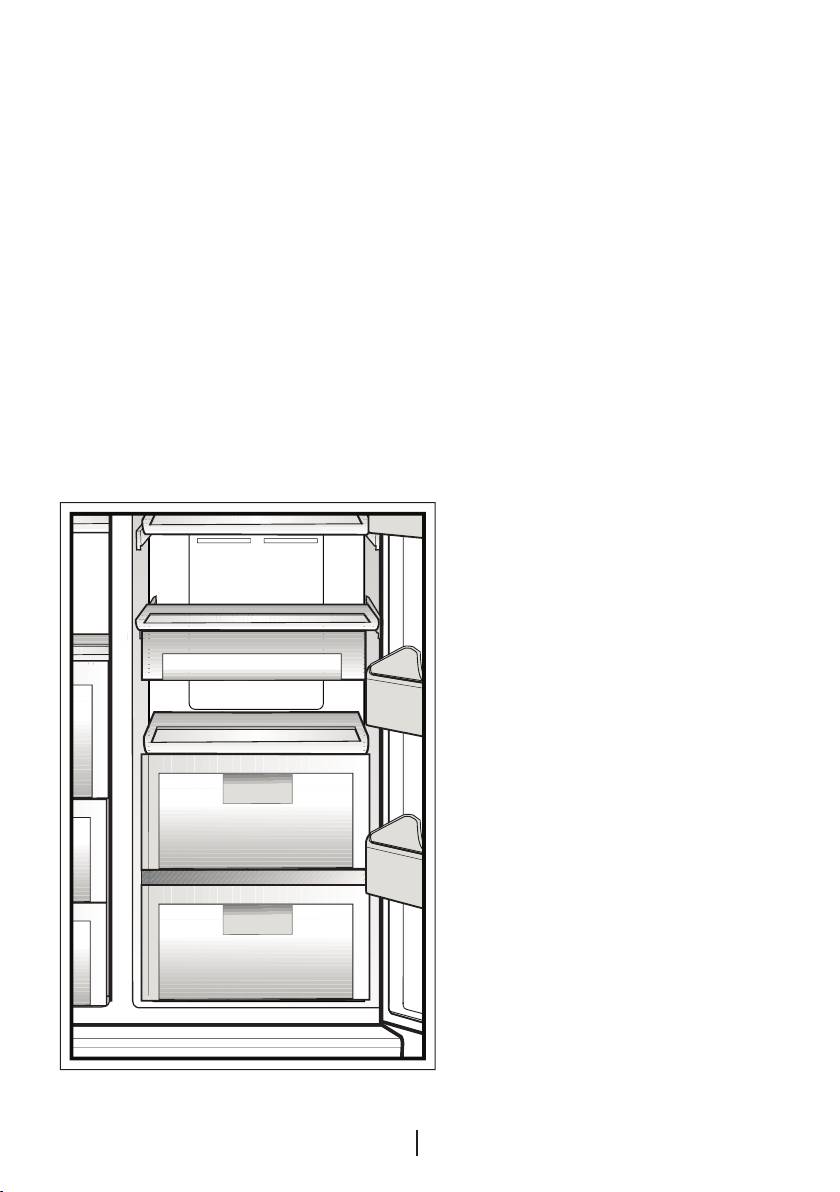
Chill compartment
You can increase the inner volume
of your refrigerator by removing the
desired chill compartment. Pull the
compartment towards yourself until it is
stopped by the stopper. Raise the front
part for approximately 1 cm and pull the
compartment towards yourself again to
remove it completely.
This compartment intended specifically
for the storage of highly perishable
foodstuffs. You can also use these
compartments if you want to store your
food at a temperature a few degrees
below the fridge compartment.
30
EN
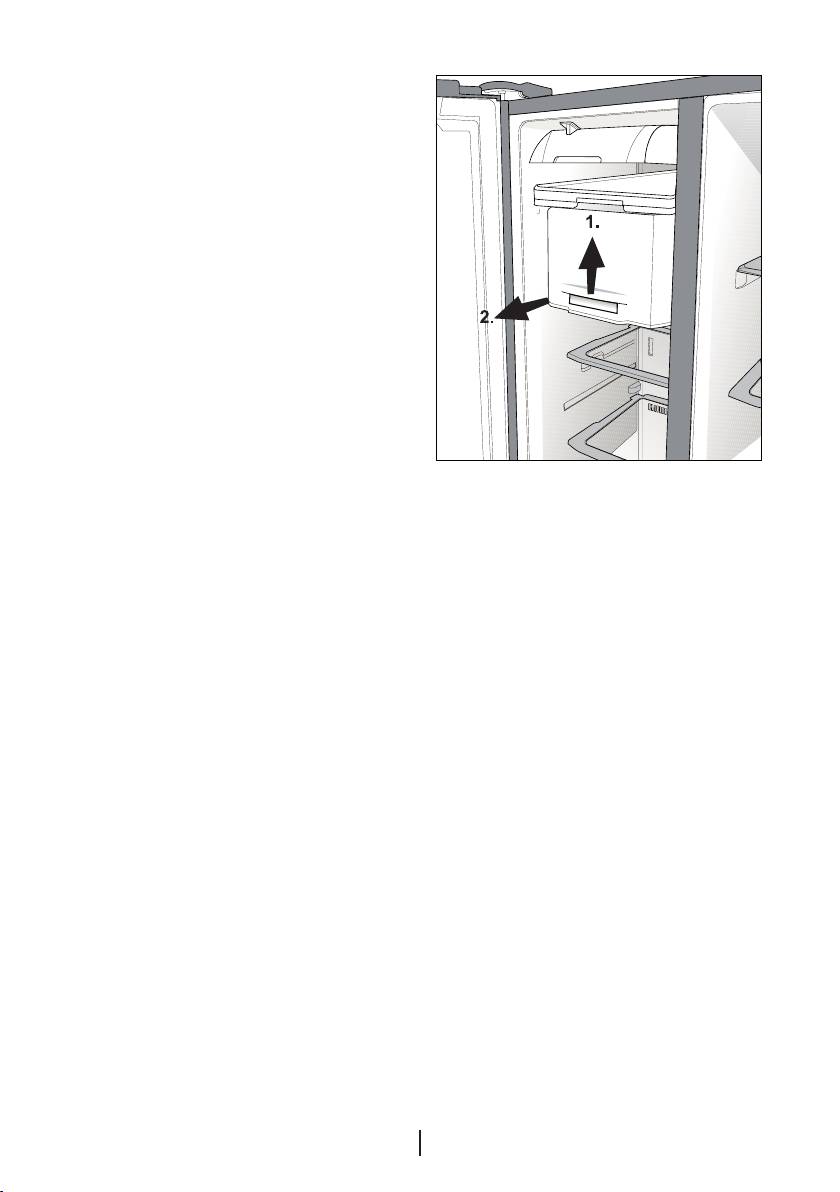
Icebox and Water Dispenser
C
Follow the procedure and warnings
below to clean the icebox:
A Remove the Icebox by lifting first and
then pulling towards yourself as shown
in the diagram.
A Empty the ice in the Icebox if any. To
take out the stuck ice, use objects that
are not sharp to avoid any damage on
the Icebox.
A Pay attention that the inside of the
Icebox is not wet/damp before placing
it back to its housing.
A If you want to get ice from the ice
dispenser after placing the Icebox
back to its housing and closing the
freezer door, exit from Ice Off mode by
pressing the Ice Off key again.
A Do not touch moving parts like
the knife in the Icebox.
C Leave the Water Reservoir empty
when you are not going to use for a
long time
31
EN
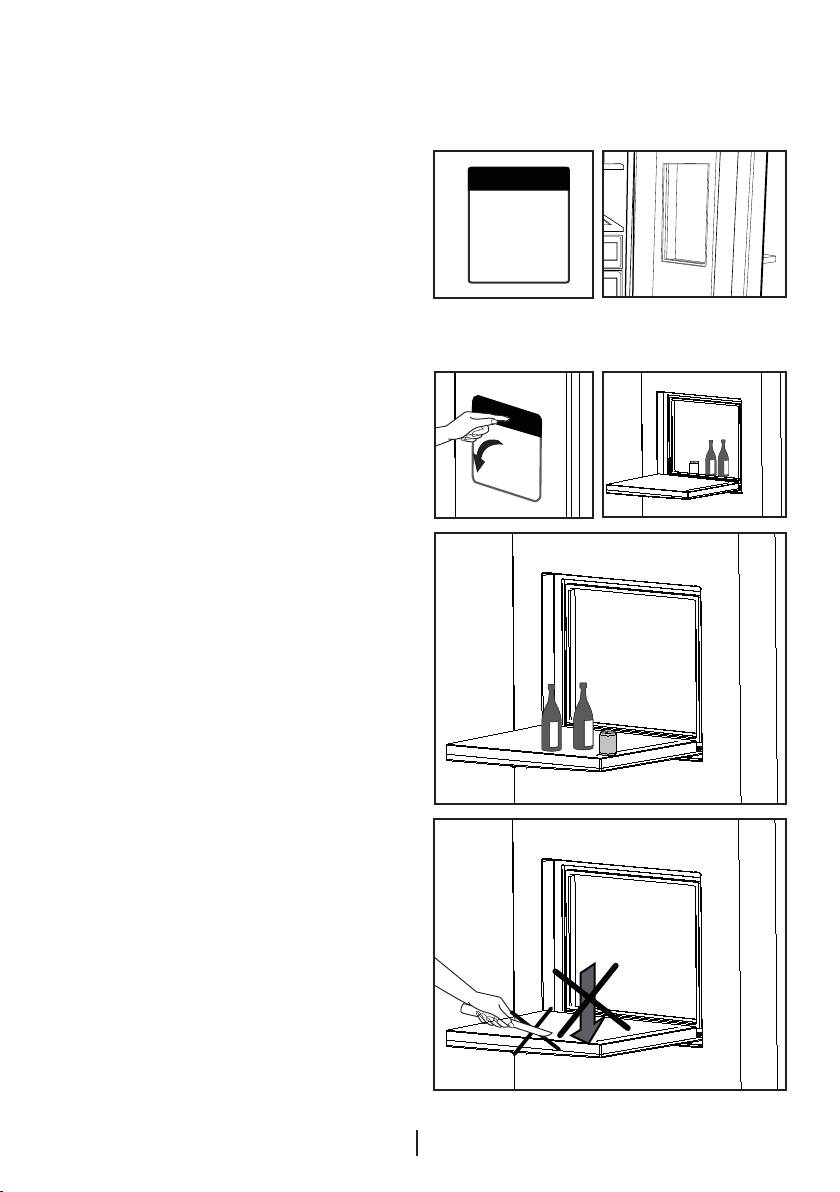
Minibar
Minibar door provides you extra comfort
when using your refrigerator. The door
shelf in the refrigerator can be accessed
without opening the refrigerator door;
thanks to this feature, you can easily pick
from the refrigerator the foods and drinks
which you frequently consume. Since
you do not have to open the refrigerator
door frequently, you will have decreased
the power consumption of refrigerator.
To open the minibar door, press by your
hand on the minibar and pull back to
open.
When the door of minibar is open, you
may use the inner face of the door as a
table on which you may put your bottles
and glasses for a short time as shown in
the figure.
A Warning: Never do things that may
may put pressure on the door such as
sitting on, climbing up or hanging to the
table and do not place heavy objects
on it. This may cause damage on the
refrigerator or personal injuries.
A Warning: Never perform cutting on
the Minibar door and be careful that the
door is not damaged by pointed objects.
32
EN
7 Recommended solutions for the problems
Please review this list before calling the service. It might save you time and money.
This list includes frequent complaints that are not arising from defective workmanship
or material usage. Some of the features described here may not exist in your
product.
The refrigerator does not operate.
• Is the refrigerator properly plugged in? Insert the plug to the wall socket.
• Is the fuse of the socket which your refrigerator is connected to or the main fuse
blown out? Check the fuse.
Condensation on the side wall of the fridge compartment (MULTIZONE, COOL
CONTROL and FLEXI ZONE).
• Very cold ambient conditions. Frequent opening and closing of the door. Highly
humid ambient conditions. Storage of food containing liquid in open containers.
Leaving the door ajar. Switching the thermostat to a colder degree.
• Decreasing the time the door left open or using it less frequently.
• Covering the food stored in open containers with a suitable material.
• Wipe the condensation using a dry cloth and check if it persists.
Compressor is not running
• Protective thermic of the compressor will blow out during sudden power failures or
plug-out plug-ins as the refrigerant pressure in the cooling system of the refrigerator
has not been balanced yet. Your refrigerator will start running approximately after 6
minutes. Please call the service if the refrigerator does not startup at the end of this
period.
• The fridge is in defrost cycle. This is normal for a full-automatically defrosting
refrigerator. Defrosting cycle occurs periodically.
• Your refrigerator is not plugged into the socket. Make sure that the plug is properly fit
into the socket.
• Are the temperature adjustments correctly made?
• Power might be cut off.
The fridge is running frequently or for a long time.
33
EN
• Your new product may be wider than the previous one. This is quite normal. Large
refrigerators operate for a longer period of time.
• The ambient room temperature may be high. This is quite normal.
• The refrigerator might have been plugged in recently or might have been loaded
with food. Cooling down of the refrigerator completely may last for a couple of hours
longer.
• Large amounts of hot food might have been put in the refrigerator recently. Hot
food causes longer running of the refrigerator until they reach the safe storage
temperature.
• Doors might have been opened frequently or left ajar for a long time. The warm air
that has entered into the refrigerator causes the refrigerator to run for longer periods.
Open the doors less frequently.
• Freezer or fridge compartment door might have been left ajar. Check if the doors are
tightly closed.
• The refrigerator is adjusted to a very low temperature. Adjust the refrigerator
temperature to a warmer degree and wait until the temperature is achieved.
• Door seal of the fridge or freezer may be soiled, worn out, broken or not properly
seated. Clean or replace the seal. Damaged/broken seal causes the refrigerator to
run for a longer period of time in order to maintain the current temperature.
Freezer temperature is very low while the fridge temperature is sufficient.
• The freezer temperature is adjusted to a very low temperature. Adjust the freezer
temperature to a warmer degree and check.
Fridge temperature is very low while the freezer temperature is sufficient.
• The fridge temperature might have been adjusted to a very low temperature. Adjust
the fridge temperature to a warmer degree and check.
Food kept in the fridge compartment drawers are freezing.
• The fridge temperature might have been adjusted to a very low temperature. Adjust
the fridge temperature to a warmer degree and check.
Temperature in the fridge or freezer is very high.
• The fridge temperature might have been adjusted to a very high degree. Fridge
adjustment has an effect on the temperature of the freezer. Change the temperature
of the fridge or freezer until the fridge or freezer temperature reaches to a sufficient
level.
• Doors might have been opened frequently or left ajar for a long time; open them less
frequently.
• Door might have been left ajar; close the door completely.
• Large amount of hot food might have been put in the refrigerator recently. Wait until
the fridge or freezer reaches the desired temperature.
• The refrigerator might have been plugged in recently. Cooling down of the refrigerator
completely takes time.
The operation noise increases when the refrigerator is running.
• The operating performance of the refrigerator may change due to the changes in the
ambient temperature. It is normal and not a fault.
34
EN
Vibrations or noise.
• The floor is not even or it is weak. The refrigerator rocks when moved slowly. Make
sure that the floor is strong enough to carry the refrigerator, and level.
• The noise may be caused by the items put onto the refrigerator. Items on top of the
refrigerator should be removed.
There are noises coming from the refrigerator like liquid spilling or spraying.
• Liquid and gas flows happen in accordance with the operating principles of your
refrigerator. It is normal and not a fault.
There is a noise like wind blowing.
• Fans are used in order to cool the refrigerator. It is normal and not a fault.
Condensation on the inner walls of refrigerator.
• Hot and humid weather increases icing and condensation. It is normal and not a
fault.
• Doors might have been left ajar; make sure that the doors are closed fully.
• Doors might have been opened frequently or left ajar for a long time; open them less
frequently.
Humidity occurs on the outside of the refrigerator or between the doors.
• There might be humidity in the air; this is quite normal in humid weather. When the
humidity is less, condensation will disappear.
Bad odour inside the refrigerator.
• Inside of the refrigerator must be cleaned. Clean the inside of the refrigerator with a
sponge, lukewarm water or carbonated water.
• Some containers or package materials might cause the smell. Use a different
container or different brand packaging material.
The door is not closing.
• Food packages may prevent the door's closing. Replace the packages that are
obstructing the door.
• The refrigerator is not completely upright on the floor and rocking when slightly
moved. Adjust the elevation screws.
• The floor is not level or strong. Make sure that the floor is level and capable to carry
the refrigerator.
Crispers are stuck.
• The food might be touching the ceiling of the drawer. Rearrange food in the drawer.
35
EN
Veuillez d’abord lire la notice d’utilisation !
Chère cliente, cher client,
Nous espérons que votre produit, qui a été fabriqué dans des usines modernes et
vérifié au terme des procédures de contrôle de qualité les plus méticuleuses, vous
aidera efficacement.
Pour cette raison, nous vous conseillons de lire attentivement tout le manuel
d’utilisation de votre produit avant de vous en servir, et de le conserver ensuite pour
une utilisation ultérieure.
Le présent manuel
• Vous aidera à utiliser votre produit avec rapidité et sécurité.
• Lisez le manuel avant d’installer et de faire fonctionner votre produit.
• Respectez les instructions, notamment celles relatives à la sécurité.
• Conservez ce manuel dans un endroit facilement accessible car vous pouvez en
avoir besoin ultérieurement.
• En plus, lisez également les autres documents fournis avec votre produit.
Veuillez noter que ce manuel peut également être valide pour d’autres modèles.
Symboles et descriptions
Vous retrouverez les symboles suivants dans le présent manuel :
C Informations importantes ou astuces.
A Avertissement relatif aux conditions dangereuses pour la vie et la propriété.
B Avertissement relatif à la tension électrique.
TABLE DES MATIÈRES
1 Votre réfrigérateur 3
4 Préparation 21
1 Votre réfrigérateur 4
5 Utilisation du réfrigérateur 22
Réglage de la température du
2 Précautions importantes
compartiment réfrigérateur ................. 23
pour votre sécurité 5
Réglage de la température du
Utilisation prévue .................................. 5
compartiment congélateur ................. 23
Pour les appareils dotés d'une fontaine à
Fonction Congélation rapide (Fast
eau ; .................................................... 7
Freeze) ............................................... 23
Sécurité enfants ................................... 7
Fonction de refroidissement rapide (Quick
Avertissement HCA .............................. 8
Cool) .................................................. 24
Mesures d’économie d’énergie ............ 8
Bouton Vacances ............................... 24
Recommandations pour le compartiment
Bouton Auto Eco (Fonction Economie
produits frais ........................................ 9
spéciale) ............................................ 24
Ioniseur ............................................. 24
3 Installation 10
Bouton Key Lock ............................... 24
Points à prendre en compte lorsque vous
Eclairage du distributeur ..................... 24
transportez à nouveau votre produit. .. 10
Sélection du type de glace/d’eau ....... 24
Avant de faire fonctionner votre
Distributeur d'eau et glace ................. 25
réfrigérateur ....................................... 10
Utilisation de l'appareil à glaçons ........ 25
Branchement électrique ..................... 11
Ice Off ................................................ 25
Mise au rebut de l’emballage .............. 11
Utilisation de la fontaine ..................... 27
Mise au rebut de votre ancien
réfrigérateur ....................................... 11
Socle du distributeur .......................... 27
Disposition et Installation .................... 11
Etagères coulissantes ........................ 27
Réglage de la stabilité au sol .............. 12
Éclairage bleu .................................... 28
Réglage du jeu entre les portes
Ion : .................................................. 28
supérieures ........................................ 14
Casier à œufs .................................... 28
Installation du filtre à eau ................... 15
Compartiment Ultra Congélation ........ 28
Raccordement du tuyau d'alimentation en
Manettes de contrôle d’humidité du bac à
eau au réfrigérateur ............................ 16
légumes ............................................. 28
Raccordement du tuyau de vidange à la
Recommandations concernant la
carafe ............................................... 18
conservation des aliments congelés ... 29
Raccordement du tuyau d'alimentation en
Dégivrage .......................................... 29
eau à l'arrivée d'eau .......................... 19
Remplacer l'ampoule intérieure .......... 29
(Dans certains modèles) ..................... 19
6 Entretien et nettoyage 31
Avant toute première utilisation de la
glace/du distributeur d'eau ................ 20
Protection des surfaces en plastique. 31
Compartiment Zone fraîche ................ 32
Appareil à glaçons et distributeur ....... 33
Minibar .............................................. 34
7 Solutions recommandées aux
problèmes 35
2
FR
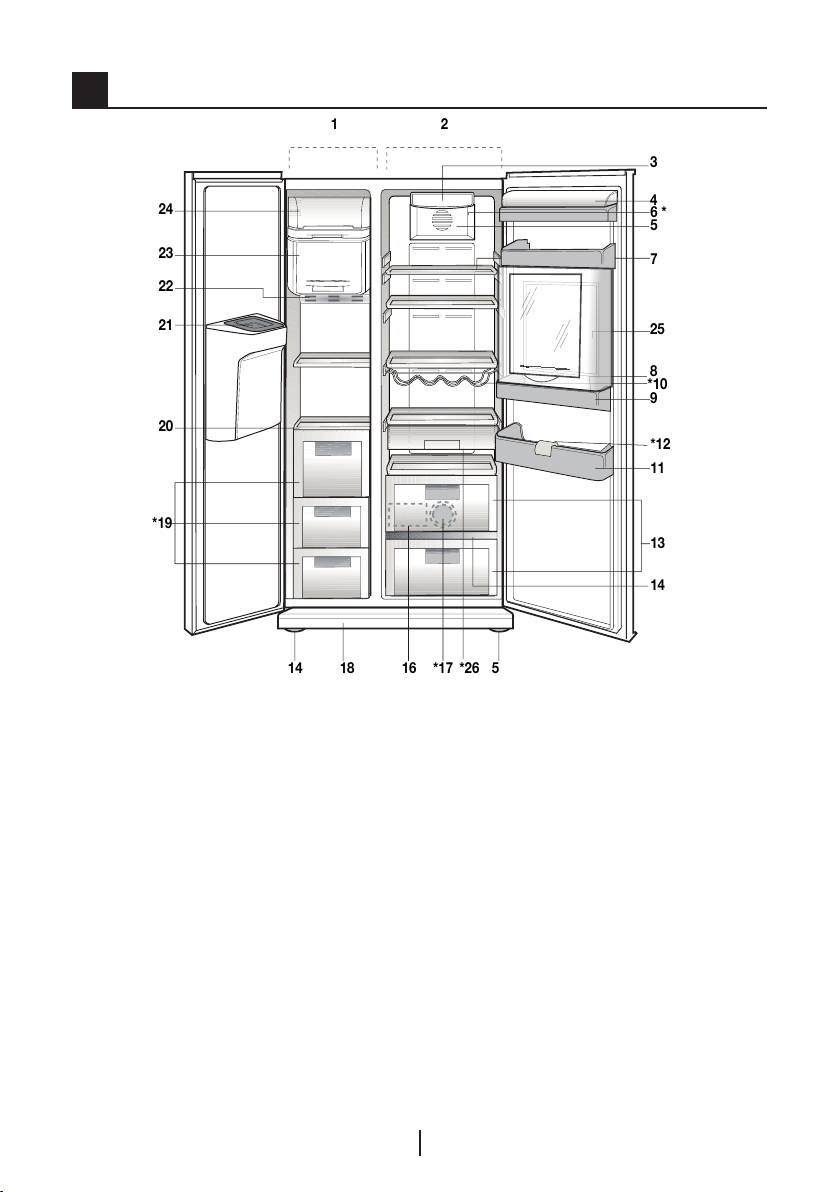
1 Votre réfrigérateur
1. Compartiment congélateur
14. Couvercle du bac à légumes
2.
C
ompartiment réfrigérateur
15. Pieds avant réglables
3.
É
clairage intérieur du compartiment
16. Éclairage bleu
réfrigérateur
17. Réservoir d’eau
4.
C
ouvercle à Beurre et Fromages
18. Plinthe
5.
V
entilateur
19. Tiroirs du compartiment congélateur
6.
I
oniseur
7.
C
layettes en verre du compartiment de
20. Clayettes en verre du compartiment
réfrigération
congélation
8.
C
asier à œufs
21. Couvercle du conduit à glaçons
9.
B
alconnets de porte du compartiment
22. Éclairage intérieur du compartiment
réfrigérateur
congélateur
10.
C
layettes porte-bouteilles
23. Compartiment Ultra Congélation
11.
B
alconnets range-bouteilles
24. Appareil à glaçons
12.
Range-bouteilles
25. Minibar
13. Bacs à légumes
26 .Compartiment Fraîcheur
*EN OPTION
C Les illustrations présentées dans cette notice d’utilisation sont schématiques et peuvent ne pas
correspondre exactement à votre produit. Si des pièces présentées ne sont pas comprises dans
le produit que vous avez acheté, elles sont valables pour d’autres modèles.
3
FR
21
3
4
24
6*
5
23
7
22
21
25
8
*10
9
20
*12
11
*19
13
14
14
18
*17 *2616
5
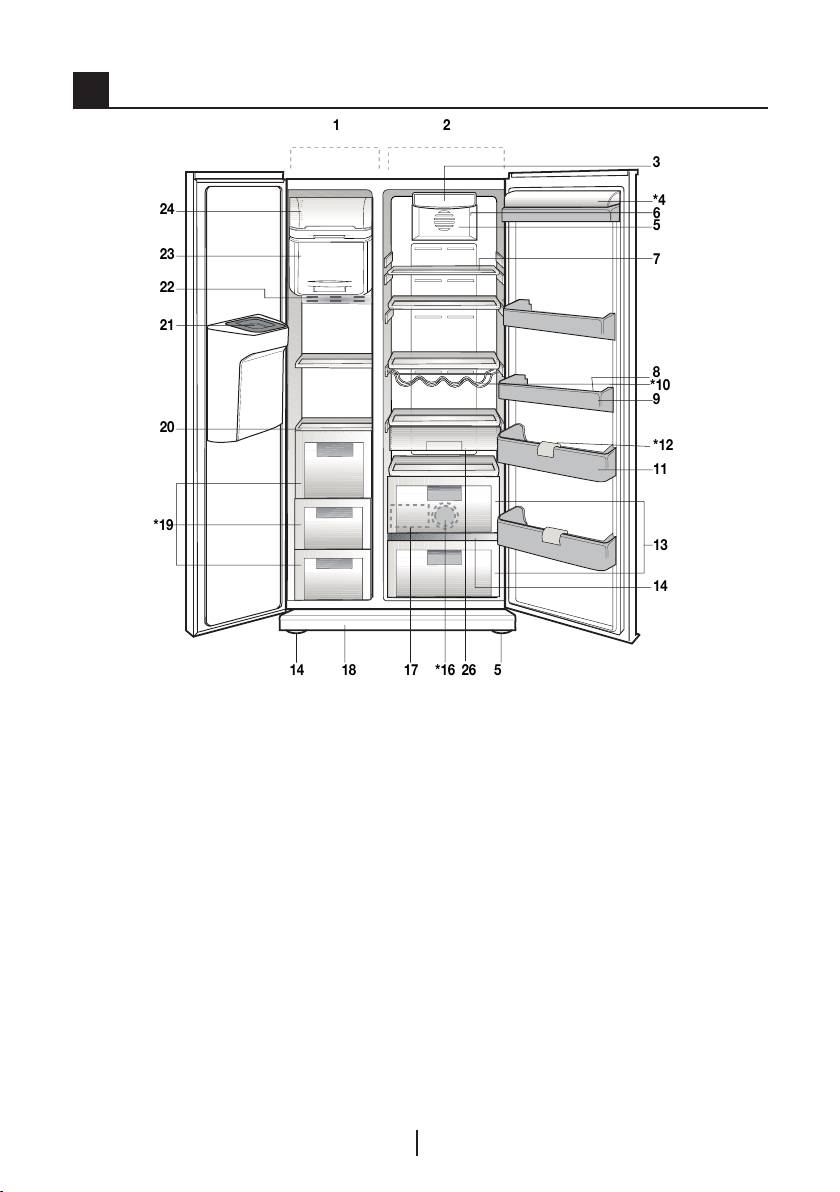
1 Votre réfrigérateur
1. Compartiment congélateur
14. Couvercle du bac à légumes
2.
C
ompartiment réfrigérateur
15. Pieds avant réglables
3.
É
clairage intérieur du compartiment
16. Éclairage bleu
réfrigérateur
17. Réservoir d’eau
4.
C
ouvercle à Beurre et Fromages
18. Plinthe
5.
V
entilateur
19. Tiroirs du compartiment congélateur
6.
I
oniseur
7.
C
layettes en verre du compartiment de
20. Clayettes en verre du compartiment
réfrigération
congélation
8.
C
asier à œufs
21. Couvercle du conduit à glaçons
9.
B
alconnets de porte du compartiment
22. Éclairage intérieur du compartiment
réfrigérateur
congélateur
10.
C
layettes porte-bouteilles
23. Compartiment Ultra Congélation
11.
B
alconnets range-bouteilles
24. Appareil à glaçons
12.
Range-bouteilles
25. Minibar
13. Bacs à légumes
26 .Compartiment Fraîcheur
*EN OPTION
C Les illustrations présentées dans cette notice d’utilisation sont schématiques et peuvent ne pas
correspondre exactement à votre produit. Si des pièces présentées ne sont pas comprises dans
le produit que vous avez acheté, elles sont valables pour d’autres modèles.
4
FR
21
3
*4
24
6
5
23
7
22
21
8
*10
9
20
*12
11
*19
13
14
14
18
*16 2617
5
